History of Hongya Cave
Hongya Cave has a rich historical background in Chongqing, boasting magnificent scenery since ancient times. Over the long years, Hongya Cave successively formed numerous historical sites such as Jiang Ai Fortress, Ming Dynasty city walls, pavilions and ancient temples, remnants of academies, and the Xin Hai Monument. There was also the saying of 'Hongya Dri Cui' – one of the Ba Yu Twelve Scenery.
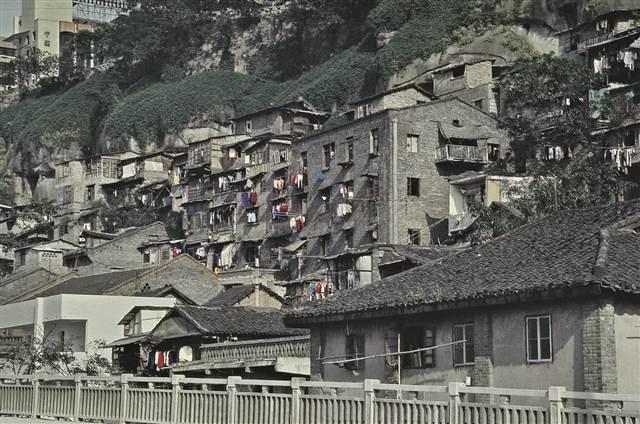
Approximately in the 1940s, a small road was opened up on the cliff, connecting the inside and outside of the city. Hongya Cave was located below Jinjiang Temple and Paper Salt River Street, both of which were docks and quite bustling. Consequently, rows of characteristic Hakka houses were built along the sides of Hongya Cave. Layer upon layer, arranged in a staggered manner, they swayed and swayed, creating a Chongqing-specific landscape.
After liberation, the riverside docks, especially Linjiangmen and Sanshanmen docks, gradually declined, and Hongya Cave also lost its former bustle. The Hakka houses, which had weathered decades of wind and rain, became dilapidated.
The construction of the Yangtze River waterfront road completely changed the appearance of the banks of the Yangtze River. In 1993, the government began construction of the Yangtze River waterfront road, and the residents of the Hongya Cave area were all relocated.
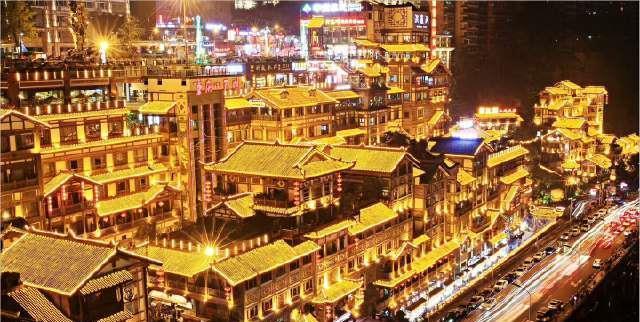
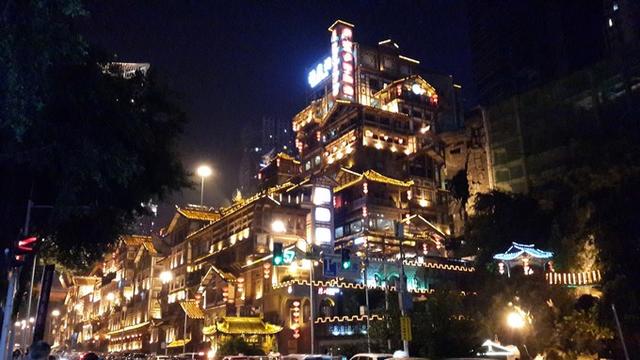
After many studies, relevant departments decided to build a leisure waterfront platform on the Yangtze River based on the existing completed construction in Hongya Cave, making it a whole with Hongya Cave, achieving the effect of mountains and rivers connecting. In 2002, the Xiao Tian Ye Group obtained the development rights of the Hongya Cave area. On September 29, 2006, the Hongya Cave Folk Customs District opened for operation. Tour the Hakka houses, view Hongya Dri Cui, stroll through the old street of the Ba City, and appreciate Ba Yu culture – Hongya Cave with its 'magical height difference' of 13 floors, the collision of Eastern and Western catering culture, and the folk customs displayed through sculptures, carvings, and reliefs, as well as the architectural culture condensed in blue brick and wooden windows.