Stretching Doesn't Relieve Pain, Doing This Can
Running with injuries is frightening, what is frightening is not knowing how to cope with injuries.
Writing/OrangeOrange
Editor/Little Leaf
Production/Macondo Running Research Institute
It's easy to notice that running is always accompanied by injuries.
Many people want to keep themselves healthy by running, and then they encounter many injuries while running. For example, running knee, plantar fasciitis, iliotibial band syndrome, shin pain, ankle pain, buttock pain, etc.
This is not a fault of running. Because movement and pain are inseparable. Any movement will cause injury.
However, it doesn't need to be worried. These injuries are minor, and the body will automatically repair them. As long as you don't give the body enough time to heal, it will gradually develop into a serious injury.
Runners often treat injuries in this way. When they feel pain in a certain part of their body, they stretch. For example, when the Achilles tendon hurts, they stretch their calf; when the knee hurts, they stretch their quadriceps and iliotibial band.
Many runners have experienced this knee pain, which is mainly characterized by pain on the outer side of the knee, which is more obvious when climbing stairs. This is iliotibial band syndrome.
This knee pain is difficult to cure in one fell swoop, and it will also give you many false impressions. You may feel that the injury has healed after a few days of rest. When you go running again, as soon as you run a few kilometers, the pain returns, and you have to stop running again. After a few days, you go running again, and the pain returns, so it continues for a long time.
In fact, the body's pain is not caused by muscle tension, but by the formation of inflammation in tissues. Stretching may temporarily relieve pain, but it cannot fundamentally solve the problem.
Increasingly, research shows that the best way to solve slow and training-related pain is to engage in strength training.
Many methods can alleviate pain, such as foam rolling, massage, acupuncture, heat therapy, cold therapy, electrical stimulation, painkillers, laser therapy, etc.
However, these are passive treatments and can only reduce the sensation of pain. But they cannot make you stronger, and they cannot allow your muscles and tissues to adapt to training.
In a positive training cycle, when your body is stimulated, after rest and diet, your body will adapt to this stimulation, and it will become stronger. If the body receives too much stimulation too quickly and too frequently, without enough recovery time, the body will generate pain.
And if at this time you stretch, it will have the opposite effect. That's why it's not recommended to stretch after running a full marathon. Because at this time, your body has sustained a large number of micro-injuries, and the formation of inflammation, if stretching will not relieve pain, but will damage muscle tissue.
Therefore, you should strengthen the tissues that are easily injured and prone to inflammation.
In 2018, research from the Sports Medicine Department of the Norwegian Sports Academy published a study in the British Journal of Sports Medicine. After analyzing several studies on strength training and injury prevention, they found that 'strength training is positively correlated with reducing injuries, and increasing 10% of strength training can reduce 4% injury risk.'
The 3 reasons why strength training prevents injuries are:
1. Relieve pain
Strength training has a pain-relieving effect. Research shows that static strength training (such as wall squat) and dynamic strength training can effectively reduce pain in the patella and Achilles tendon.
2. Positive attitude
This is also one of the benefits of strength training. Many people become frustrated and depressed because of injuries, which prevents them from running. By engaging in strength training, they can reduce this anxiety and depression, and maintain a positive attitude.
3. Strengthen the body
The biggest benefit of strength training is to strengthen muscles and tendons such as the Achilles tendon. Because running is a very impact sport, your body needs to be strong enough to resist this impact effectively, so as to prevent injury.
Below are 8 strength training exercises that can effectively alleviate iliotibial band syndrome, Achilles tendon pain, and patellar pain.
If your body has pain and still can do these exercises, as long as the pain is not too strong and cannot be tolerated, you can. You may not be able to accurately judge the degree of pain, so you can determine based on the pain index. The pain index is 1-10, the larger the number, the more painful. If the pain index exceeds 4, it is not recommended to do these exercises.
Exercises to alleviate iliotibial band syndrome
The iliotibial band syndrome causes knee pain because of insufficient gluteal muscle. Therefore, strengthening the gluteal muscles is the fundamental way to solve the iliotibial band syndrome. The following 2 exercises can effectively strengthen the gluteal muscles.
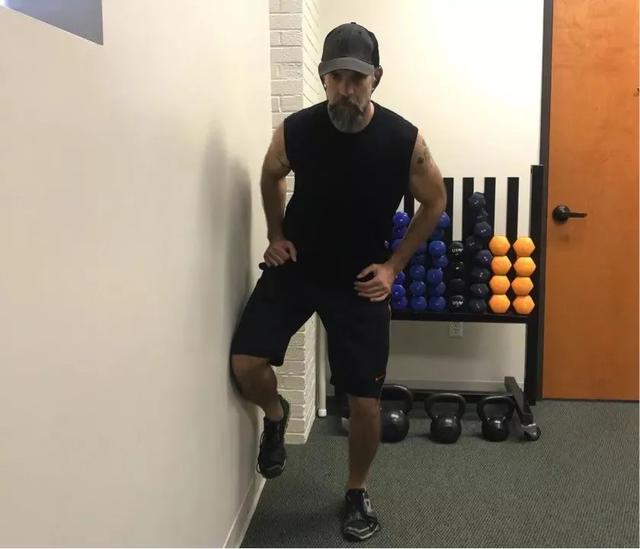
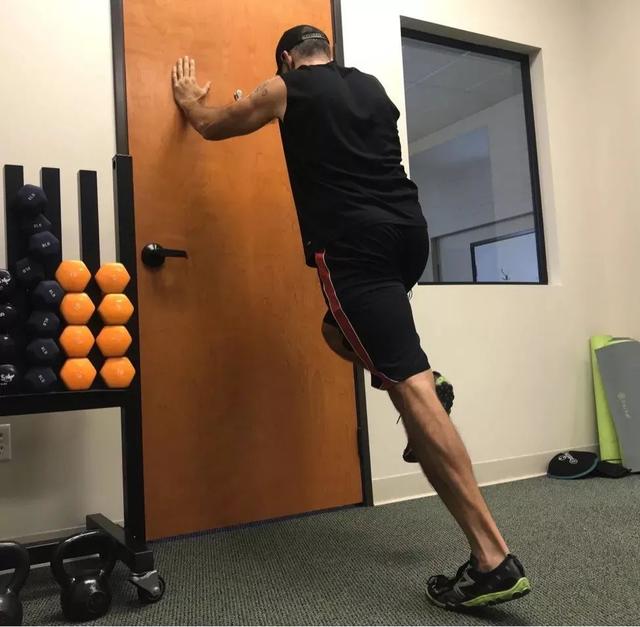
1, Wall sit side push
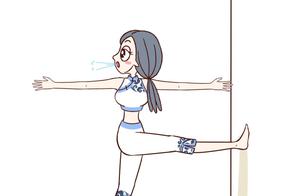
Stand with one leg against the wall, and the other leg is bent at the knee and at a right angle, then push the wall with the leg that is leaning against the wall. At this time, you will feel that the leg standing on the side of the gluteal muscle is cramping. Maintain this posture for 45-60 seconds, and repeat 4-5 times.
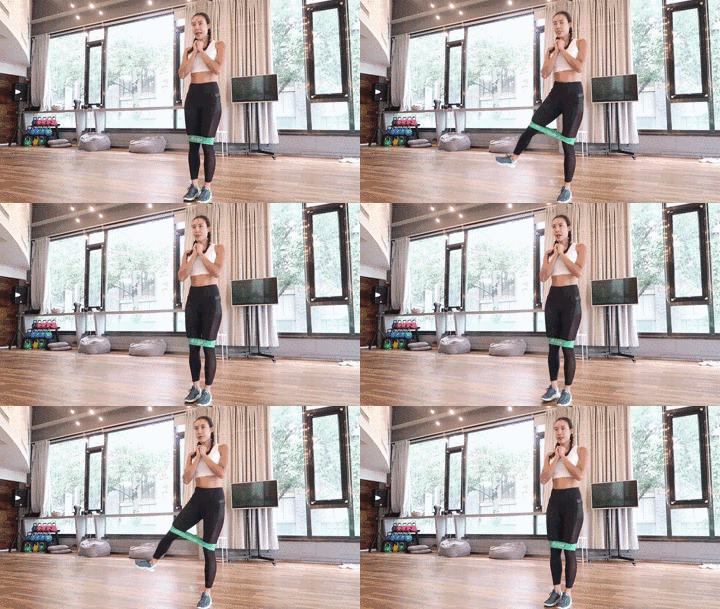
2, Resistance band standing kick
Prepare a resistance band, place the resistance band near the calf, stand up, and the pain-inducing leg raises and kicks 45 degrees or side kicks. Each set is 15-20 times, and 3 sets.
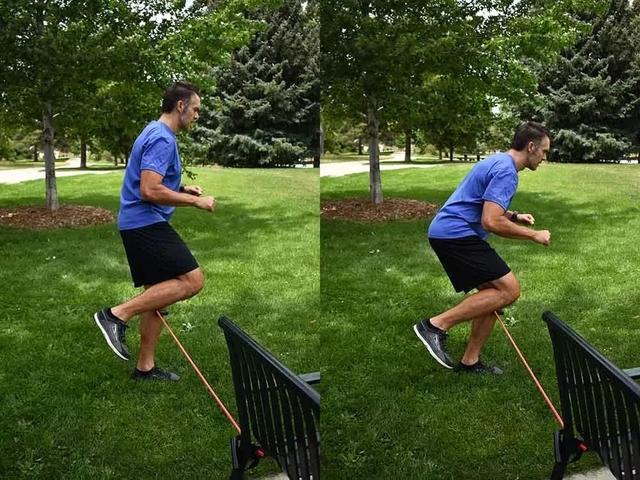
3, Single-leg resistance band standing half squat
This action also requires a resistance band. Place a resistance band on the leg that feels pain, and fix the other end of the resistance band, and then do a half squat action with slow speed. Each set is 20 times, and 3 sets.
Exercises to relieve Achilles tendon pain
Achilles tendon pain is a common injury for runners. The best way to recover from Achilles tendon pain is to strengthen the knee and gluteal muscles.
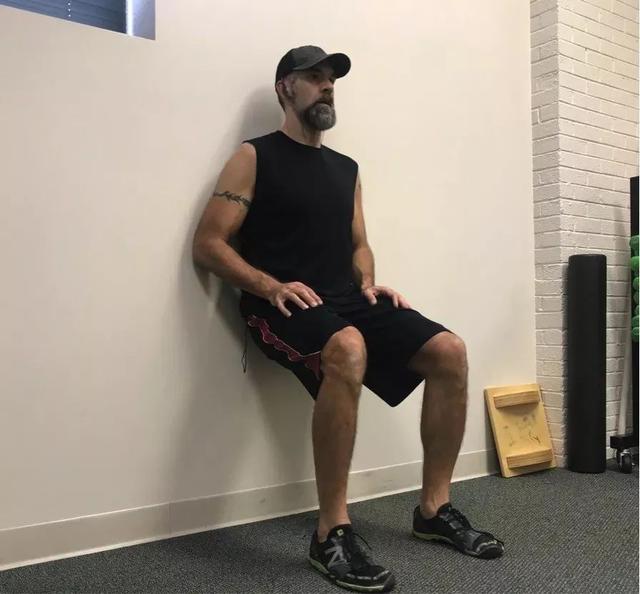
1, Wall squat static
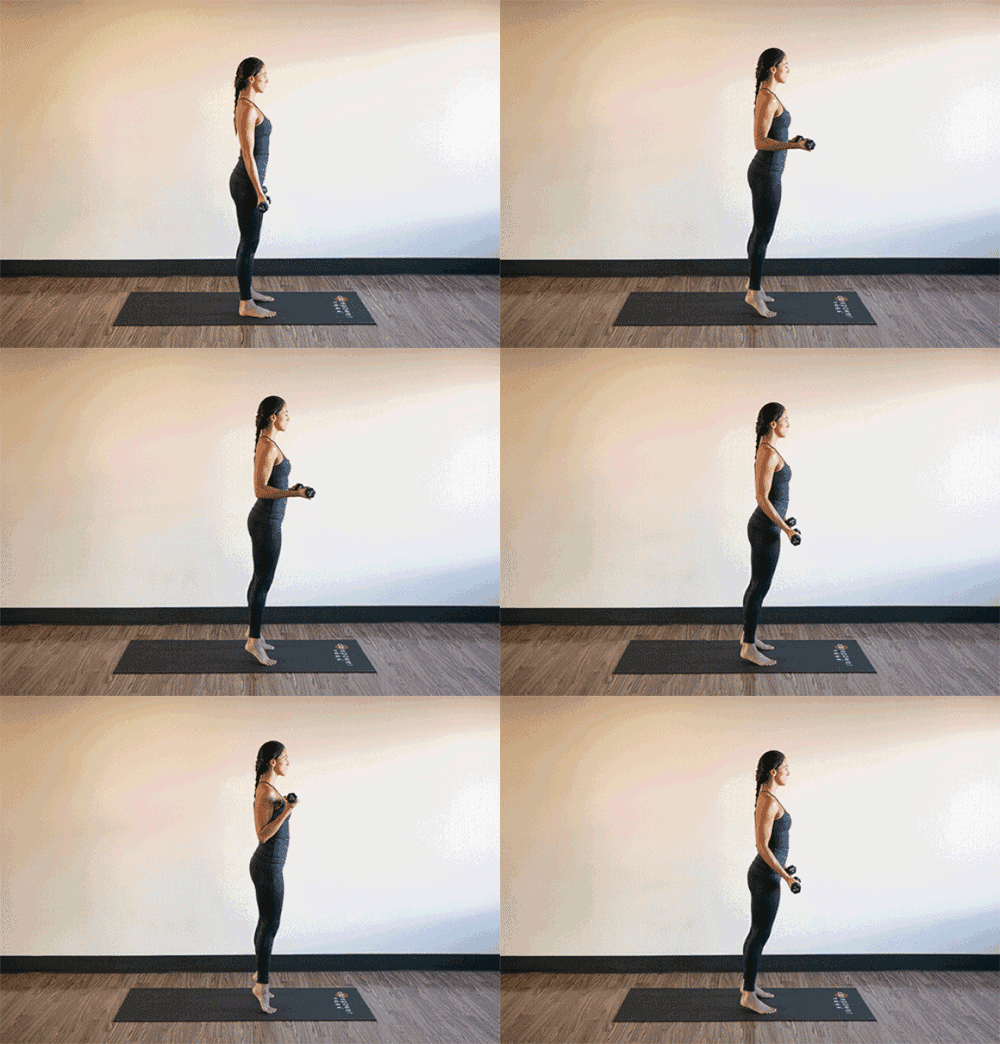
As everyone knows, this exercise is already very familiar, so it will not be detailed. Maintain this posture for 45-60 seconds, and do 4-5 times. If you want to increase the difficulty, you can add a leg to the static squat.
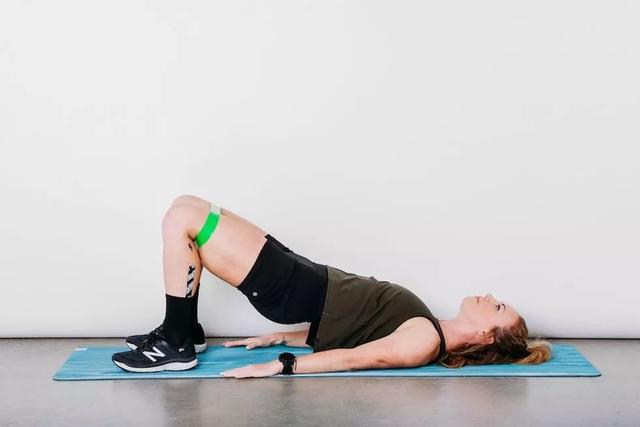
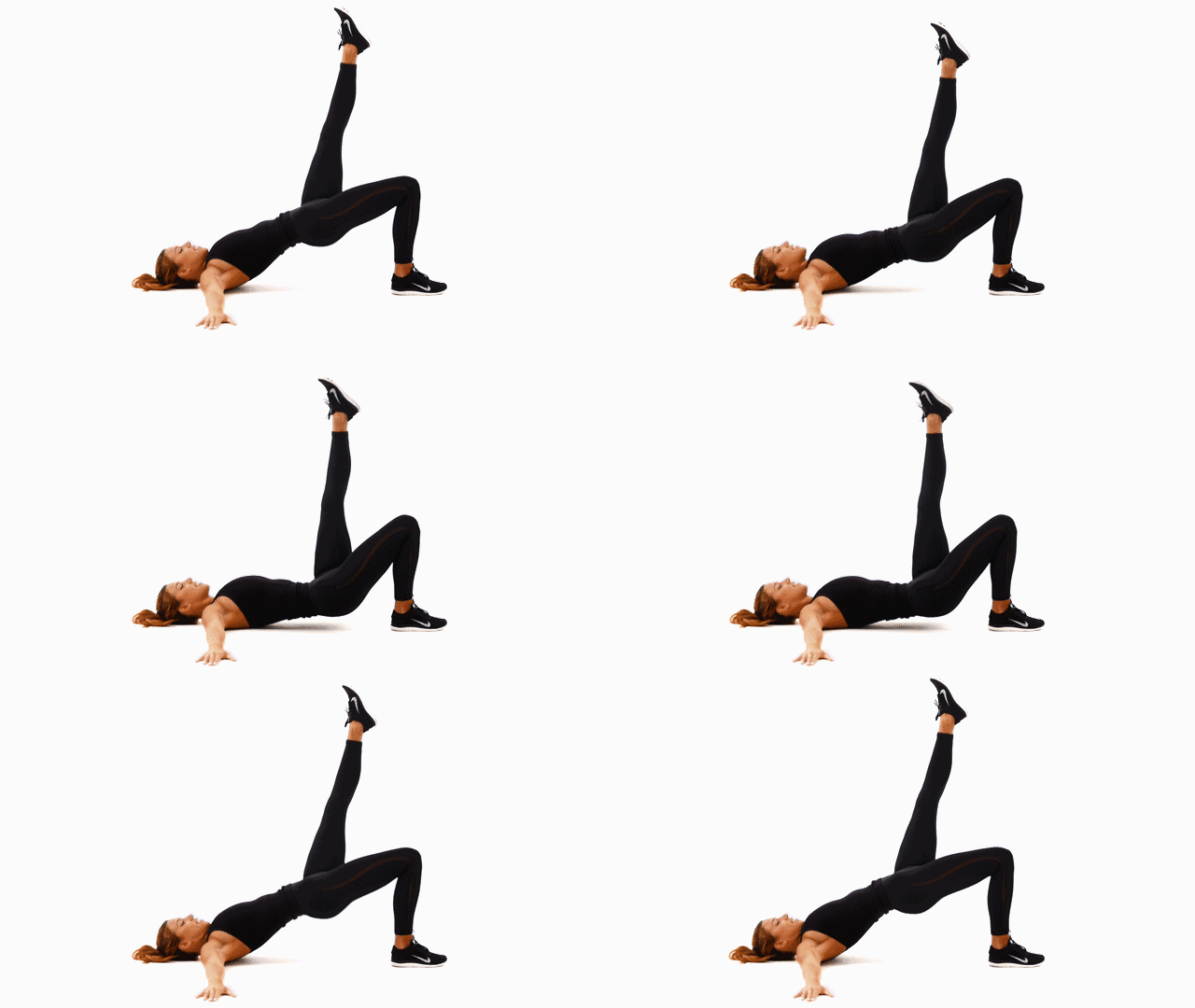
2, Glute Bridge
If you find this action difficult, you can do the basic glute bridge action. This action can be static or dynamic. If it is static, you can maintain it for 45-60 seconds, and do 4-5 times; if it is dynamic, you can do 15-20 times in 3 sets.
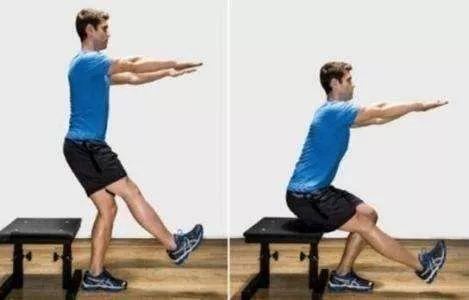
3, Single-leg half squat
Prepare a chair, the pain-inducing leg stands, and the other leg raises and sits down half squat. If the ability is strong, you can do without a chair, and the depth of the squat can also be larger. Each set is 15-20 times, and 3 sets.
Despite the fact that strength training can alleviate pain, it is not a magic bullet. If the pain persists for a long time, generally more than 3 days, then it is considered a long time, you should consult a professional doctor.
45-604-515-203
3
15-203
3