Three Effective Tactics for Dealing with Long-Paddled Players – Master Them and Boost Your Score

During the match against long-paddled players, many tennis enthusiasts don't know how to organize effective tactics, often following the opponent's rhythm, which makes playing against long-paddled players very passive and difficult to win. To win, you must highlight your own initiative. Long-paddled balls are inherently strange, and if you don't take the initiative, the situation is likely to be one-sided.
Today, we will analyze the application of the most common tactics and routines in the match. This routine is to initiate an attack by starting with yourself, second board long-paddled ball returns clear rotation, which creates a strong premise for your attack. We have summarized three commonly used attack routines against long-paddled balls, and hope it will help you.
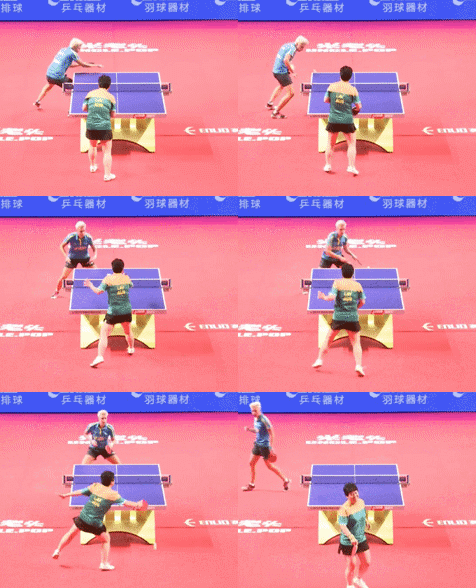
First, play long balls to launch an attack. This long ball refers to an overspin ball, with landing points mainly on the opponent's backhand side. After you serve the ball, the opponent will hit or block it, and the opponent's return ball is under spin. For this under spin ball, you can use two ways to attack. One is to use a lag turn to emphasize the return ball's rotation. As long as the return ball's rotation is strong enough, the long-paddled player will find it difficult to handle this type of ball. The rotation of the lag ball must come out. If the rotation is not strong, the long-paddled player will have an offensive opportunity.
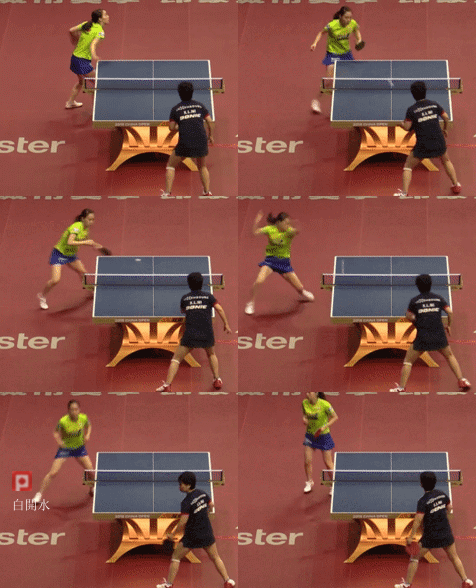
In addition to turning the ball, you can also attack during the ball's ascent. The prerequisite for attacking is to have a sufficient grasp of the rotation of the incoming ball. When attacking under spin balls, you must primarily focus on the return ball's landing point. If this board ball is hit or blocked back by the opponent with very strong rotation, which is often referred to as 'dead spin,' the subsequent board connection and handling will become difficult. You can choose to chase the body position or attack with a large angle.
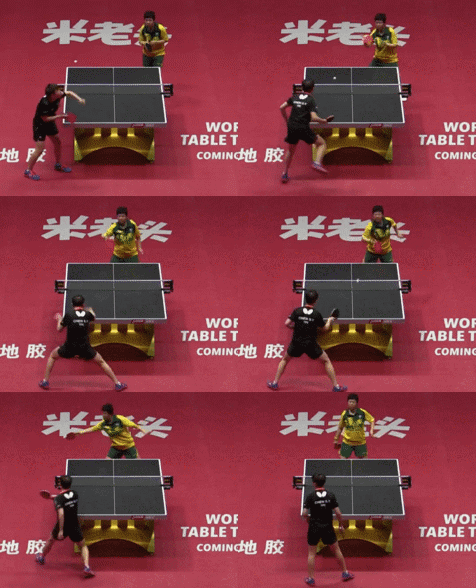
Second, attack with under spin balls. Minimize the use of side spin, to prevent the opponent from borrowing rotation to return the ball. The purpose of playing under spin balls is to wait for the opponent to proactively push. When the opponent pushes the ball, it will have some drift and speed, and you can use small movements to return a quick backhand tear or quick pull-through-bring back, to handle this board ball and try to grab the rising period, add some friction during the impact to create an arc, and the movement range should not be too large.
Third, the baseline long ball ambush. This baseline long ball should issue a board long ball with a focus on rotation, waiting for the opponent to go up and push, then proactively attack. This ball has a surprise effect, so the after serving the ball should be quick to produce a surprise effect.
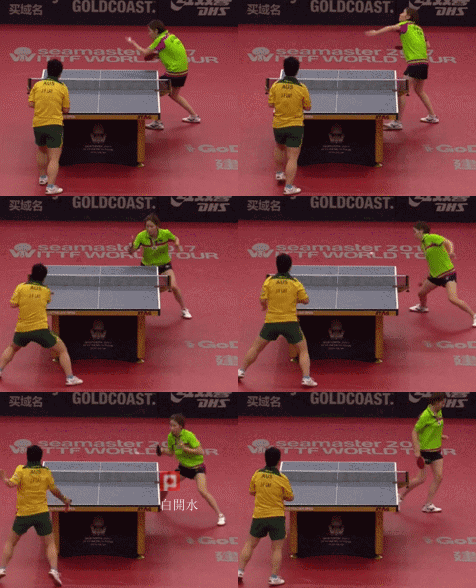
When playing against long-paddled balls, you must have patience and maintain clear thinking. Do not try to solve the problem in one board. You need to use clear thinking to judge the rotation of the return ball in multiple boards, and choose the return technique. If the rotation is chaotic after multiple boards, it's a trick played by the long-paddled player.
Ping Pong Net - White Water