A Little Cute! Locust-Hunting Master 'Iron Armor' Still Has a 'Hardcore' Style
It's a master locust hunter, despite its adorable appearance.
Rare pink starlings appear in Fuzhou, it last arrived in Rongyi ten years ago, this time it may be lost.
N Haina reporter Shi Lei Lei
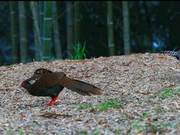
You can see it looks like a magpie, but this kind of bird is extremely rare in Fuzhou and Fujian. It is a master of eliminating locusts in northern China. In recent days, bird watchers in Fuzhou downtown found a small bird that looks different from the flock of silk starlings, which locals have hardly ever seen.
The president of Xinjiang Bird Watching Association, Guo Jun, confirmed that it is a pink starling.
Today's chat on the ground is about a name that is very girly but also 'hardcore' - the pink starling.
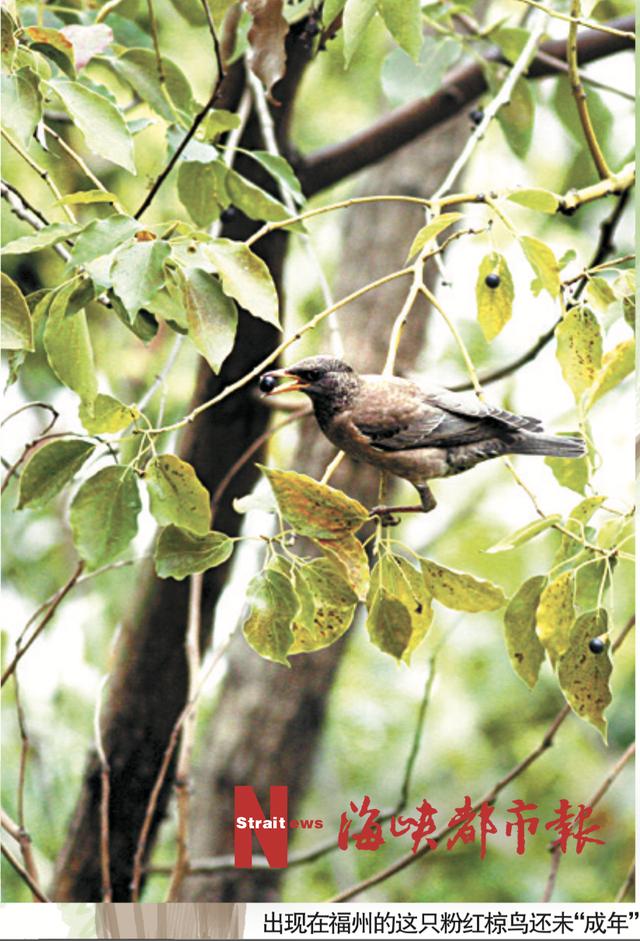
A special little bird has arrived in Fuzhou downtown.
In March of this year, because of the arrival of dozens of juvenile cranes, Fuzhou bird watchers all focused their attention on Gulang Road in Gulang District.
Bird watcher ‘Ice Tea’ revealed that on March 6th, the ‘good bird’ teacher of Fujian Bird Watching Association found a different bird in the flock of silk starlings and released it online for questioning, and the answers received were pink starlings.
‘Ice Tea’ said that pink starlings belong to the order Passeriformes, starling family, pink starling genus, and this species has only appeared in Fuzhou more than ten years ago, at that time it was a male bird, catching worms in the grassland.
According to data, pink starlings are migratory, mainly distributed in the eastern part of Europe and the middle-west of Asia, and they can reach southern India for wintering in May.
If it is a male bird, it will have a ‘’ hairstyle.
In determining this pink starling, local bird watchers also had doubts.
It turns out that pink starlings look like magpies, with pink-colored backs and bellies, and male pink starlings have beautiful crests during the breeding season, like a ‘’ hairstyle. However, the pink starlings seen by Fuzhou bird watchers do not have pink feathers, and their bellies are brown.
Finally, the president of Xinjiang Bird Watching Association, Guo Jun, confirmed that it is a pink starling in the transition stage from juvenile to adult. Guo Jun said that pink starlings like to live in groups, and a single bird flying to Fujian means it is likely a ‘lost bird’ – a bird that is lost.
Guo Jun also consulted the book ‘China Birds Classification and Distribution’ edited by Zheng Guangmei, which notes that pink starlings have a distribution in Fujian.
Fun fact: Huge appetite nicknamed ‘Iron Armor’
Pink starlings are called pink starlings because their backs and bellies are pink.
Pink starlings are ‘three-there’ protected birds (i.e., terrestrial wild animals of important ecological, scientific and social value protected by the state), mainly feed on locusts, and their appetite is huge, they can catch 120-180 locusts every day, and each pink starling can protect two acres of grassland from locust damage, and the locust control personnel gave them a vivid name — ‘Iron Armor’.
Thank you to Guo Jun and bird watchers ‘Ice Tea’, ‘Online’ for clues, each clue fee 20 yuan
Editor: Xiao Yan