Whiplash Scorpion: A Non-Venomous Creature Named for Its Appearance
In China's history, there are many legends about animals, most of which are based on common animals. Among these, the Four-legged Beast is particularly special. It is a legendary creature in ancient myths and a mount for Jiang Ziya in the Investiture of the Gods. Its face resembles a horse, its horns resemble deer, its neck resembles a camel, and its tail resembles a donkey, hence its name, 'Four-legged Beast.' In fact, the 'Four-legged Beast' is based on the prototype of the moose-deer, a relatively common animal. However, there are also many biological species in reality with appearances that are difficult to identify. To introduce one of these perplexing creatures—Whiplash Scorpion
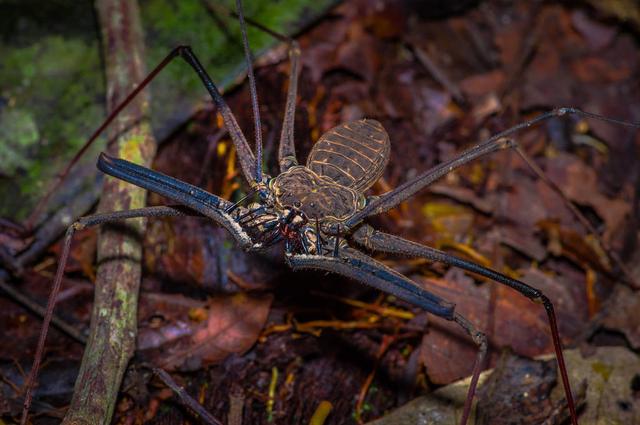
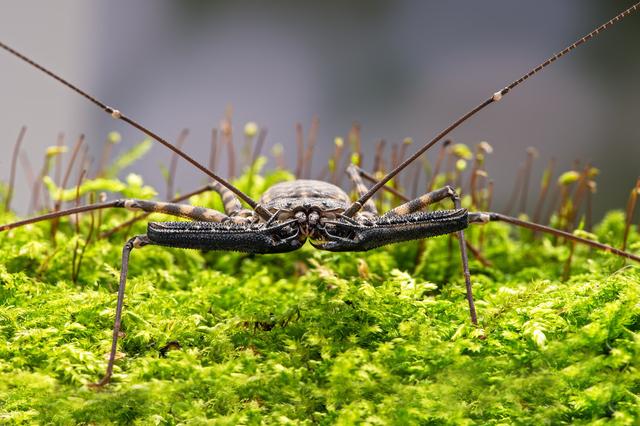
Scorpions, one of the Five Poisons, are well-known creatures. Their large pincers and tail stinger are clearly dangerous. However, this creature, which looks like a spider and resembles a scorpion, has been rarely seen by many people. The Whiplash Scorpion evolved from a small predator dating back 300 million years. It is generally distributed in tropical countries near the equator, and due to its scarcity and the fact that it lives in caves and only comes out to hunt at night, it is rarely discovered. In fact, from its structure, the Whiplash Scorpion is more like a spider. The biggest difference between spiders and scorpions is that their chest and abdomen are clearly separated. The abdomen of scorpions is tightly connected to their chest. Therefore, the Whiplash Scorpion has spider-like features in its body structure, but its front pincers and tail stinger resemble those of a scorpion.
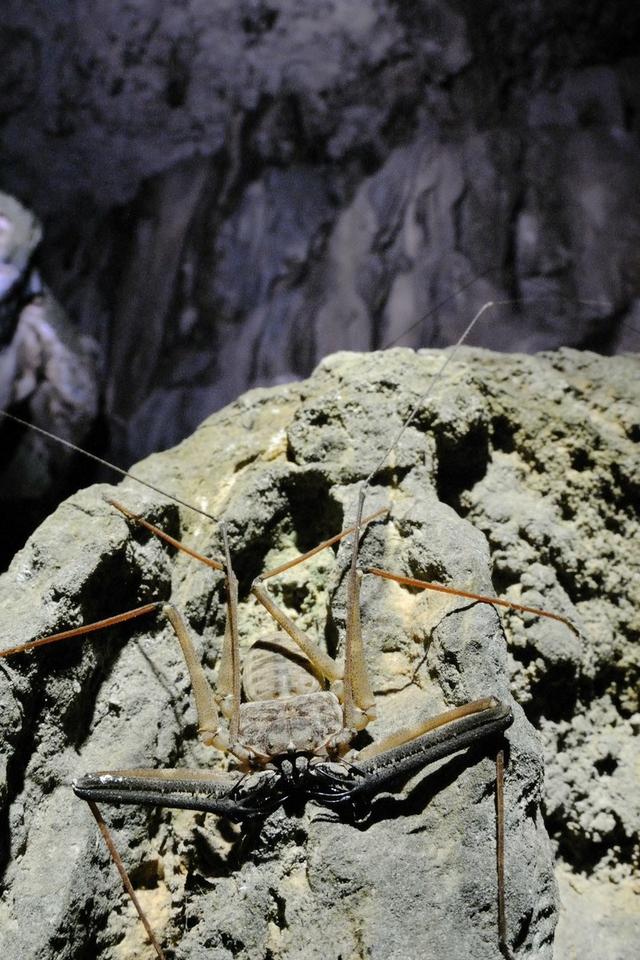
Although the Whiplash Scorpion shares many similarities with scorpions, their characteristics are completely different. Scorpions are high-level predators. They use venomous stings to injure prey, allowing them to capture prey that cannot move. The Whiplash Scorpion's characteristics are more defensive. The glands at the end of its tail are not venomous, but when threatened, they will raise their tails and spray a misty acetic acid to drive away enemies. The Whiplash Scorpion's front pincers, although not as large as those of scorpions, are covered with needles, which can fix and tear the bodies of prey. Therefore, the Whiplash Scorpion can still capture venomous creatures such as venomous spiders, scorpions, and centipedes. Due to its long-term residence in caves and nocturnal activity, the Whiplash Scorpion is almost blind. Therefore, the Whiplash Scorpion's first pair of walking feet have evolved into explorers, using its six back feet to walk and probe the terrain. When moving forward and exploring, it shakes its first pair of walking feet, which is like pulling a whip, hence the name 'Whiplash Scorpion.' Because the Whiplash Scorpion's vision is poor, it cannot easily capture prey like a scorpion. Wild Whiplash Scorpions are often in a state of hunger. When they are hungry, they are extremely aggressive and will attack other members of their species without hesitation to swallow them.
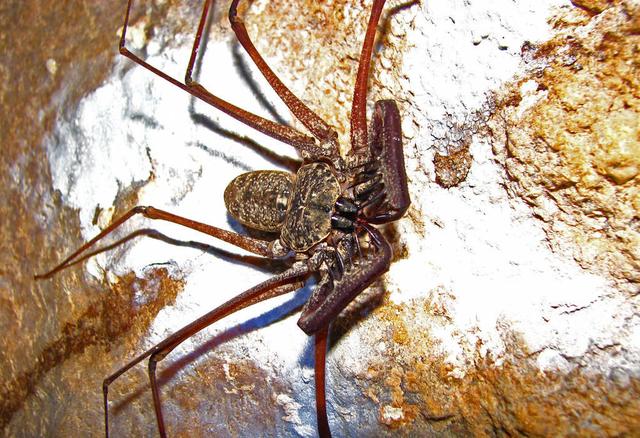
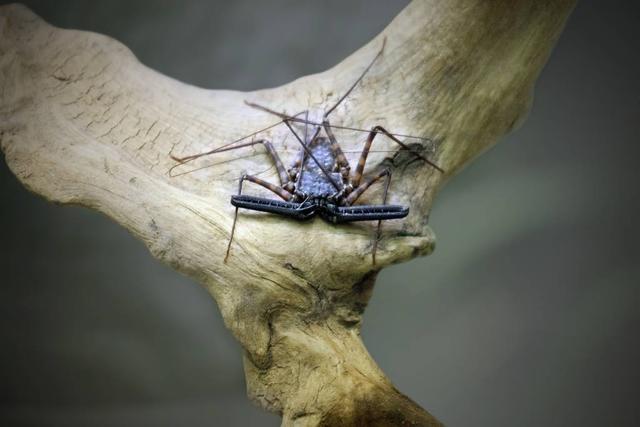
Many scientists are surprised that this creature has survived on Earth for 300 million years. This is because most creatures that can survive for a long time have excellent hunting abilities. However, the Whiplash Scorpion does not have these qualities. Scientists believe that although the Whiplash Scorpion does not have venom and strong hunting skills, it has very high fidelity in imitating the appearance of a scorpion, which makes most insects' enemies dare not approach it. Therefore, its survival environment is essentially without enemies. The main reason for the scarcity of today's Whiplash Scorpions is the current environmental changes and pollution.