Why Do African Elephants Like to Destroy Trees?

Common African Elephant, Loxodonta africana
Common African Elephant, also known as the Savannah Elephant, is a species within the African Elephant genus and currently the largest land mammal in the world, widely distributed across the African continent. Common African Elephants are social animals, preferring to live in herds led by older females, forming herds of varying sizes, typically 20-30 individuals. The members are mostly its female offspring.
Males, with an average shoulder height of 3.3 meters and a weight of 5.5 tons;
Females, with an average shoulder height of 2.8 meters and a weight of 3.7 tons.
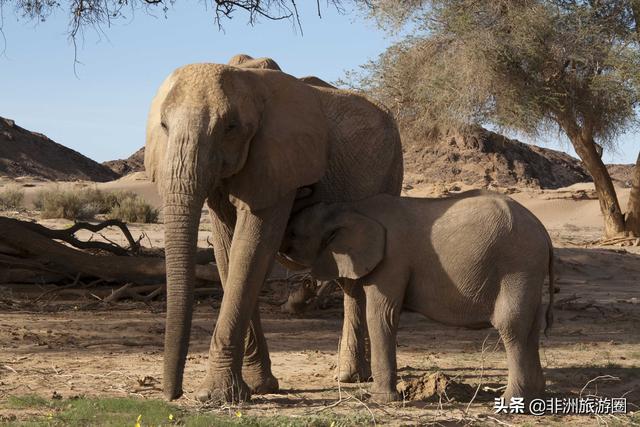
I used to play a computer game called 'Zoo Tycoon', in which African elephants were raised. One issue I was always puzzled by was that as soon as trees were planted in the enclosure, they would be destroyed, and if they weren't planted, the elephants would be unhappy, posing a demand.
In numerous documentaries, African elephants destroying trees frequently appears.
Why is this the case?
The usual explanation is for feeding, emotional release, or demonstrating their status. Recent observations and research have shown that this behavior is multifaceted, not entirely random, and has a strong purpose.
One point caught my attention: Elephants have enough intelligence to observe the relationship and development between species, they push and peel trees to create their own or the herd's 'farm'. The new branches of the fallen trees will grow vigorously from the broken places, and the fallen trees are more likely to grow other plants. That way, even if the branches and leaves of the tree are eaten, it will 'manufacture' new 'flavors' in a short time, which is faster than the natural recovery of a normal tree.
Another point is to expand the field of vision and early discovery of 'enemies', reducing the hidden ambush spaces of predatory animals and reducing the chances of being harmed.
(Article source:Animal WorldAuthor:XiaoqiuThe article only represents the author's point of view, thank you to the original author for the acknowledgement. Copyright of/ belongs to the original author, this account has no commercial purpose, only for readers' reference and exchange. If there is any infringement, please contact the to delete!)