‘Bear Out of the Woods’ Appearing Ahead of Schedule? Expert: Climate Warming Causes Early Awakening
According to a report by chinanews.com on March 15, under the global trend of climate change, countries such as Russia, Canada and the United States have already seen ‘bears appearing’ ahead of schedule. Normally, bears are still in hibernation during this time.
British wildlife expert Alan Wright said, ‘This is not good news for people or bears.’
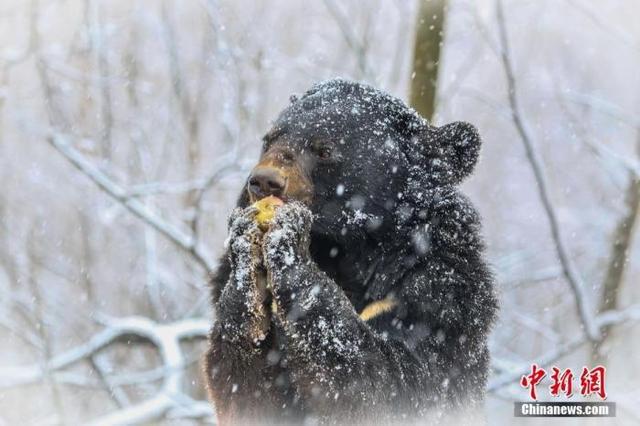
Photo of a black bear eating fruit. Photo taken by Myuwen Gong.
What impact does this have on bears?
Europe has just experienced the warmest winter in its history, and the average temperatures in the US in December 2019 and January 2020 were higher than normal.
Therefore, bears around the world are waking up from hibernation earlier than usual.
Wright said this situation may cause bears to face food shortages. ‘When they wake up, the bears start foraging and find that there is not much to eat, many plants have not yet begun to grow, and small animals have not appeared.’
At the end of hibernation, bears need to replenish their energy quickly because the ‘breeding season’ is approaching.
Wright said, ‘Many bears may be born shortly after, and they will starve because their parents are not strong enough, and they cannot find enough food to help the babies grow.’
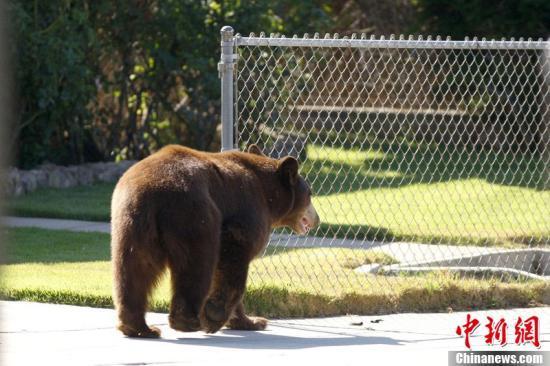
Photo of a black bear appearing on a California highway, and then entered the city. Finally, wildlife protection staff successfully subdued the black bear.
What impact does this have on people?
On the other hand, this is not good news for people, as it may increase the interaction between bears and people. ‘Normally, bears prefer to stay in their own territory and don’t want to interact with people.’ However, hunger will inevitably force bears to search for food in more distant and unfamiliar places, which means they may be closer to people.
‘Bears will go to places where people store food, with a very clear purpose: to find food!’
Wright said, ‘This only happens when bears are in ‘extreme desperation’—either because they are starving or because they must find food for their babies.’
In 2019, a region in Russia declared a state of emergency due to dozens of polar bears invading residential areas to find food and attacking humans.
In normal years, bear mothers with cubs usually won’t ‘emerge from their dens’ until late April.
Wright advises that if you encounter a bear, you should try to avoid it and immediately contact relevant authorities.