Large-headed Swallowtail Butterfly
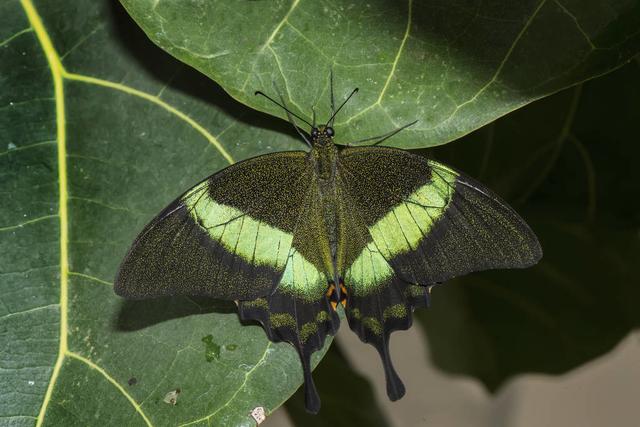
The Swallowtail butterfly is a collective term for butterflies in the order Lepidoptera, Papilionidae family, generally large insects. The wings have tail-like protrusions as a characteristic name, but many species have no tail-like protrusions. They are usually black, yellow, or white, with red, blue, green, and yellow patterns. Some species are more characterized by brilliant blue, green, and yellow metallic luster. Swallowtail butterflies are beautiful in shape, and many species have long tail protrusions. Some species are pests; some species are protected. There are more than 850 species worldwide, and about 100 species in China.
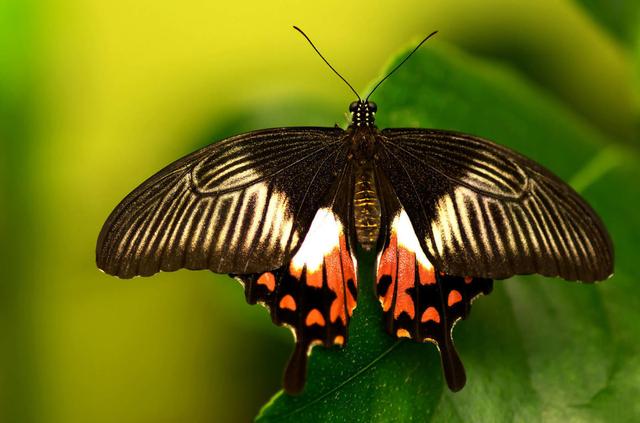
Swallowtail butterflies are of large size, medium size is less. The colors are vivid, the background color is mostly black, yellow, or white, with blue, green, red, etc. patterns. The beak is developed. The front and back wings are triangular, the front wing vein 5, the back wing vein 2, and there is 1 transverse vein; the back wing has 1 hook-shaped shoulder vein on the upper side of the sub-edge, and Sc and R veins form a small chamber at the base, and most species have M3 extended into tail protrusions, some species have 2 or more tail protrusions or no tail protrusions. There are obvious sexual dimorphism in Swallowtail butterflies of Papilio and Chilasa genera. In addition, some species also have seasonal and polymorphic phenomena.
The eggs are nearly spherical, and they are produced on the host plant. The larvae have a red or yellow pungent gland on the central front of the front thorax. The pupa is with cocoon.
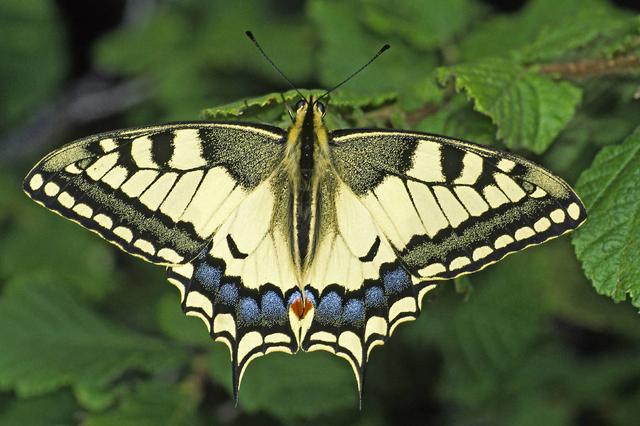
Swallowtail butterflies have complete metamorphosis, spherical eggs, dispersed on leaves.
The larvae are herbivorous, and many larvae feed on the leaves of orange trees, camphor trees, etc. They are good at flying. For species with pungent glands, they will emit a pungent odor when frightened. Many butterflies imitate the color or pattern of seemingly unpalatable Swallowtail butterflies to protect themselves.
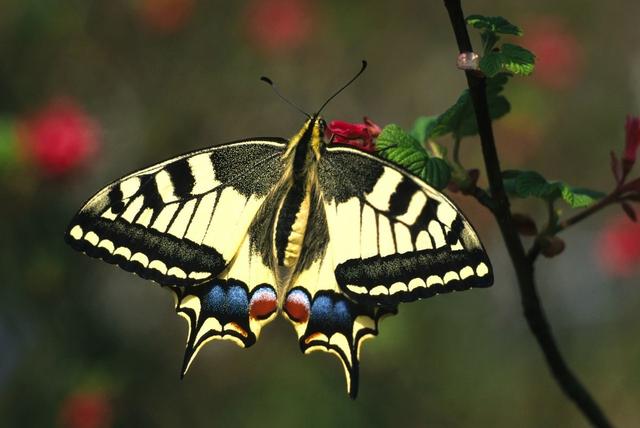
Swallowtail butterflies (Papilionidae) generally reproduce 1-2 generations in one year. Generally, Swallowtail butterflies lay their eggs on trees, and they specifically choose to lay eggs on plants of the genus Citrus. This is a way for them to increase the hatching rate of their larvae.
After the larvae of Swallowtail butterflies molt several times, the color suddenly changes from black and white to vivid green. The change in larval hormone levels in the body changes the way genes function, thus promoting the transformation of the larvae. Swallowtail larvae initially wear black and white spotted patterns with bumps all over their bodies, using them to camouflage themselves as bird droppings to avoid predators. After the fourth molt, they turn into vivid green that can blend in with the surrounding vegetation, and the bumps disappear. The concentration of juvenile hormone is the key to the color change of Swallowtail larvae.
Swallowtail larvae, after 4 molts, show a snake-like appearance to avoid predators. When frightened, they raise their heads to intimidate enemies, extending two antennae on their heads and emitting a strange smell.