When it comes to stone crabs, who will you think of?
When going to the rock reef beach to go out to sea, have you ever seen this scene?
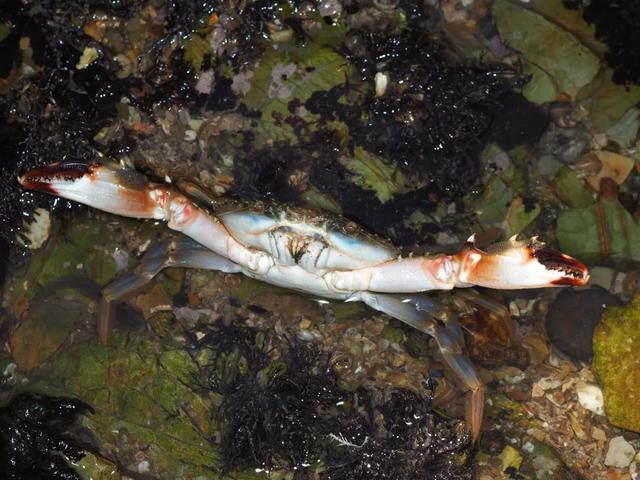
Japanese Crab
Charybdis japonica
A ruthless appearance, with extremely sharp spines (teeth) around the shell, it's hard to know how to grab it. This crab is called Japanese Crab, which sounds unfamiliar, but seafood lovers who often mention stone pliers crawl, stone crab or red shell, must be familiar with it.
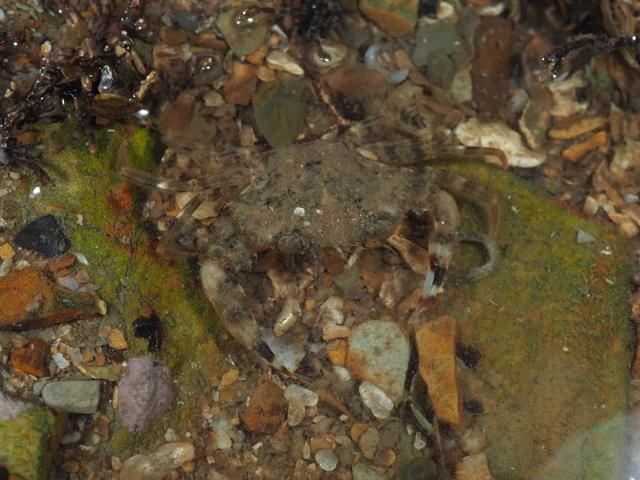
Japanese Crab Juveniles
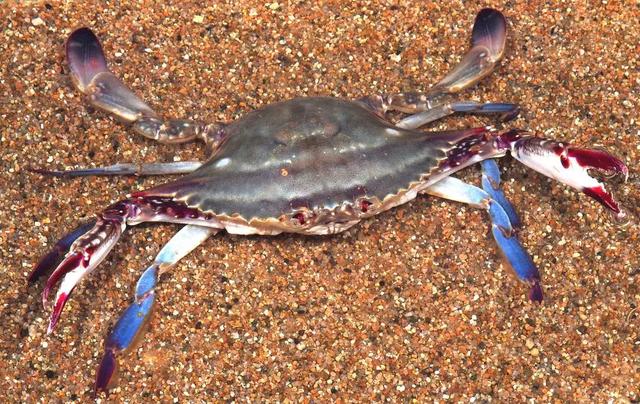
As for Japanese Crab living in the ocean, it's a sea crab. But when we usually talk about 'sea crabs', we often think of another kind of crab, which is the Soft-shelled crab. Some places call it gun crab.
Soft-shelled crab Portunus trituberculatus
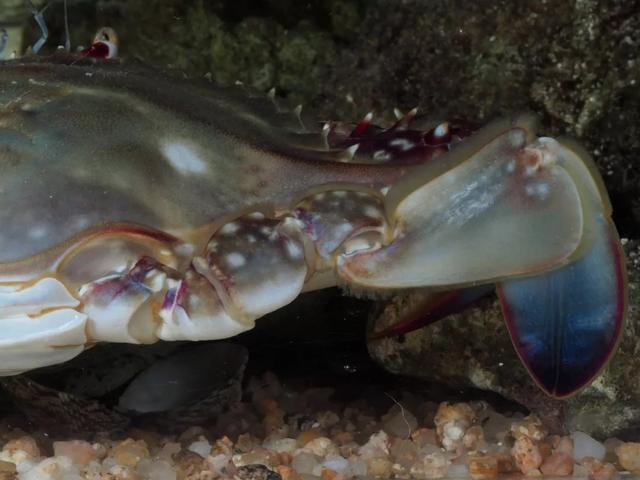
Soft-shelled crabs and Japanese crabs both belong to the Pincer crab family, but the latter belongs to the Crab genus, while Soft-shelled crabs belong to the Soft-shelled crab genus. The Soft-shelled crab genus has a total of 22 species in the world. Their main characteristics include the last pair of walking legs are paddle-shaped, the carapace is very wide, and the last tooth on the outer side of the front edge is larger than the other front edge teeth. The back view of the body is clearly in a streamlined shape.
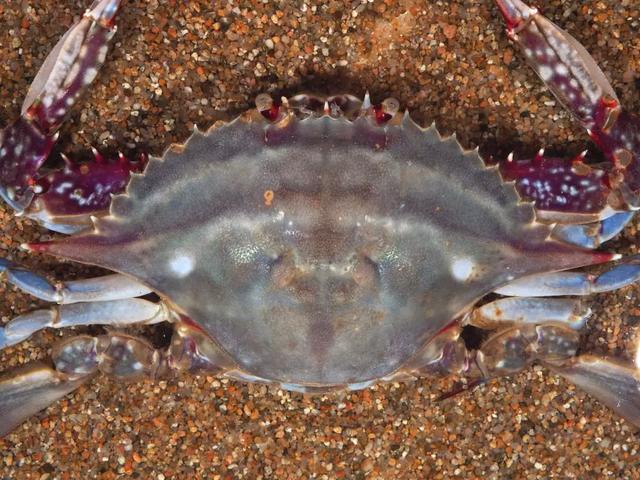
Don't think Soft-shelled crabs only live in fixed areas, they are actually a kind of crab with reproductive and overwintering migration habits. Every day in spring and summer is their breeding period, a large number of Soft-shelled crabs will migrate to shallow seas to spawn and breed, and in winter they will migrate to 10 to 30 meters deep muddy seabed for overwintering.
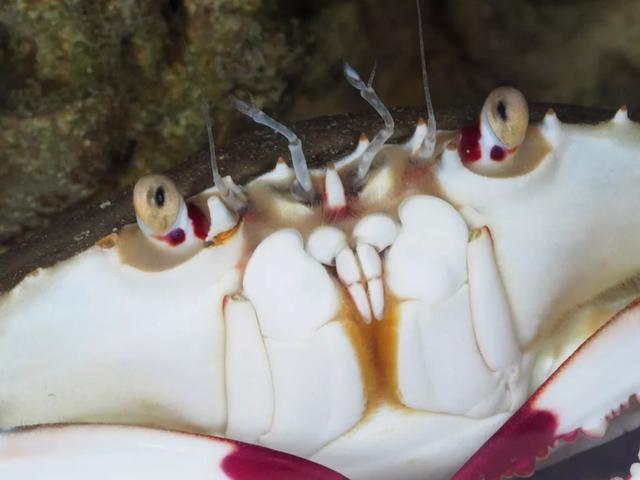
You may often see Soft-shelled crabs bound with ropes or rubber bands with their two large pincers, because Soft-shelled crabs are very fierce and combative. If a Soft-shelled crab without being bound is presented to you alive and jumping, you would not know how to grab it effectively.
Name origin
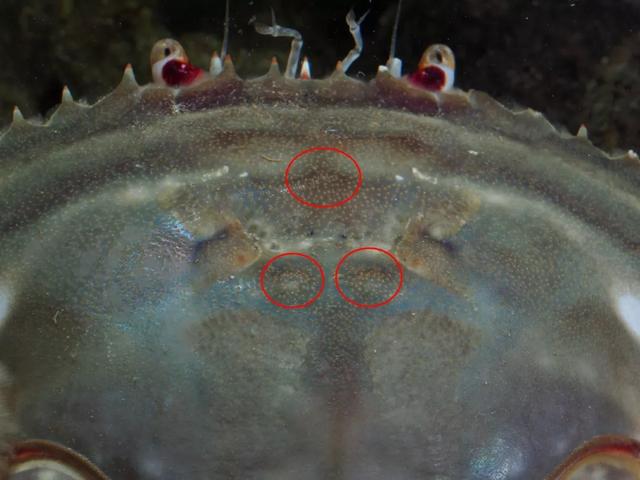
The name of Soft-shelled crab comes from the three small protrusions on its carapace, which correspond to its stomach and heart. Next time you eat crabs, feel it.
Three bumps
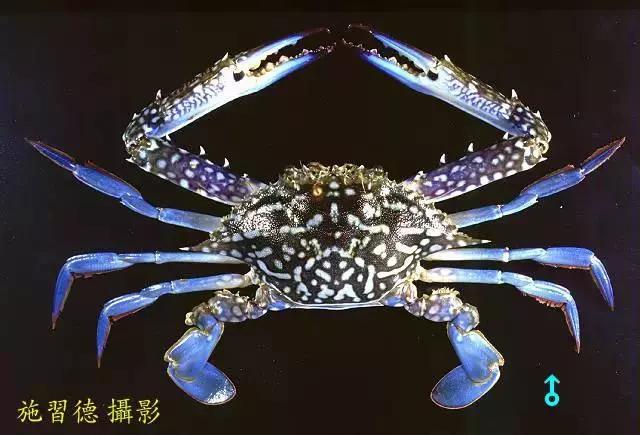
In addition, in southern seafood markets (with the continuous development of logistics transportation, it has been increasingly seen in northern markets in recent years), in addition to Soft-shelled crabs, there is another crab that is very similar to it, but more vibrant and beautiful. Its name is Far-sea Soft-shelled crab.
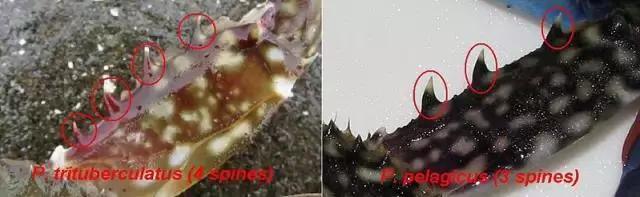
Far-sea Soft-shelled crab is not only similar in appearance to Soft-shelled crabs, but also has a very close kinship. In 2007, Mantelatto Professor of St. Paul's University, Brazil, and RAFAEL ROBLES and DARRYL L. FELDER from Louisiana University conducted a phylogenetic analysis of 14 species of Soft-shelled crabs in the Western Atlantic distribution based on mitochondrial 16S rDNA sequence, the results showed that Soft-shelled crabs and Far-sea Soft-shelled crabs are very close in phylogenetic relationship.
Soft-shelled crab (left) and Far-sea Soft-shelled crab (right) Source: commons.wikimedia.org
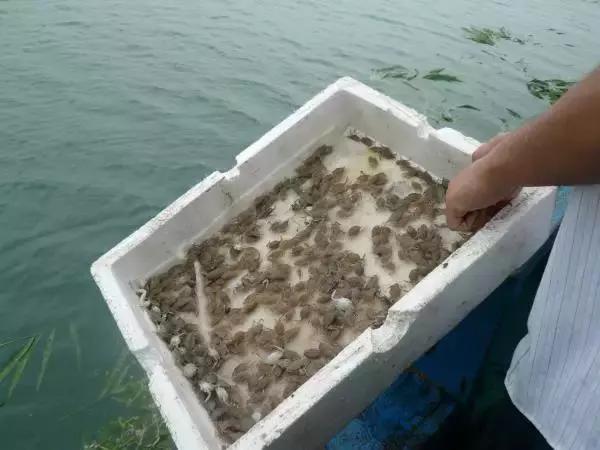
Although as an important fishery resource, Soft-shelled crabs are almost supplied continuously in the market, facing the continuous overfishing and marine pollution, the catch volume of Soft-shelled crabs is declining year by year. In order to avoid resource depletion, many coastal aquaculture departments have carried out artificial breeding and release of Soft-shelled crabs, artificially raising Soft-shelled crabs in the survival rate of juvenile stages to the survival rate of juvenile stages before releasing them back into the sea to grow naturally.