Tibetan Mastiff vs. Lynx: A Deadly Battle – Who Would Win?
The Tibetan Mastiff is a large canid, while the Lynx is a mid-sized feline. Therefore, this is a contest between canids and felines. At first glance, the Tibetan Mastiff is much larger than the Lynx. Logically, the Tibetan Mastiff should easily defeat the Lynx. But is that really the case? Obviously not. Let's look at the basic data of both animals.
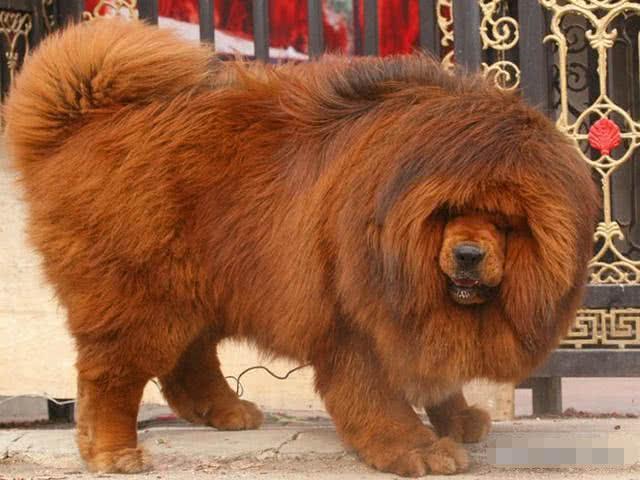
First, let's look at the Tibetan Mastiff
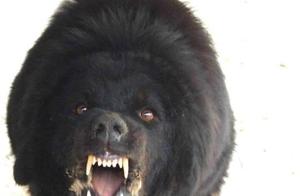
The Tibetan Mastiff is known as the ‘Oriental Divine Canine’, and was once at the ‘throne’. It had a very high price and was highly sought after. In order to ‘hype it up’, many people exaggerated the abilities of the Tibetan Mastiff, to the point that there were even rumors on the Internet such as ‘one mastiff can defeat three tigers’. However, with the collapse of the ‘myth’ of the Tibetan Mastiff, the once-high Tibetan Mastiff has become an unremarkable dog, and the claims about the Tibetan Mastiff on the Internet have also decreased.
Normally, purebred Tibetan Mastiffs have a body length of about 1 meter and an average weight of about 50 kilograms. Especially since the Tibetan Mastiff originated in the Qinghai-Tibet Plateau, its fur is very long, about 25cm long, and its fur is very dense, so the Tibetan Mastiff looks very large.
Of course, under artificial breeding, some non-pure Tibetan Mastiffs have body sizes far greater than the above data, but the truly pure and strongest fighting Tibetan Mastiffs are within the above range.
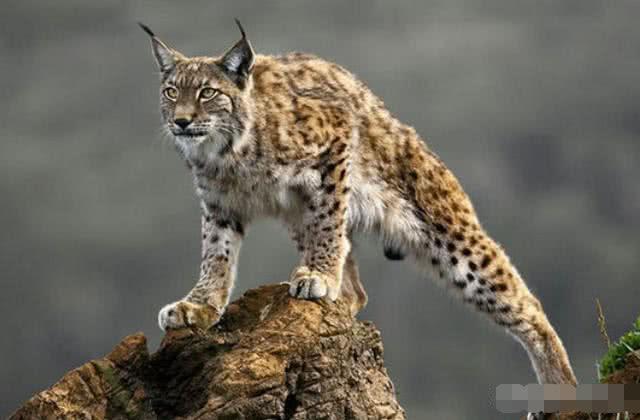
Now let's look at the Lynx
The Lynx is a mid-sized cold-loving feline animal, it is mainly distributed in Europe and Asia’s cold and subarctic regions with coniferous forests. From a biological classification standpoint, the Lynx belongs to the cat subfamily, with domestic cats belonging to the same subfamily, from an appearance standpoint, the Lynx is much larger than the domestic cat, but it is different from the domestic cat.
The average body length of an adult Lynx is about 1.2 meters (including the tail), and the average weight is about 30 kilograms. As a carnivorous animal, the Lynx is a pure meat-eating animal, its main prey includes rodents, rabbits, and medium-sized wild boars, wild deer, and qilin (a type of wild goat).
The habits of the Lynx are very similar to those of tigers. They mainly hunt by ambushing. Usually, the Lynx waits in a fixed location for prey to pass by. When prey reaches its hunting range, it will rush out to hunt. If the hunt fails, the Lynx will not give up easily, it will return to its hunting site to wait for prey again.
Because there are large carnivorous animals such as leopards and tigers in the Lynx’s survival area, the Lynx is very cautious, and once it hears a strange sound, it will immediately run away or climb a tree to avoid danger. When it is hunted by large carnivorous animals, it will also use the ‘dead ruse’ to deceive the carnivorous animals, but this trick has no effect when it encounters a wolf pack.

So, will the Tibetan Mastiff and the Lynx fight?
If the Lynx and the Tibetan Mastiff meet in a narrow passage, the Lynx will immediately run away because of the Lynx's cautious and careful personality. And the Lynx’s speed is faster than the Tibetan Mastiff’s, so they won’t fight if they meet in a narrow passage.
If they have to fight to the death, I think the Lynx has an advantage. There are three reasons.
01 Flexibility comparison
Although the Tibetan Mastiff looks large, in fact it only has a body length of about 1 meter and a weight of about 50 kilograms, while the Lynx has an average body length of 1.2 meters and a weight of 30 kilograms. Although from the surface, the Lynx has a disadvantage in weight, but felines are inherently more flexible than other carnivorous animals. That is, in combat, the Lynx can flexibly dodge the attack of the Tibetan Mastiff and can also cause damage to the Tibetan Mastiff with its paws. The Tibetan Mastiff's flexibility is not as good.
02 Wilderness comparison
The Tibetan Mastiff is fierce, but no matter how fierce, it is a dog raised by humans, its wildness has completely lost to wild carnivorous animals, and it has been raised by humans, the Tibetan Mastiff only has biting, it doesn't have any combat techniques, while the Lynx is a wild carnivorous animal, and it hunts alone every day. It often faces large carnivorous animals, which makes it have rich combat experience.
This is something the Tibetan Mastiff cannot compare to.
03 Actual situation
Many friends have had experience with cat and dog co-breeding. Because of the difference between the two species, their habits are quite different, which often leads to them fighting. In combat, even if the cat is much smaller than the dog in terms of size, it will often use its flexibility to make the dog suffer. More importantly, a wild Lynx is much more frightening to a dog than a normal cat.

Summary
Although the Lynx and the Tibetan Mastiff have significant differences in weight, the Lynx’s flexibility and rich combat experience can make up for it. Therefore, I think the Lynx will win against the Tibetan Mastiff in a narrow passage.
What do you think?