Where are the Lion's 'Fingerprints'? Scientists are Improving the Monitoring Methods of the Asian Lion Population
The 'fingerprints' of the lion are where? By looking at faces, scientists are improving the monitoring methods of the Asian lion population
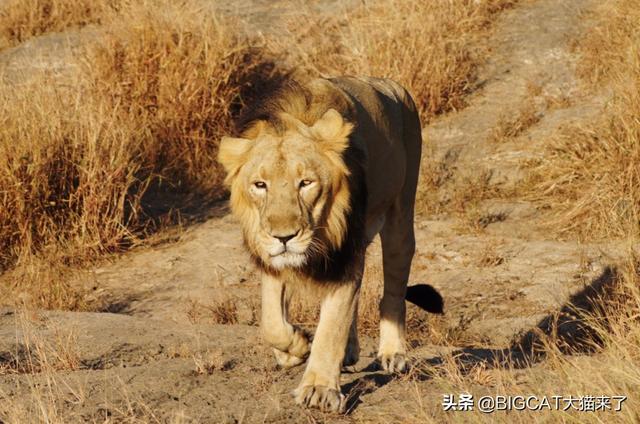
The Asian lion is a subspecies of the lion and also a critically endangered large cat species. In 1908, the Asian lion was once hunted to death, with only 13 remaining, later in 1908, India established the Gil National Park in the state of Gujarat to protect the Asian lion, since then, the Gil National Park has become the only natural habitat of the Asian lion.
The importance of accurate statistical results
Scientifically estimate the Asian lion population in the existing habitat and its distribution situation, can help animal protection workers to formulate more reasonable protection policies and habitat management measures. Therefore, after the 21st century, the forest department of Gujarat State will conduct a lion population census every 5 years: in 2005, 359 Asian lions were counted; in 2010, 411 Asian lions were counted; in 2015, 523 Asian lions were counted.
In these censuses, scientists adopted a method calledTotal countsPopulation monitoring method to estimate the Asian lion population. However, this statistical method existsLarge technical loopholesThe Asian lion in Gil Park and surrounding areas has a range of over 1700 square kilometers, thereforeIt is almost impossible to count every Asian lion, and it is easy to produce repeated counting and omissions, which leads to significant deviation between the final statistical results and the actual situation.
If we want to protect the Asian lion, their endangered status needs an estimate with little deviation, then allocate corresponding resources and management, but inappropriate monitoring methods will cause large deviations, subsequently leading to wrong policies and management decisions, which may hinder protection.New monitoring methods for Asian lion populationRecently, scientists from the Indian Wildlife Institute, led by Keeshabu Gog and his colleagues, after nearly half a year of practice, published a new method for monitoring the population of Asian lions. This new monitoring method mainly estimates the Asian lion population distribution density through

Two steps
to estimate the Asian lion population density: (1) First, select a certain area of survey area, then take photos of Asian lions in the survey area, and then use a computer program to identify Asian lions'Whiskersand lions'
permanent marks(such as scars, spots) to identify different lions (effectively preventing repeated counting and omissions).(2) Next, usingMathematical modelingway, combined with the Asian lion's spatial distribution to fit the data, estimate the Asian lion population distribution density. This new monitoring method effectively avoids the problem of insufficient data for measurement. Scientists selected a research base of 725 square kilometers in the western Gil Park, during the research period, they took photos of Asian lions 368 times, but after detecting the system, there were a total of 67 different Asian lions detected.
Based on the actual number of photographed Asian lions, it is estimated that the distribution density of the Asian lion. In this new monitoring method, identifying Asian lions'whiskersto identify different individuals is an important link.
So, what are whiskers? What are their characteristics? The 'fingerprint' of the lion – whiskersWe know that all cats have long whiskers on their faces, lions are no exception. These long whiskers are often called whiskers by animal scientists, sensing the surrounding environment, detecting distance, this provides convenience for life.
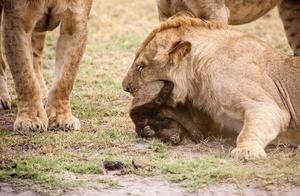
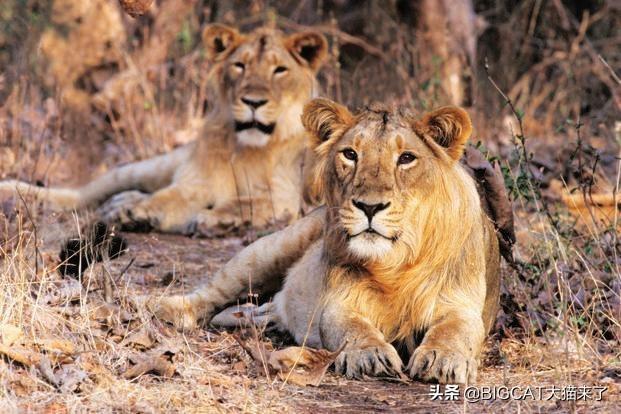
In many African lion documentaries, to record the life of a lion group, animal scientists will give all members of a lion group a name. For adult lions, we can distinguish them by their size, gender, scars, hair etc. characteristics, but for a litter of lion cubs that are almost identical, how to distinguish them? At this time, we need to observe the cubs' whiskers. Experienced animal scientists or photographers will draw their whiskers' features first, and then name the cubs.When encountering one of the cubs next time, you can recognize it according to its whiskers' characteristics.In summary, in the lion population statistics, through
identifying their whiskers, this is a practical and effective method, which can effectively prevent repeated counting and omissions, and the result is more reliable.
The new monitoring method has discovered that the density of wild prey has little impact on the distribution density of Asian lions. Besides estimating the distribution density of Asian lions, scientists also used the new monitoring method to comprehensively assess the density of prey and other factors that may affect the lion population density. We know that carnivorous animals feed on herbivores, and the impact of herbivore population and density through food chain on carnivorous animals. Initially, scientists thought that the distribution density of Asian lions depends on the distribution of natural prey, but after using the new statistical method, the results were opposite: the density of prey in the survey area had little impact on the Asian lion's distribution density. In addition, the survey found that compared with high or uneven altitude areas,the Asian lion prefers to live in flat valleys. Besides,

places where food is placed near to attract lions to tourists' observation have a higher density of Asian lions. These research findings show that humanfor the sake of developing tourism to attract lions, the behavior of lions and the dynamics of the lion population influenced by human have similar characteristics. So, how can this finding be applied in the protection of lions? It has a certain warning effect on people, so people can recognize the negative impact of their behavior on the lion population; on the other hand, it can be used as a basic guideline, to help people formulate more targeted protection measures, avoid useless behavior, and do a good job of restoring the lion population.
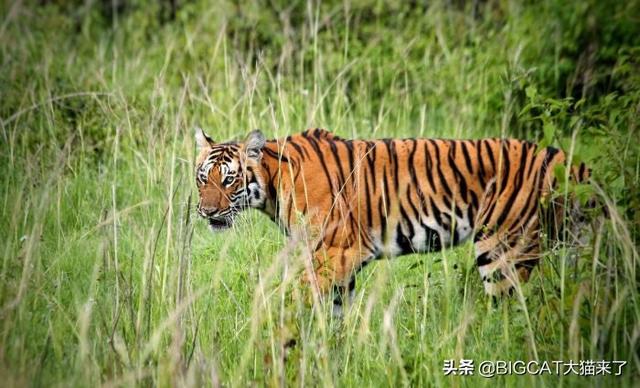
Similar monitoring methods have been used in tiger statistics. If saying that lion's whiskers are lion's fingerprints, then tiger's stripes are like tiger's fingerprints. There is no two tigers' stripes are the same on earth. Lion's fur color is relatively monotonous, and there are no obvious spots on the fur, so identifying different lions through whiskers is a practical and effective method, which can effectively prevent repeated counting and omissions, and the result is more reliable. The new monitoring method has discovered that the density of wild prey has little impact on the distribution density of Asian lions. In 2019, India counted 2967 tigers. In this tiger census, scientists used the method of 'stripes identification' to identify different tigers, so that the statistical results are more accurate. Extension: What role do cat's whiskers play?

Of course, for lions, they will not identify different lions by their whiskers. However, whiskers still play a big role for them, such as their tactile function: each cat's whiskers have many sensory nerves at the end, cats can sense the surrounding environment through whiskers, detect distance, this provides convenience for life. Besides, the state of the whiskers can also reflect the lion's physical condition. For example, if a lion's whiskers are long and straight, it indicates that its physical condition is good; if a lion's whiskers are curved or yellowed, it often indicates that this lion is malnourished or sick. Animal keepers in zoos often judge the nutritional status of tigers, lions and leopards by their whiskers. In summary, any endangered species' management depends on its population range, population density, population number, and the threats it currently faces. This method of identifying Asian lions' whiskers to identify different lions is more scientific, more reliable results, it can help animal protection workers make more targeted protection measures, avoid useless behavior, and do a good job of restoring the lion population.
20192967“”