Breaking! Anhui's Yellow Mountain Tops Weibo Hot Search – All Because of a ‘Rat’?
Yellow Mountain's this species topped Weibo's trending list

According to reports, recently, researchers discovered two new species of mammals in the Yellow Mountain Scenic Area, which have been confirmed through research to be two new species of Crocidura
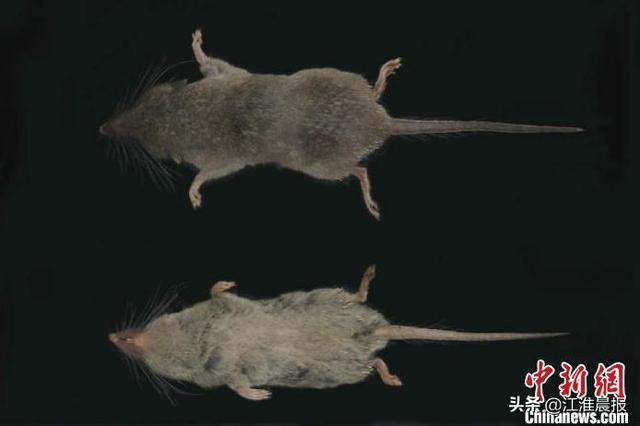
Anhui Crocidura, Zhang Baowei, taken
A joint project between the Yellow Mountain Scenic Area Management Committee's Garden and Landscape Division and the Ministry of Ecology and Environment's Nanjing Environmental Science Institute and Anhui University has recently made significant progress in the classification study of the Crocidura genus in the Yellow Mountain Scenic Area
The project group analyzed and confirmed through morphological and phylogenetic analysis that the Crocidura species collected from the Fuxi Monkey Valley in the Yellow Mountain Scenic Area are two new species, which have been named 'Anhui Crocidura' (Crociduraanhuiensis) and 'Huangshan Small Crocidura' (Crocidurahuangshanensis).
This research result was published in the English edition of 'ZoologicalSystematics' of the Institute of Zoology, Chinese Academy of Sciences, in the 4th issue of 2019 and the 1st issue of 2020
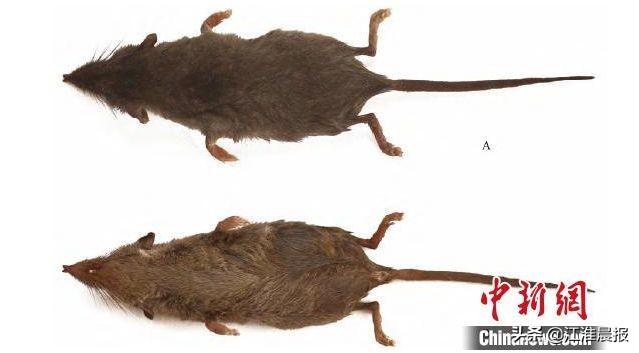
Huangshan Small Crocidura, Zhang Baowei, taken
Muskrats belong to the rodent order, Muscridae, Crocidura genus, which are distributed in Asia, Europe and Africa, most species are concentrated in tropical and subtropical regions, living in forests, plains, hills and mountains, mainly feeding on soil insects, also eating some plants' flowers, fruits and seeds. Crocidura is similar to rats, with three types of body size: large, medium and small.
Anhui Crocidura: small eyes; round ears; the back fur is grayish-brown and darker than the abdomen; the tail is similar in color to the fur, with a length of only 76% of the head and body length; the tail is almost half exposed, with sparse short bristly hairs, the tail tip has a tuft of bristly hairs; the limbs are half exposed, pink, with sparse short hairs at the ankles; the skull is long and narrow, the first pair of upper incisors is developed, the sagittal ridge is distinct. Samples (6) weigh 10.52-13.51g, head and body length 60.88-78.10mm, tail length 48.34-59.24mm, forefoot length 9.20-9.87, hindfoot length 13.52-14.83mm, ear length 7.74-9.24mm, skull length 20.81-22.38mm.
Huangshan Small Crocidura: small nose; long whiskers to the bottom of the ears; small eyes; round ears with ear shells having distinct basal hairs; the fur is grayish-brown, the back is slightly black; the limbs are slender, with five fingers (toes) on the front and back feet, the feet have small and fleshy protuberances, the finger pads and toe pads are pink, half exposed, the ankle has sparse brown hairs; the tail is about 76% of the head and body length, almost bare, with a small amount of long bristly hairs; the skull is long and flat, without zygomatic arches, the first pair of upper incisors are curved and developed, the sagittal ridge is obvious. Samples (5) weigh 4.35-7.77g, head and body length 50.45-61.97mm, tail length 39.64-45.03mm, forefoot length 6.99-8.33mm, hindfoot length 11.84-13.82mm, ear length 7.86-8.70mm, skull length 16.88-17.90mm.
Researchers believe that the two new species discovered in the Yellow Mountain Scenic Area all belong to medium-sized muskrats. The discovery of Anhui Crocidura and Huangshan Small Crocidura, two new species, further enriches the mammalian diversity of Yellow Mountain Scenic Area, especially the order Carnivora, and fills the gap in the study of the Crocidura genus in the area.