·“”
Beautiful Yunnan – Biodiversity Encyclopedia
Today
is to introduce
Vertebrate·Red-billed Bulbul

Biodiversity EncyclopediaVertebrate·Red-billed Bulbul
Red-billed Bulbul
Cuculus canorus
Vertebrate, Bird Order, Cuckoo Family, Dodo Family. Also known as Bulbul, Kaku, and Guo Gong. Widely distributed throughout China, photo taken in Dulong River.
Red-billed Bulbuls are solitary, often active alone, occasionally in pairs, rarely in groups, their calls are loud and clear, repeatedly ringing, which is the origin of the name 'Bulbul'. They are mainly summer migrants in China, flying quickly and powerfully, moving in straight lines. In 2016, bird scholars and bird watchers from China and the United Kingdom jointly conducted the 'Beijing Red-billed Bulbul Project' through attaching satellite trackers to Red-billed Bulbuls, discovering that their migration distance can reach 12000 kilometers.
They eat a variety of caterpillars, especially during the breeding period, almost exclusively feeding on caterpillars, and also eating slugs and other soft insects, occasionally eating hard-shelled insects. From a human perspective, they are beneficial birds.
However, for other bird species living in the same area, the Red-billed Bulbul is a natural born schemer and executioner. Living with the Red-billed Bulbul is like dancing with the devil.
All of this stems from the Red-billed Bulbul's parasitic nesting behavior.
Parasitic nesting refers to the behavior of birds not building nests themselves, but laying eggs in the nests of other bird species, and the host bird hatching and raising the young. Research shows that among the one hundred thousand bird species, one hundred species have the behavior of parasitic nesting, and the Red-billed Bulbul is the most typical.
When the Red-billed Bulbul reaches the breeding period, it will observe nearby birds that are also in the breeding period, such as the egg recognition ability, breeding time, habitat quality, nest characteristics, and diet of these birds. Usually, the Crested Tit, the Yellow Wagtail, the Sparrow, the Magpie, the Tawny Pipit, the Jay, the Sparrowhawk, the Brown Firecrest, the Grey-headed Wagtail, etc. are its targets.
Once it discovers that female birds are laying eggs, the Red-billed Bulbul will quickly lay eggs and, when the other birds are not present, will put its own eggs into the bird's nests, and generally, the Red-billed Bulbul will only put one of its own eggs in a bird's nest.
Will the other birds not notice? This also has to be mentioned – the Red-billed Bulbul's 'sneaking'. Researchers found that the color of the Red-billed Bulbul's eggs varies depending on the host bird, that is, the Red-billed Bulbul's eggs can mimic the color and patterns of different host eggs.
This is even more cruel.
Typically, the Red-billed Bulbul chick will hatch first, then use its back to push other bird eggs out of the nest, through killing the 'parental' chicks of the other birds, to achieve exclusivity. So people will see small Crested Tits or other birds diligently feed the larger Red-billed Bulbul chicks because they think these chicks are their only children.
After growing up, will the Red-billed Bulbuls and their parents live in harmony? No, they will just flap their wings to find their relatives.

Biodiversity EncyclopediaVertebrate·Red-billed Bulbul
Left Lingren, Nature Photographer, Special Editor of 'China National Geography', Long-term filming domestic wildlife and plants, committed to expressing the beauty of biodiversity.
Let's review the knowledge points in the previous episodes of the 'Biodiversity Encyclopedia'!
I love 'being beautiful' – Arthropods·Lily Aphid
Biodiversity EncyclopediaVertebrate·Red-billed Bulbul
Who dares to compare with me in cuteness – Vertebrate•Brown-eared Bulbul
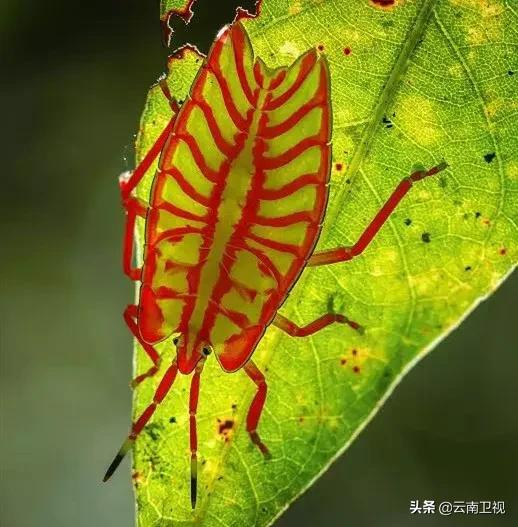
Biodiversity EncyclopediaVertebrate·Red-billed Bulbul
There is a beauty called Green Velvet Clover – Seed Plant·Leafy Velvet Clover
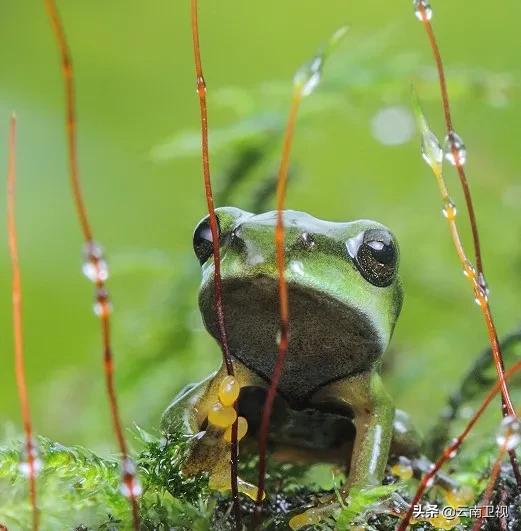
Biodiversity EncyclopediaVertebrate·Red-billed Bulbul
'The 'Double Life' of Harmony and Violence – Arthropods·Yellow Star Locust

Biodiversity EncyclopediaVertebrate·Red-billed Bulbul
Source: Yunnan Release
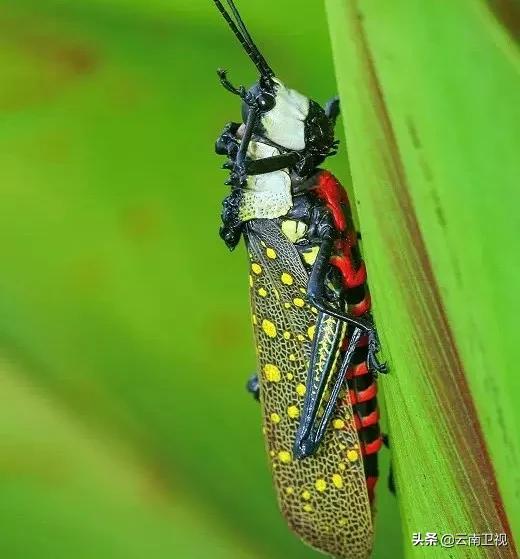
Editor: Dani
Responsible Editor: Song Lijin
Supervised by: Mu Liying
Channel Director: Du Xiang
Editor-in-chief: Li Xiaofeng
Producer/Chief Producer: He YanNing
/