Highly Specialized Spiral Structure, What Body Part Does It Belong To? Mouth, Back or Tail?
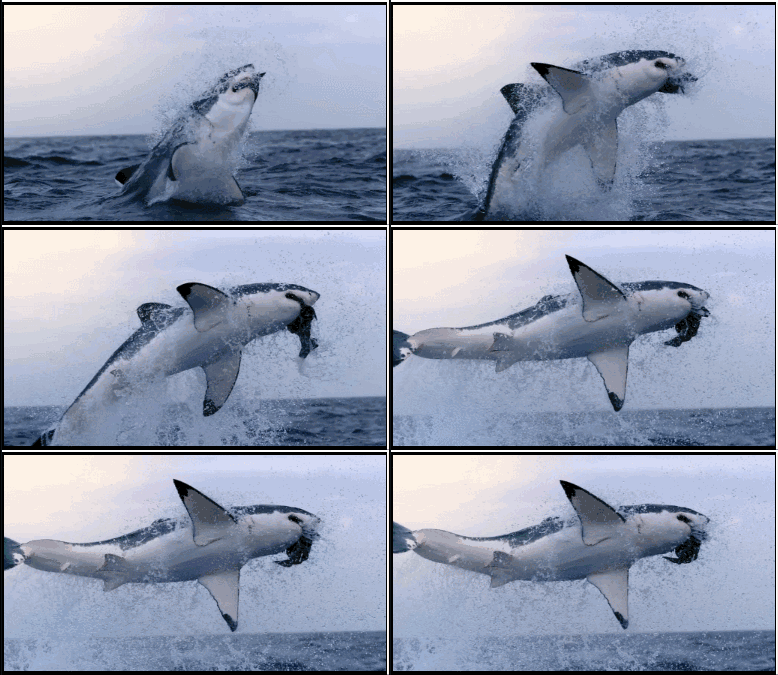
In all the perplexing fossil mysteries, few are as enduring as the Spiral Tooth Shark.
It all began with a peculiar fossil fragment.
In 1899, paleontologist Alexander Kabinosky discovered a spiral-toothed fossil on the Ural Mountains, the fossil featured a regular spiral winding, easily leading one to think it might be a shelled nautilus or a similar shelled creature.
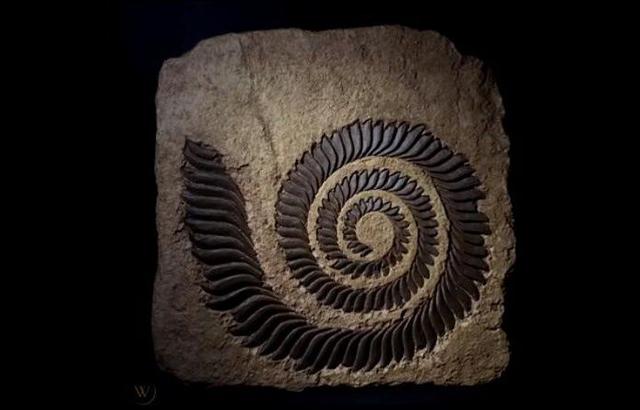
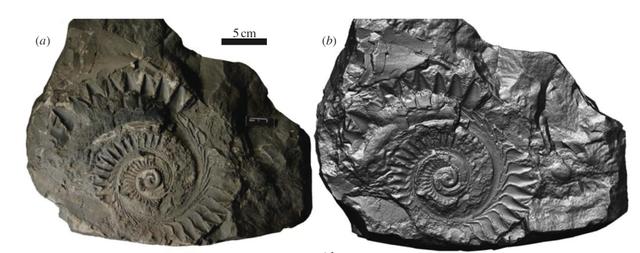
However, after careful consideration, Kabinosky ultimately believed it might be a part of a shark-like fish, as shark skeletons are made of cartilage, which is difficult to preserve, thus such a spiral structure would likely be similar to teeth.
Given the facts, this 2.7-million-year-old creature was named Spiral Tooth Shark.
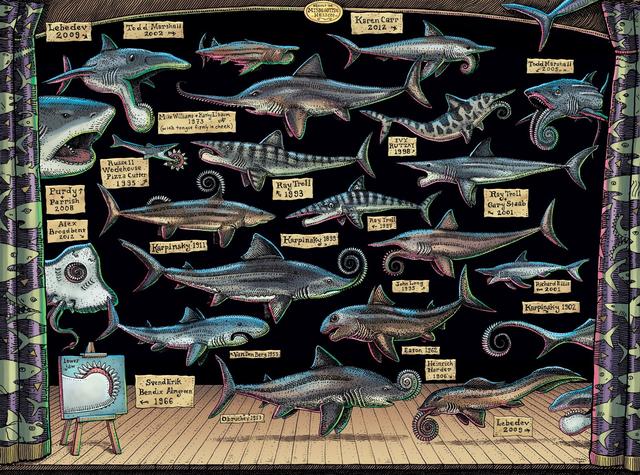
The fossil is just a part of the body, and scientists have argued about what this ancient creature looked like for over a century.
For a century, people have been guessing its appearance, where exactly did the spiral teeth grow?
Some believed the spiral teeth grew on the jawbone, others thought they grew in the center of the back, and still others believed they grew in the nose, the jaw, the dorsal fin, the tail fin, or even in the depths of the throat.
There was no obvious sign indicating where this unusual structure was best suited to be installed.
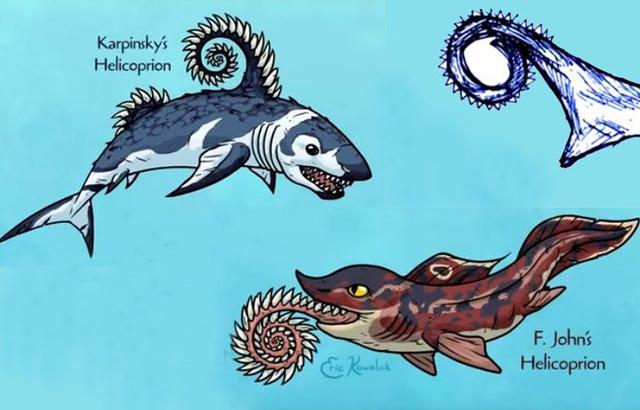
Until researchers at Idaho State University used CT scanning technology to virtually reconstruct the Spiral Tooth Shark jawbone, thus revealing some of the mysteries surrounding this large spiral-shaped fossil.
To date, more than 150 such fossils have been found worldwide, and the Idaho State University Natural History Museum houses the largest Spiral Tooth Shark spiral tooth fossil, which consists of 117 teeth, each measuring 23cm in diameter, after virtual reconstruction of the jawbone, answering the position where this fossil grew on the animal.
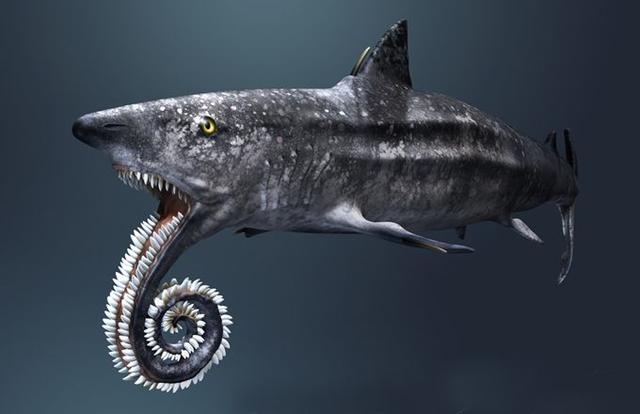
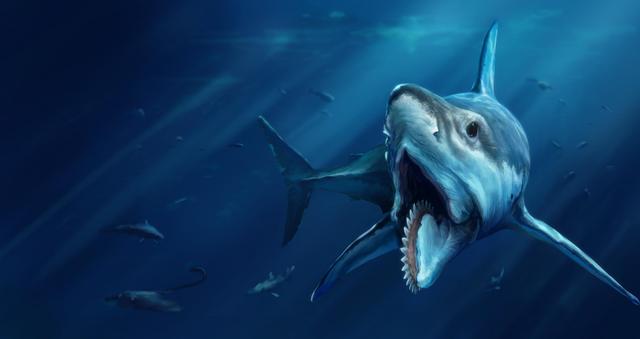
The spiral teeth are located at the back of the lower jaw, in a ‘toothed’ shape, and the jawbone has a mechanism for backward rolling and cutting.
According to current science, we know that sharks have teeth that replace themselves like a conveyor belt, once a tooth falls out, the following teeth automatically take its place, while the Spiral Tooth Shark’s teeth do not fall out, the old teeth are squeezed together, and more and more teeth accumulate.
Most paleontologists believe that these teeth grow at the end of the lower jaw, despite this, the debate continues among artists and scientists.
What a terrifying spiral tooth – is it completely enclosed in the chin, or awkwardly hanging outside the mouth?
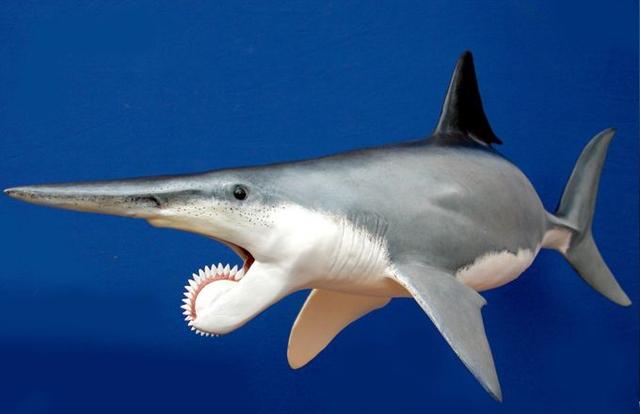
The Spiral Tooth Shark did not have a long chin, nor was it a true shark.
Contrary to earlier bold speculations, the Idaho scientists believe that the spiral teeth were completely filled in the jawbone, and the jaw joint is located behind the back of the spiral teeth, and the spiral teeth are supported by the cartilage of the two sides of the jawbone.
More surprisingly, the Spiral Tooth Shark had no teeth on its upper jaw.
The spiral-increasing teeth are the entire weapon of this creature.
Another significant discovery is that they are not true sharks, nor are they the ancestors of sharks.
People always thought that Spiral Tooth Shark was a shark, although the name also contains ‘shark’, but through the skull fragments, Spiral Tooth Shark is closely related to ray-finned fish, generally 7-8 meters long.
How did the Spiral Tooth Shark use its spiral teeth to hunt?
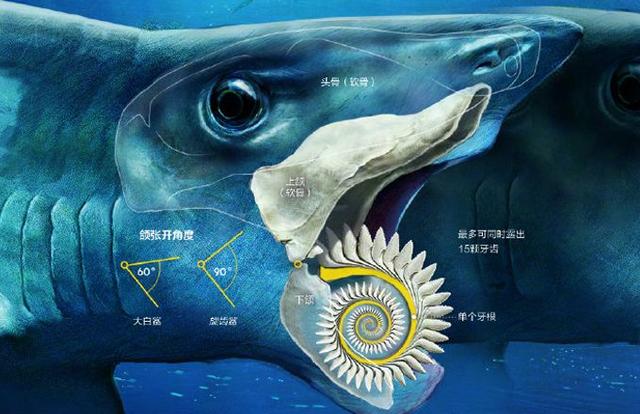
The Spiral Tooth Shark's teeth are like a circular saw, when the jaw closes, the teeth rotate like gears, and the teeth rotate backward to cut open the shell.
Such a hunting strategy was effective for life 27 million years ago, including squid and other soft-bodied creatures, especially nautilus and trilobites (extinct soft-bodied animals), the teeth will directly eat the meat in the shell.
Some scientists also believe that this device was made for eating trilobites.
Finally
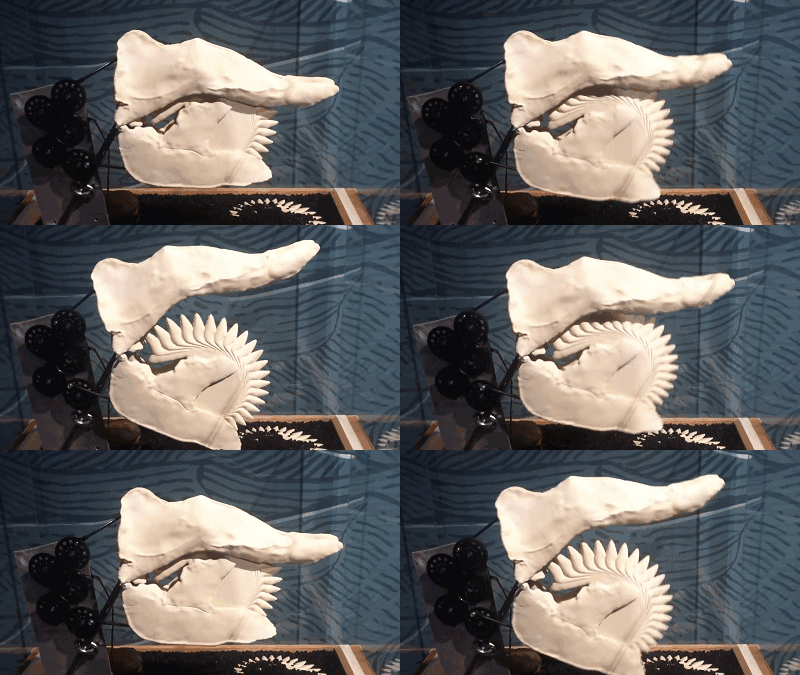
Research on the Spiral Tooth Shark is still ongoing, and our understanding of this peculiar creature is still very limited.
The Spiral Tooth Shark is a lucky creature.
It has only one spiral weapon, it escaped the Permian extinction, and even dominated the ocean for 800,000 years.
However, this extremely specialized feature often leads to extinction if a slight change occurs, and the fate of the Spiral Tooth Shark is the same.