Why Do African Elephants Like to Destroy Trees?
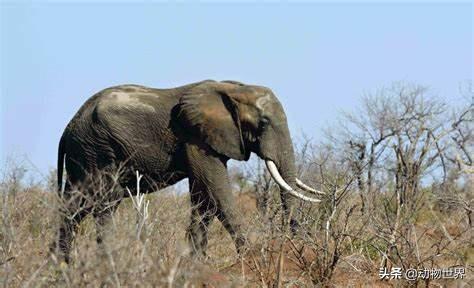
The African elephant is currently the largest land mammal in the world, widely distributed across the African continent. Common African elephants prefer to live in herds, with each herd led by an older female, forming herds of varying sizes, typically 20-30 individuals. Most of the members are its female offspring.
Males, with an average shoulder height of 3.3 meters and a weight of 5.5 tons;
Females, with an average shoulder height of 2.8 meters and a weight of 3.7 tons.
I used to play a computer game called 'Zoo Tycoon', which included the breeding of African elephants. There was one problem I always found confusing: that as soon as trees were planted in the enclosure, they would be destroyed, and if they weren't planted, the elephants would be unhappy, raising a demand.
In numerous documentaries, African elephants destroying trees frequently appears.
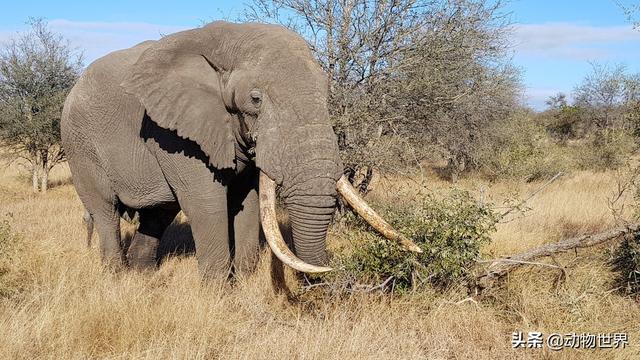
Why is this the case?
The usual explanation is for emotional release or to display their status. Recent observations and research have shown that this behavior is multifaceted, not entirely random, and has a strong purpose.
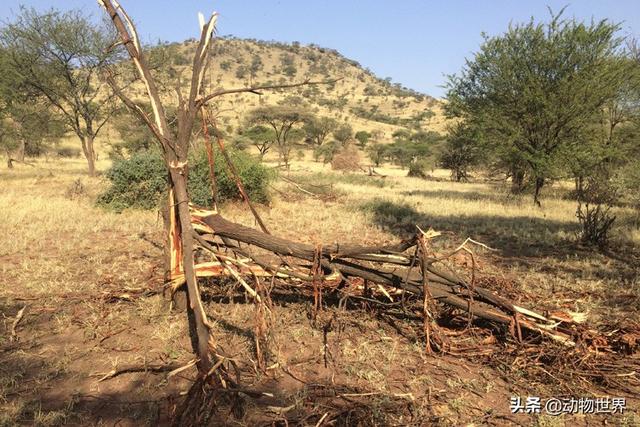
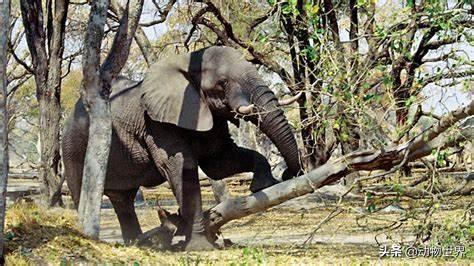
One point caught my attention: Elephants have enough intelligence to observe relationships and developments between organisms, they push and peel at trees to create a 'farm' for themselves or their herd. Fallen trees will grow vigorously from the broken ends, and the trunks around fallen trees are easier to grow other plants. That way, even if the branches and leaves of a tree are eaten, it will 'create' new 'flavors' in a shorter time than the natural recovery of a normal tree.