Four-Like Animals and Snow Leopard Images Captured in Qinghai National Park
China Tibet Net News: Qinghai is one of the regions with the most concentrated global high-altitude biodiversity. According to the 2018 'Qinghai Vertebrate Fauna and Distribution' latest records, the province has 605 wild animal species. It is also the first province in China to undertake the pilot scheme of dual national parks (i.e. Three Rivers Source National Park and Qilian Mountain National Park). Recently, new wildlife sighting images have been discovered in these two national parks, let's take a look together.
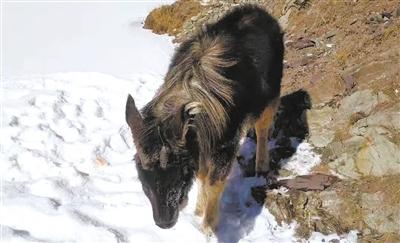
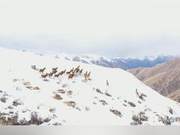
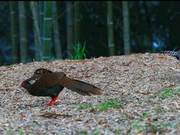
The picture is provided by the Qinghai Zhiduo County Forest Public Security Bureau for national level key protection animal, the Tibetan gazelle.
On February 13th, the Tibetan gazelle was recorded in Dasheng Village, Colorful Township, Zhiduo County, Qinghai Province, within the territory of Yushu Tibetan Autonomous Prefecture. The Tibetan gazelle is also known as 'Mingzang sheep', belonging to the Bovidae family, a typical forest-dwelling mammal, mainly active at altitudes of 1000 to 4400 meters in conifer-mixed forests, coniferous forests or rocky shrubs. Its horns are not like deer, its hooves are not like cows, its head is not like sheep, and its tail is not like donkeys, so people call it 'Four Unlike' together with domestic reindeer, Bactrian camels and Elks.
Currently, the Tibetan gazelle has been recorded in Zhiduo County for the first time, and the appearance of the Tibetan gazelle reflects that the ecosystem in the Three Rivers Source area is continuously improving, and also reflects that the protection of wild animal resources in the Three Rivers Source National Park has achieved remarkable results.
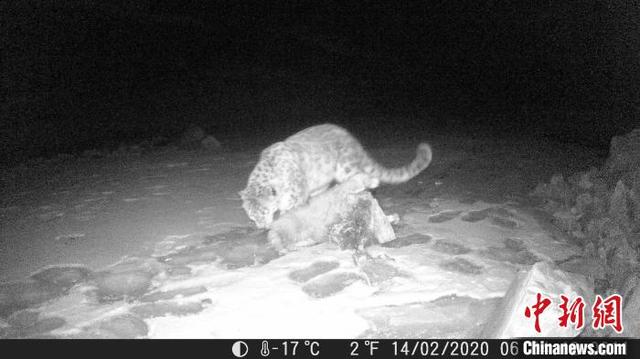
The screenshot is a clear image of snow leopard captured by infrared cameras in Xiaqier Mountain, Haian County, Qinghai Province, by the Qinghai Tibetan Autonomous Prefecture 3 on March 3rd. Image source: Chinanews.com
Qilian Mountain Natural Protection Association introduced on March 3rd that the association's contracted photographers captured a clear image of snow leopard in Xiaqier Mountain, Haian County, Qinghai Province, using infrared cameras. This is the first time the snow leopard has appeared in this area. This shows that the ecological environment is getting better and better, and wild animals can survive and grow.
Snow leopards are often referred to as 'the barometer of the health of the global high-altitude ecosystem'. Their distribution area spans across China and Kazakhstan, India, Nepal, Pakistan, Mongolia and other 12 countries. Currently, China is the largest distribution country of snow leopards, covering 60% of their habitat. 'As a keystone species, snow leopard, we hope to protect snow leopards while protecting the ecosystem behind them.'
Qinghai is one of the regions with the most concentrated global high-altitude biodiversity, species diversity, genetic diversity and genetic diversity. It is a repository of high-altitude biological natural species. Protecting wild plants and animals is directly related to the global ecological health and safety, and has important significance for protecting the common home of mankind and achieving sustainable human cultural inheritance and economic and social development. (China Tibet Net, comprehensively/Chen Mengmeng)