Hunchun Jingxin Marsh Welcomes Thousands of Migratory Birds, White-Necked Cranes Truly 'Stand Out'
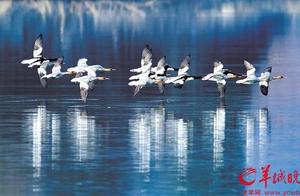
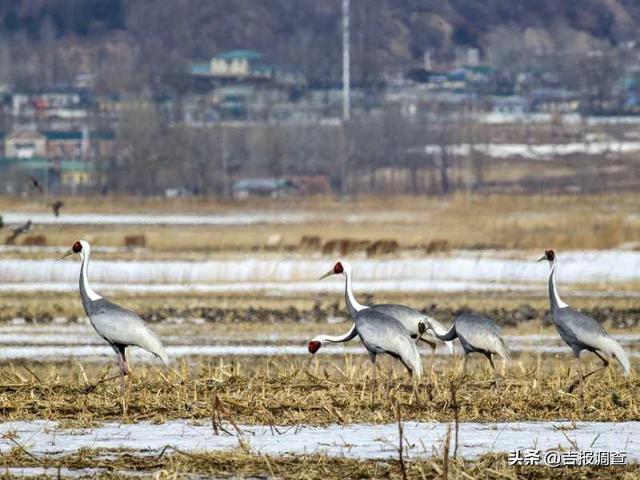
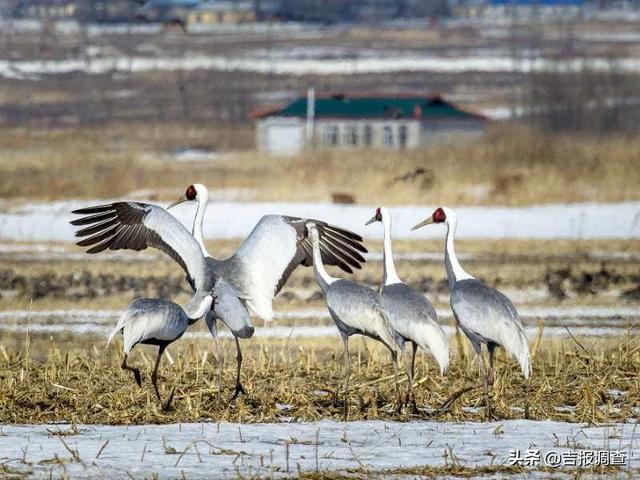
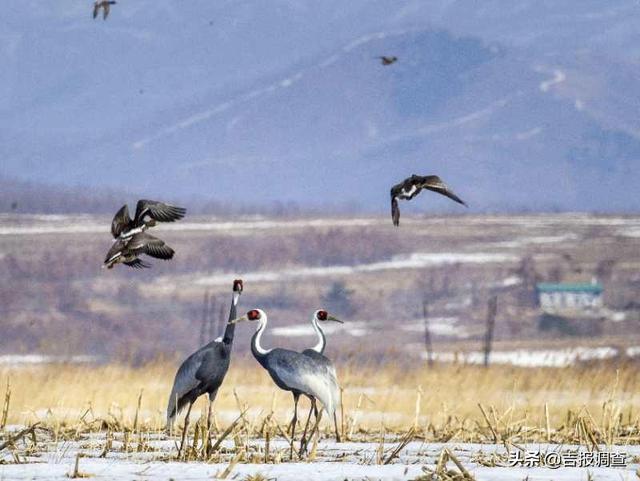
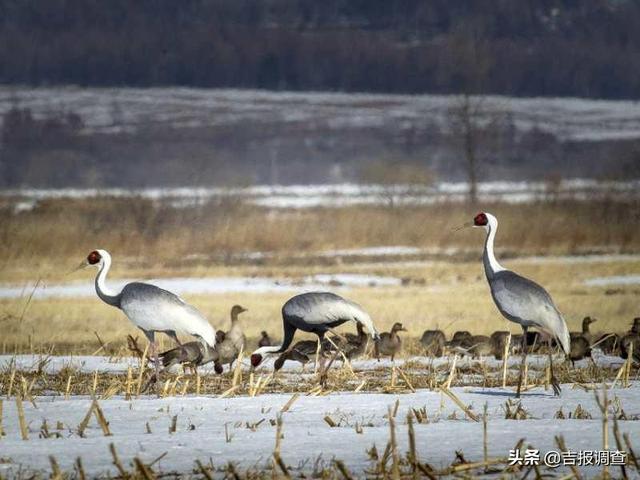
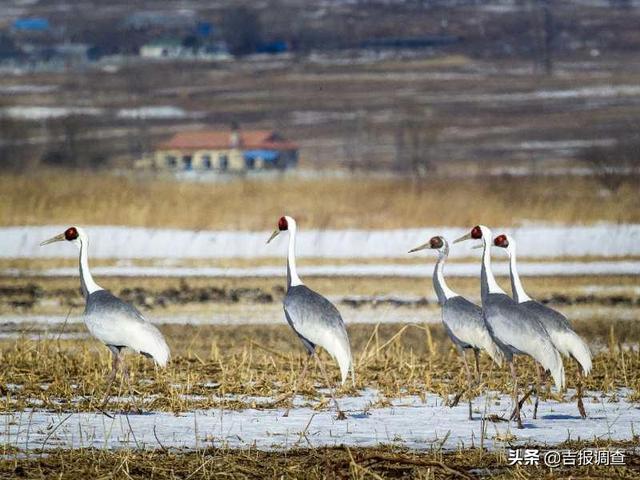
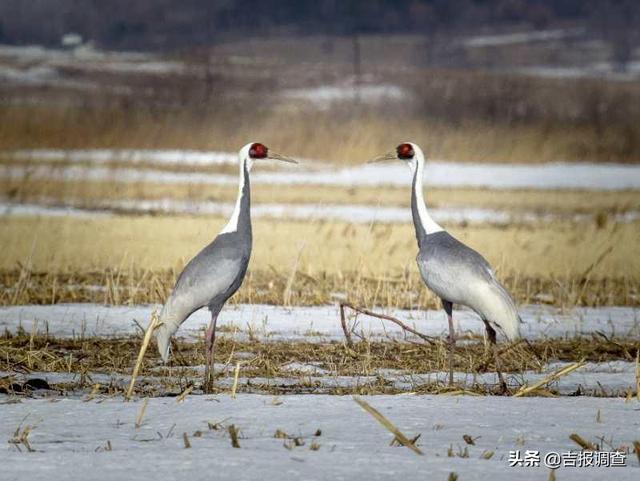
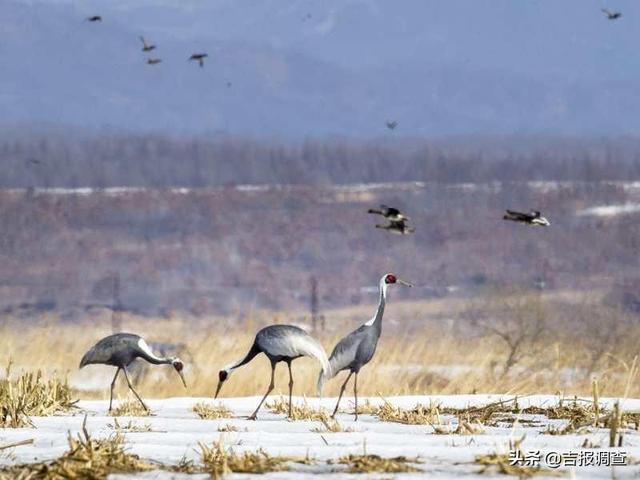
On March 14th, photography enthusiasts in Hunchun captured a flock of white-necked cranes in Jingxin Marsh. The cranes leisurely foraged for food, chased, danced, and soared in the marsh.
According to the Wild Resource Protection Office of Hunchun Northeast Tiger National Nature Reserve Monitoring, these birds numbered thousands, with the white-necked crane being one of them. Jingxin Marsh is located in the key state-owned forest area under the jurisdiction of the Changbaishan Forestry Group. The routes of migration between China, Japan and Australia converge here. Every spring and autumn, tens of thousands of migratory birds stop to forage and replenish their energy.
The white-necked crane (scientific name: *Grus vipio*) is similar in shape to the red-crowned crane, but slightly smaller. Its upper body is slate gray, and its tail feathers are dark gray with broad black markings at the ends. When feeding, they primarily use their beaks to peck at food or to rake open the surface soil with their beaks, then peck at the seeds and rhizomes buried beneath. This bird is a rare captive ornamental bird, primarily breeding in northeast China's Heilongjiang and Jilin provinces and northern regions. During winter, some migrate to Jiangsu, Anhui, and Jiangxi provinces’ wetlands. The white-necked crane is a national level secondary protected precious bird, and its number is scarce.
In spring, it starts arriving gradually from the end of March and lasts until the end of April. In autumn, it starts leaving the breeding ground in September and lasts until mid-November to early December. During migration, they form family groups or small groups composed of several family groups. Hunchun Jingxin Marsh is their station.
Warm tips: Jingxin Marsh is temporarily not open to photographers from outside.
Jilin Daily Publishing House Production
Planning: Jiang Zhongxiao
Author: Bu Lifeng
Photography: Liu Longxi
Editor: Liu Ying