Small Flying Squirrel (Pteromys volans)
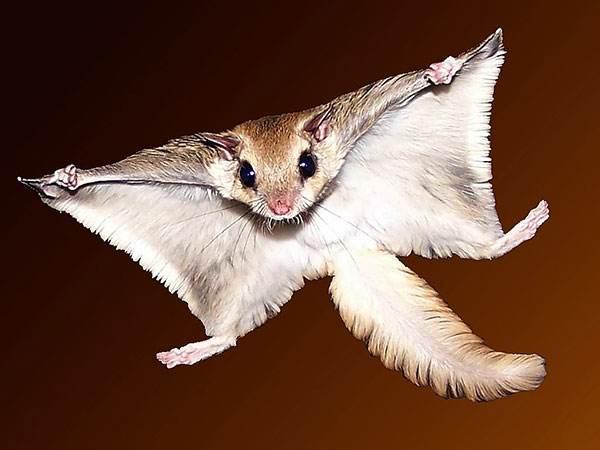
Flying squirrel (Pteromys volans), a species of squirrel in the genus Pteromys and the squirrel family Sciuridae. Flying squirrels are small, with a blunt snout, large eyes, normal ears, short and stout limbs, and a flattened tail.
Flying squirrels have no hibernation habits, they are nocturnal, they often climb trees or glide between branches, they feed on pine nuts, berries, and young twigs, they produce 1 offspring per year, with 2-4 offspring per litter, they live in temperate and cold-temperate coniferous or mixed coniferous-broadleaf forests, and are distributed in China, Estonia, Finland, Japan, the DPRK, South Korea, Latvia, Mongolia, Russia.
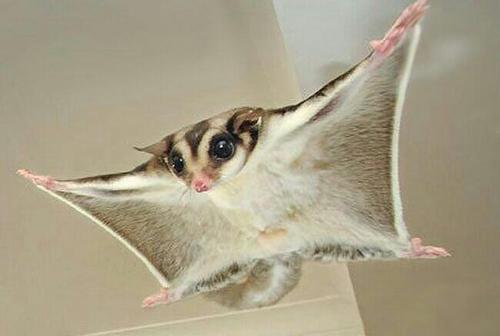
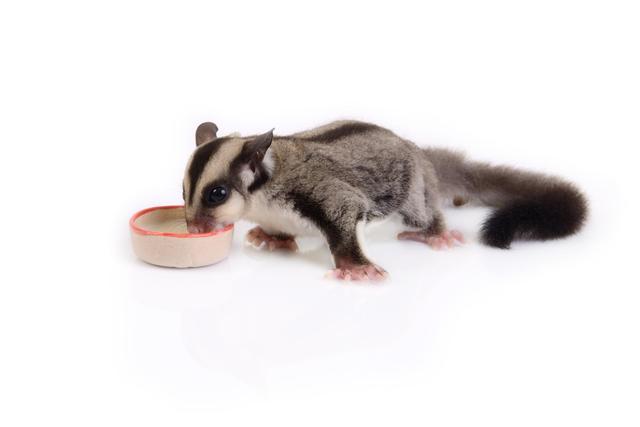
Flying squirrels are small, with a body length less than 200mm. They have a blunt snout. They have large eyes, normal ears, and short, stout limbs. The forefeet have bare palms with palm pads and finger pads, the hind feet have a base covered in short hair, without palm pads, but with 4 toe pads. The tail is flattened, with the tail hair arranged in a feather-like manner. Female nipples have 4 pairs, namely 2 pairs in the chest and 2 pairs in the abdomen.
Flying squirrels have two colorations in summer and winter, summer hair on the back is brownish-gray, with the base gray and the tips brown; in the back hair, there are black hairs with the base black, the upper segment gray, and the tip black, so the entire back appears gray black striped. The membrane is basically the same color as the back. The abdomen is gray, the hair on the tips is white, there is a dark-brown eye ring around the eye sockets, and the ears are covered with short brown hair. The four feet have brown-yellow back feet, and the foot bases are covered in pale brown hair. The tail has dark brown streaks with gray, and the sides are orange-yellow.
The full length of the flying squirrel's skull does not exceed 41mm. The snout is short, only 1/4 of the skull length. The brain skull part is rounded, with a notch above the eye socket, and a protrusion extending outwards along the eye socket. The cheekbones are relatively flat, the nasal bone is short, and its end is less than the width of the forejaw end. The pinna is large, and its length is greater than the length of the upper teeth. Thepillow bone socketis nearly circular.
The molars of the flying squirrel have a smooth surface in front of the teeth, and the first upper incisors are very small, the second upper incisors are large, and the crown surface of the teeth is greater than that of the following(premolar) crown surface. The(premolar) crown type is low, and the chewing surface is very clear, which is similar to the original form of squirrel.
Flying squirrels live in temperate and cold-temperate coniferous or mixed coniferous-broadleaf forests. In Qinghai, they usually live in dense forest environments, and the habitat mainly has spruce, birch, black birch and willow trees. The flying squirrel has no hibernation habits, they are nocturnal, they often act after sunset, and occasionally appear during the day. When disturbed, they slowly crawl to the entrance of the hole, some of them immediately jump out and slide, after landing, they quickly climb up the nearby tree trunk, and finally hide in the branches or dense foliage, some of them often stay in the hole to observe the surrounding movement and stillness, and then jump out to glide or stay in the hole. They often climb trees or glide between branches. When gliding, the tail is flat and stretched out, and the limbs are extended to spread the skin membrane, they can fall as far as 50m.
Flying squirrels build nests and use tree species mainly for willow and birch, occupying the nest trees, due to the hollow of the stem, the tree will soon die, and the flying squirrel lives in it. The depth of the hole is continuously deepened, but the hole diameter always remains unchanged, and the number of entrances sometimes increases. The bottom of the nest is mainly made of moss, and moss is filled with it. The height of the hole entrance of the flying squirrel is irregular, ranging from 2-3m to 6-7m.
Flying squirrels feed on pine nuts, berries, and young twigs, and they also eat mushrooms. At the end of autumn, they often store nuts and other food for the winter.
The predators of flying squirrels include carnivorous cats, weasels and eagles.