Please Note to All Dog Owners: What is Commonly Called ‘Intestine Turning’ in Dogs is Actually a Contagious Disease
Dogs are loyal animals for humans. The saying 'dogs don't care about poverty,' refers to our dogs, no matter how poor our fortunes are, they will remain loyal to their owners. Before, in rural areas, dogs were often kept to guard the house and yard. Now, in rural areas, many people still keep dogs, and in cities, dogs are kept as pets, and dogs are considered members of the family. Whether in rural areas or cities, most people know that dogs 'turn their intestines'. In their opinion, dogs 'turn their intestines' at a certain time, if they succeed, they will survive, if they don't, the dogs will die. Actually, this is a wrong view, dogs don't have 'turn their intestines' syndrome, it's a severe acute viral infection called canine parvovirus infection. And it has a very high mortality rate. It's called 'turn their intestines' because the symptoms of this disease are frequent vomiting and bloody diarrhea. Therefore, everyone must be vigilant and not because of wrong views delay the dog's treatment. Today, let's take a detailed look at dogs' infectious disease – canine parvovirus.
The infectious characteristics of canine parvovirus
Canine parvovirus is an acute, virulent infectious disease caused by canine parvovirus infection. It is mainly transmitted between dogs or dogs without symptoms through the virus. The virus exists in the feces, urine, saliva and vomit of dogs. When these objects contaminate drinking water, food and tools and the environment, the virus infects healthy dogs. That is, when dogs eat canine parvovirus-contaminated food or drink, or even direct contact with infected dogs, they will be infected.
Canine parvovirus is susceptible to all ages, different breeds and sexes of dogs. Clinically, puppies before weaning are more common, and dogs less than 1 month old and adult dogs over 5 years old are less likely to be infected. Purebred dogs are more likely to be infected than crossbred dogs and native dogs. Canine parvovirus can occur throughout the year and has no obvious seasonal characteristics. However, the incidence of the disease is higher in cold, sudden temperature winter-spring seasons. In addition, if the stocking density is too large, the environmental sanitation conditions are poor, it can also increase the risk of canine parvovirus infection, and the mortality rate under such conditions is also high. If infected with other diseases at the same time, the disease will worsen and increase the mortality rate.
Symptoms of Canine Parvovirus
Canine parvovirus is clinically divided into two types: hemorrhagic colitis type and acute myocarditis type.
1, Hemorrhagic Colitis Type of Canine Parvovirus
It mainly occurs in dogs over 2 months old, with an incubation period of generally 7-14 days. The infected dog shows depression, body temperature rises 40-41℃, reduced or stopped eating, vomiting, the initial vomit is white mucus or foam-like liquid, later turns into yellow water foam; shortly afterwards, diarrhea occurs, the feces are yellow or gray, often in the dog's anus, ejected in a jet-like manner, the surface of the feces is covered with mucus or membrane, then the feces contain blood, resembling tomato juice, and has a foul smell. The sick dog quickly dehydrates, showing sunken eyes, poor body condition, severe cases have cool ears and nose, if not treated in time, most of them will suffer from shock and die within 1-3 days after appearing with bloody feces. The mortality rate is 10-50%.
2, Acute Myocarditis Type of Canine Parvovirus
It often occurs in 4-6 week-old puppies, often without any symptoms and suddenly dies, or suffers from severe respiratory distress and then dies. Some dogs recover from hemorrhagic colitis and then suddenly develop heart failure. The symptoms are characterized by extreme depression, refusing to eat, groaning, the conjunctiva is purple, difficulty breathing, the heart makes noises, the heart rate increases, the disease is short and the onset is sudden, usually does not receive treatment before death. Hemorrhagic colitis type is less likely to cause myocarditis.
For canine parvovirus diagnosis, pet hospitals or veterinarians will generally use special test paper for rapid testing, and the accuracy is also high. If breeders don't want to take dogs to the clinic, they can buy these test papers to test. Using cotton swabs to wipe the dog's feces, insert into the sample tube with reaction dilution, draw up the mixed liquid in the sample tube, drop it into the sample hole of the test paper for 4 drops, after 5-10 minutes, if the test paper has 1 red line, it is negative (that is, it is not infected with canine parvovirus); if the test paper has 2 red lines, it is positive (that is, it is diagnosed with canine parvovirus infection).

Raising dogs for canine parvovirus
Canine parvovirus is short in disease course and fast in deterioration. It generally dies within 4-5 days after infection, and about 7 days for the myocarditis type. For hemorrhagic colitis type dogs, if effective anti-vomiting, hemostasis and anti-diarrheal measures are taken, antiviral drugs are given, and intravenous fluids are given to correct the acid-base imbalance and electrolyte disorder, to prevent secondary infection, symptomatic and supportive treatment can achieve good therapeutic effect, and at the same time, hemorrhagic colitis secondary myocarditis should be paid attention to.
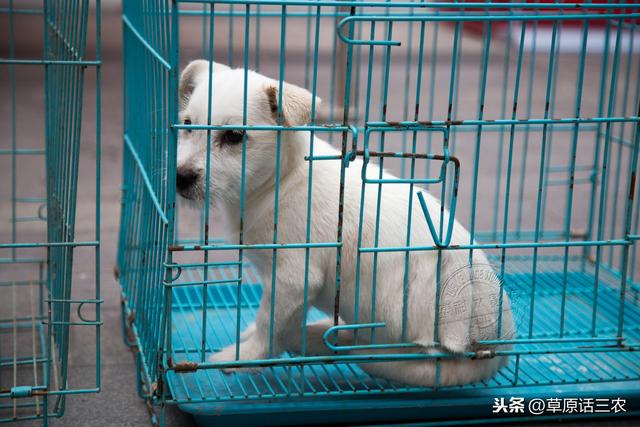
1, Antiviral
Use canine parvovirus high antibody serum 5-10 ml once intramuscularly, or use canine three-way high antibody serum 5-15 ml once intramuscularly, once a day for 3-5 days. If conditions permit, you can input blood from healthy dogs infected with canine parvovirus or convalescent dogs with canine parvovirus, which can achieve better therapeutic effect.
2, Symptomatic Treatment
(1) Anti-vomiting: When the dog vomits, use Metulixin 1-2 mg/kg + Vitamin B6 intramuscularly; or use Atropine 0.5-2 mg/kg, subcutaneous; or use Emmer 1-2 mg/kg intramuscularly. (2) Anti-diarrhea: Take Rhoacid protein tablets 1 tablet to swallow; or take Simethicone 1.5g to swallow. (3) Stop bleeding: Inject 1-4 ml of Hemostat into the muscle; or take Yunnan White medicine to swallow. (4) Adjust the acid-base balance and electrolyte disorder: Use Green's solution 200-500 ml + Vitamin C0.5-1g, once intravenous injection, once a day for 3-5 days, give the dog drink electrolyte solution. (5) Antibacterial and anti-inflammatory, prevent secondary infection: Inject kanamycin, chloramphenicol 10,000 units/kg + Dexamethasone 0.5-1 mg, once 1-2 times a day for 3-5 days. Also, inject benzylpenicillin 30-35 mg/kg, once a day for 3 days.
Preventing Canine Parvovirus
1, Canine parvovirus is fast in onset, once it occurs, it should immediately take comprehensive prevention measures, isolate sick dogs, disinfect kennels and tools and venues with 2-4% alkali water or 10-20% bleaching powder solution, can achieve good prevention effect. 2, Vaccination or booster with canine parvovirus vaccine or two-way vaccine, five-way vaccine. If there is no outbreak area, at 10-12 weeks of age, the first immunization, and then immunization 1 time every 1 month, continuously 2-3 times, can produce protective effect; if there is an outbreak area, at 6-8 weeks of age, perform the first immunization and booster, and also every 1 month immunization 1 time, continuously immunization 2-3 times, can protect for one year; adult dogs should be immunized once every 6 months.
4200——500+C0.5——13——5
51/+0.5——11——23——530——35/1——23
12——4%10——20%
210——121112——36——8112——361
“”