The World's Largest Terrestrial Crab, Able to Crack Coconuts, Now Struggling on Local Residents' Tables
Today, we introduce a creature that can crush bones, feeds on small cats and rats, and has a spider-like appearance as a giant crab.
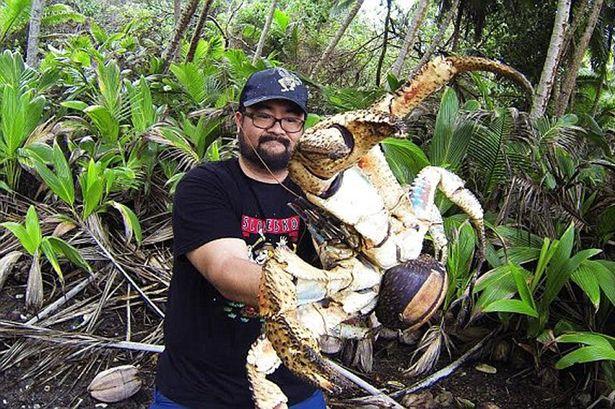
Coconut crabs are the largest terrestrial crustaceans and the largest terrestrial crabs, typically weighing 3kg and up to 7kg, about the size of a small dog.
At a glance, these giant crabs look like aliens from outer space, it's really not a biological creature on Earth, the spider-like appearance is fascinating, but some facts also make people shudder.
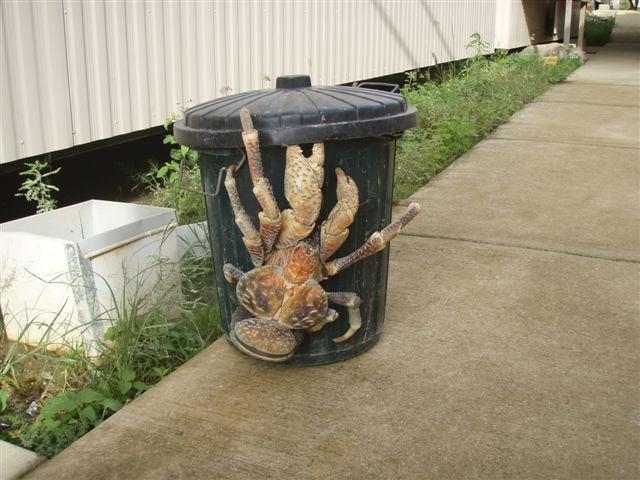
It can grow very large, some even as big as a trash can
Coconut crabs are also a type of hermit crab, like other species, coconut crabs started their lives in the sea, freely floating, until a certain time, they will live on land
Due to the absence of a shell like hermit crabs, the body parts of coconut crabs can grow freely, like 'Invincible Hulk', it broke free, with a more ferocious and stronger appearance
Thus, the title of the largest terrestrial crustacean came into being.
Coming from the ocean, but it will drown if it stays in water for too long
Coconut crabs have a good life, distributed in the surrounding waters of the Indian Ocean and part of the Pacific Islands, these land animals can survive 30-60 years
Unlike most crabs, this giant creature has well adapted to life on land, if it stays in the water for too long, it will drown
Originally a marine creature, when living on land, it has to face the problems of breathing and maintaining moisture
Coconut crabs have a lot of blood vessels in their gills, which are used for breathing, and there is sponge tissue around the gills, which must be kept moist, it uses its legs to spray water onto itself, it may also drink some seawater to maintain water salt balance
Most notably, coconut crabs avoid the sun to maintain moisture, which is a typical nocturnal animal
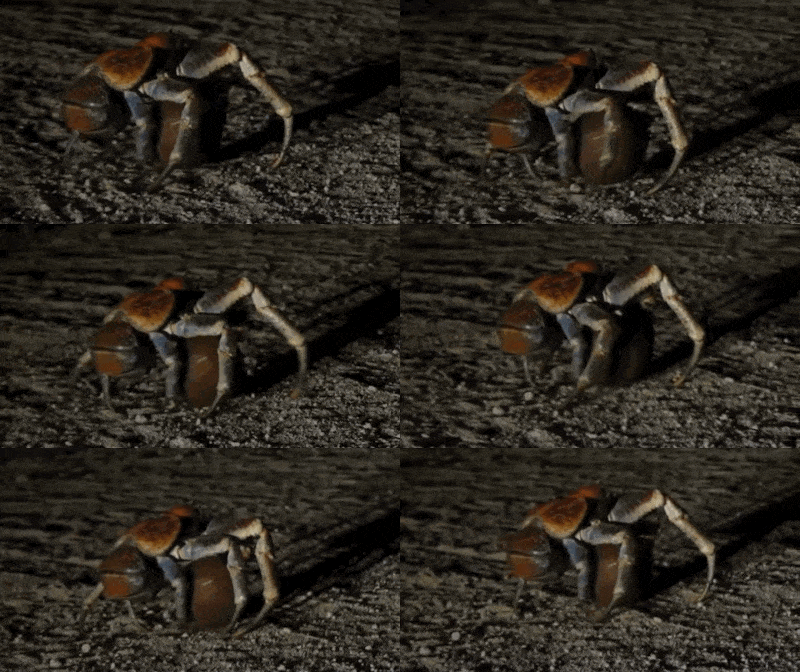
They love to eat coconuts, so they learned how to climb trees and open coconuts
Coconut crabs are omnivorous, as the name suggests, they love coconuts
To get to coconuts, they practiced climbing, and know that coconut trees can be as high as 18 meters, to get to coconuts, they developed strong legs and claws
Like other crustaceans, the coconut crab's body is divided into different parts
The front section is called the head and chest, with 10 legs and a abdomen, two front legs have strong claws, followed by two strong legs for walking, this combination allows them to climb vertical objects like trees
The fourth pair of small legs has pincer-like claws for precise actions such as mating, laying eggs, or building nests
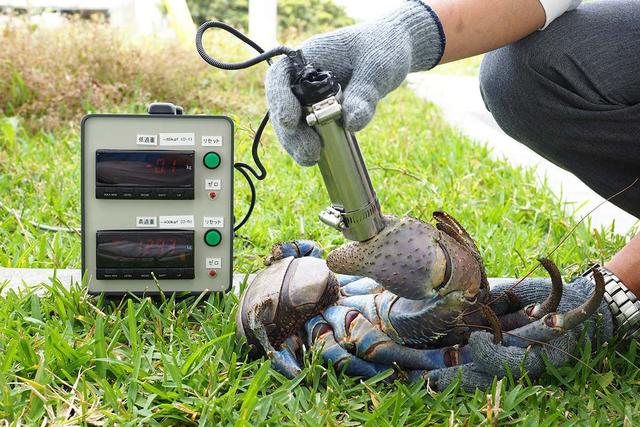
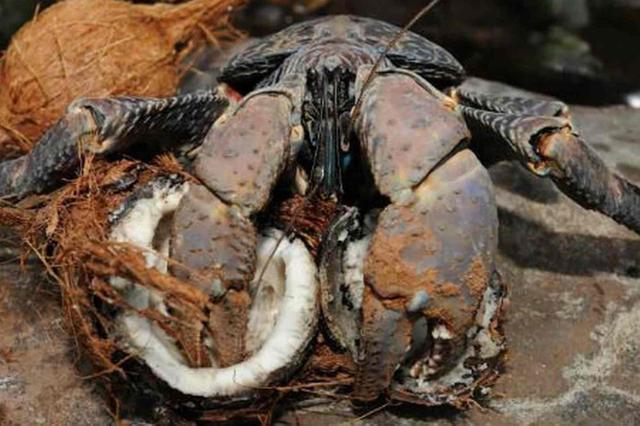
Huge claws can flip over plants or rocks weighing up to 50 pounds, let alone opening coconuts
Coconut shells are notoriously hard, but coconut crabs are powerless in front of them
At first, they will first tear open the shell, one fiber after another, until all the hairs on the shell are removed, this process may take several hours or even a few days. This task is so difficult that researchers once thought that this crab could not complete it
But the fact is not so
When they remove the hairs on the shell, they use their claws to dig out a 'eye socket', then suck out the liquid, and slowly open the entire coconut
Coconut meat is their main food source, and it is also the main food source for their huge bodies
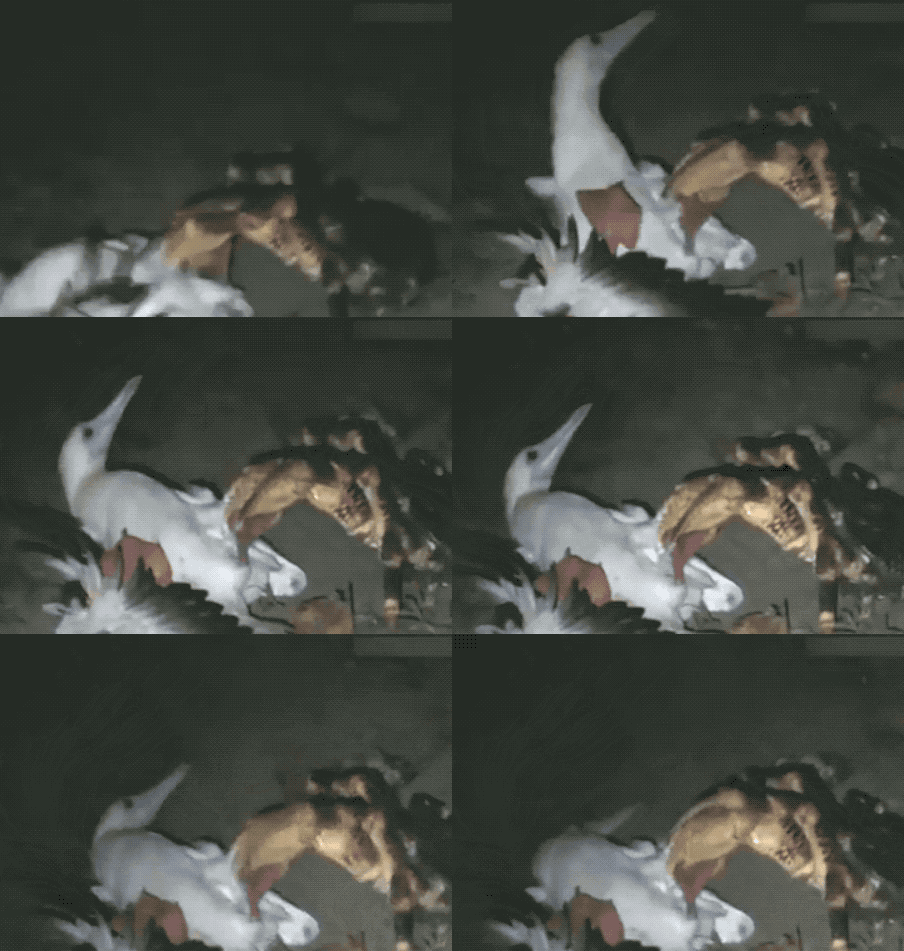
Coconut crabs are opportunistic, eating anything, cats, chickens, birds, and rats, sometimes even cannibalism
Despite their intimidating appearance, coconut crabs are like opportunistic robber crabs compared to other predators
They eat large foods such as chickens, cats and birds, but they often feed on carrion, rarely directly attacking live animals
Coconut crabs are also one of the few that eat their own shells and even other coconut crabs during molting, so they will also engage in self-harm
Experts believe that this practice provides a lot of calcium for the growth of the animal, and in the evolutionary process, coconut crabs have developed the ability to bite off coconuts, which allows them to eat less of their own kind
There are rumors that coconut crabs also eat people
This creature has a legend, some people think it is related to the disappearance of Amelia Earhart
Earhart was a pilot, in 1937 she flew across the Pacific Ocean and suddenly disappeared from the radar, the body was never found. Three years later, researchers found a bone on an island, this bone is similar to the position and physical condition of the missing pilot
Therefore, it is speculated that the pilot died on this beach and was encountered by a coconut crab
To verify this point, researchers used pig carcasses, when the pig carcass was left in the wild, the coconut crab quickly tore the pig carcass into pieces and scattered it around, which is exactly the same as the bone found of Earhart
However, the speculation that coconut crabs eat corpses has not been settled, but through this experiment, one thing is certain, coconut crabs like to eat bones, and they will carefully clean them and bring them back to their nests
Because of its delicious taste, it is almost extinct now
Pacific islanders have been capturing them for years, considering them a delicious food and aphrodisiac
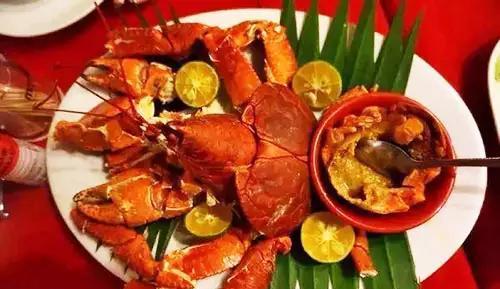
Coconut crabs taste similar to lobster and crab meat, the fat in the abdomen and the eggs in the female are considered the most delicious parts, which can be steamed or boiled with coconut milk
Despite the coconut crabs' mighty claws and ability to climb trees, they are helpless against human predators
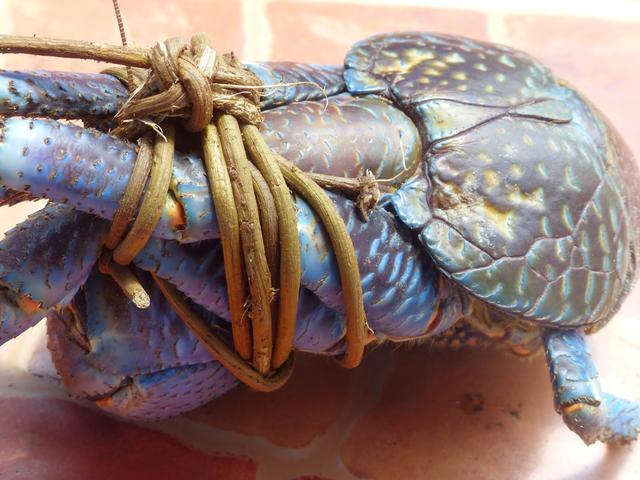
People use the coconut crab's love for coconuts as a lure, using coconut meat as bait to catch coconut crabs, if the catch is not good, it is easy to lose a finger. By fixing the two longest legs and connecting them, it is easy to pick up the coconut crab
Now,
Coconut crabs are on the verge of extinction
To protect this species, some protection policies have been introduced, such as not allowing it to be sold or eaten normally, a fine of US$5500 will be charged if you eat coconut crab on Christmas Island
5500