Bear Monkey Appears on Highway, Provoking Police
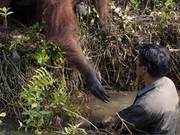
Recently, a bear monkey appeared on a highway in Menglian County, Pu'er City, and constantly provoked the police who came to rescue it. The little guy looked relatively docile but also a bit mischievous. It was initially identified as a bear monkey, a national level protected animal.
Today we'll learn about it, bear monkey (scientific name: Macaca assamensis) is a monkey species under the order Primates and the family Macaca. The body size is similar to that of the monkey, weighing 10-15kg, body length 500-700mm; tail length is about 1/3 of the body length. Unlike the monkey, the face is relatively longer and the brow ridges are higher and more prominent.
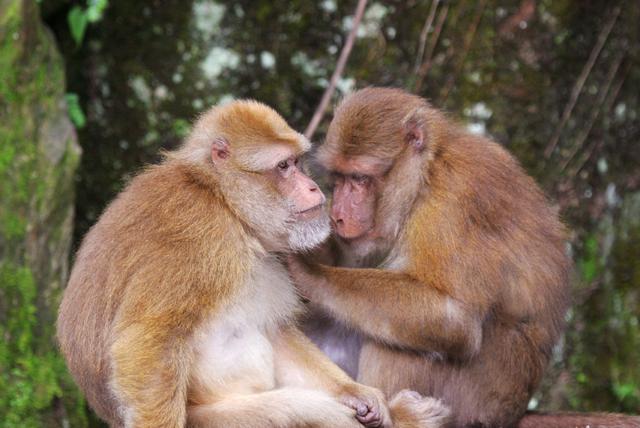
It is a endemic animal in the Himalayas and the Indochina region. It mainly lives in monsoon evergreen broadleaf forests, deciduous broadleaf forests, coniferous broadleaf mixed forests or high mountain dark coniferous forests. Some similar to short-tailed monkeys, but bear monkey's habitat is relatively higher. In the south-east of Tibet and northwest of Yunnan, the habitat altitude is about 2500 meters, it has strong cold resistance, the distribution latitude is northward. It mainly feeds on fresh leaves and stems of wild plants and animals, as well as insects, amphibians and small birds.
Distribution in China, India, Nepal, Bhutan, Myanmar (northern), Thailand (northern), Laos and Vietnam. It is listed as CITES II level protected animal in the 'Washington Convention'
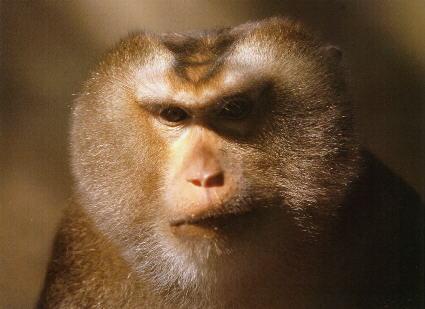
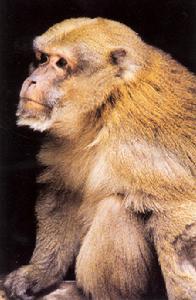
The body length of the bear monkey is 51-73.5cm, tail length 15-30cm, male weighs 6-19kg, female average weight 5kg. The male is larger. The bear monkey's fur is yellow-gray, dark brown, the face is dark brown or purple red, the shoulder, head and arm are relatively light. It looks like a monkey, but a bit bigger than the monkey. Its name comes from the fact that it looks like a bear and chubby.
The bear monkey is an endemic animal in the Himalayas and the Indochina region. Tropical and subtropical forests, altitude 1000-2000 meters, it is particularly fond of living in tall trees. It mainly lives in monsoon evergreen broadleaf forests, deciduous broadleaf forests, coniferous broadleaf mixed forests or high mountain dark coniferous forests. The habitat and habits of the bear monkey are similar to those of the short-tailed monkey, but the habitat of the bear monkey is relatively higher. In the south-east of Tibet and northwest of Yunnan, the habitat altitude is about 2500 meters, it has strong cold resistance, the distribution latitude is northward.
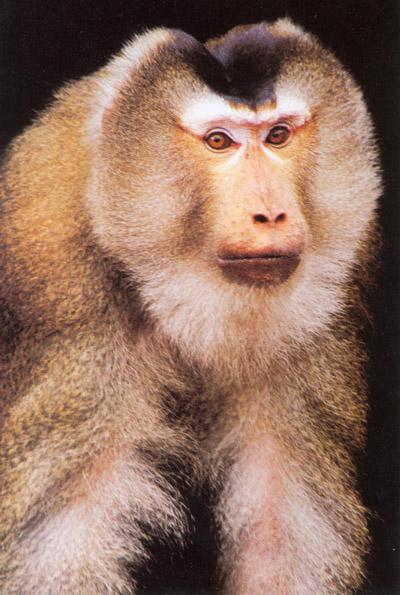
When female is in estrus, the skin of the thigh, buttocks and arm has redness and swelling. The newborn cubs have soft fur, brown shoulders and pale yellow other parts. When it grows up to sub-adult, it turns yellow again. In China, there are a few successful breeding, the female sexual maturity age is about 4.5 years old, the male is about 3 years old, the gestation period is about 168 days, the birth season is from March to July, one offspring per year, the longest breeding lifespan is 16 years.
Distribution in Bangladesh, Bhutan, China, India, Laos, Myanmar, Nepal, Thailand and Vietnam.
There are two subspecies of bear monkey, both distributed in China. The named subspecies are distributed in Myanmar, Thailand, Malaysia, Assam in northeastern India, Guangxi, Guizhou and the northern part of China's Yunnan. The Himalayan subspecies is distributed in the southern slope of the Himalayas, including China's Tibet.
The total number of bear monkeys in the entire distribution area does not exceed 300,000, of which more than 20,000 live in protected areas. The number of bear monkeys in China is much lower than that of monkeys and macaques, estimated at about 8,000. The main risk factors in China are deforestation, destruction and poaching. The bear monkey is listed as a national level one key protected wild animal. Most of the population lives in the natural reserves of Tibet and Yunnan, and is well protected. In the bear monkey distribution area, strengthen the law enforcement publicity and education of wildlife protection, stop the bear monkey poaching behavior.
There are at least 41 protected areas and national parks in Northeast India, and some countries' parks. To help protect this species, some national parks in the Himalayas are trying to promote educational projects, encouraging local people not to cut down forests, use alternative energy instead of burning firewood. These measures reduce the conflict between bear monkeys and local people.
Listed in 'China's Key List of Wild Animals' Level I
Listed in the 'World Conservation Union' (IUCN) 2008 Red List of Endangered Species – Near Threatened (NT)