Shadows of Movable Cultural Relics of Benxi – Miaohoushan Site
Source: Benxi Museum
Miaohoushan Site, located in Xiaotun Village, Shanizhu Village, Benxi County, is currently the northernmost Paleolithic Early Site discovered in China, and also the earliest human settlement site in Northeast China, with a history of about 500,000 years, therefore known as 'the Hometown of the First Person in Northeast China'. Due to its geographical location, it played a bridging role in the spread of ancient Chinese culture to the Korean Peninsula and beyond.
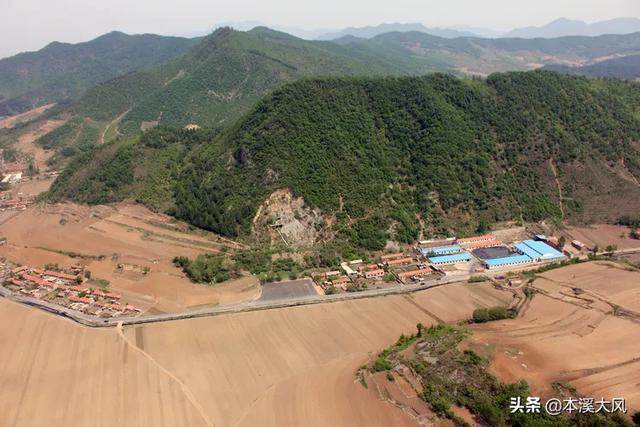
Bird's-eye view of Miaohoushan Site
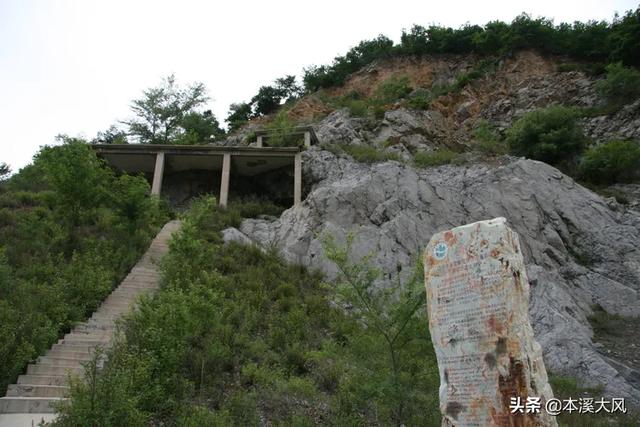
Close-up of Miaohoushan Site
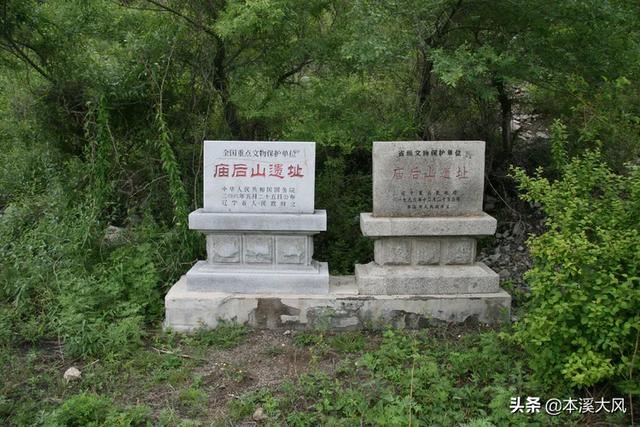
Miaohoushan Site Protection Monument
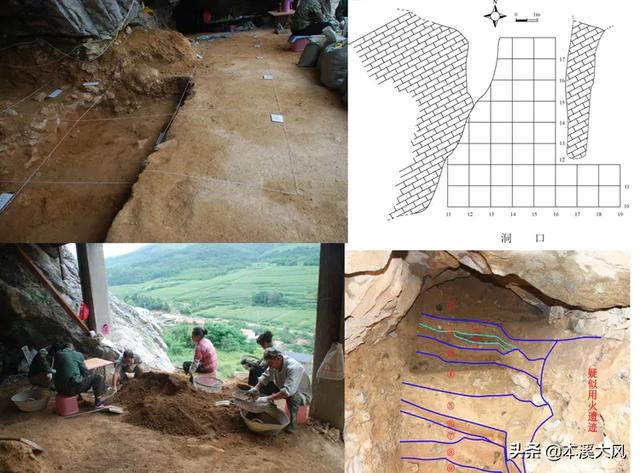
Archaeological Excavation Site and Trench Plane Diagram
The 3 human teeth and one leg bone unearthed from Miaohoushan Site belong to 4 individuals. The canine and molars with cavities are severely worn and belong to two elderly individuals; the lower molars are less worn and belong to adults; the femur has a slightly thicker bone wall and obvious primitive characteristics, with a slender bone diameter, indicating a child individual. The 4 human fossils represent different age stages of the people of Miaohoushan
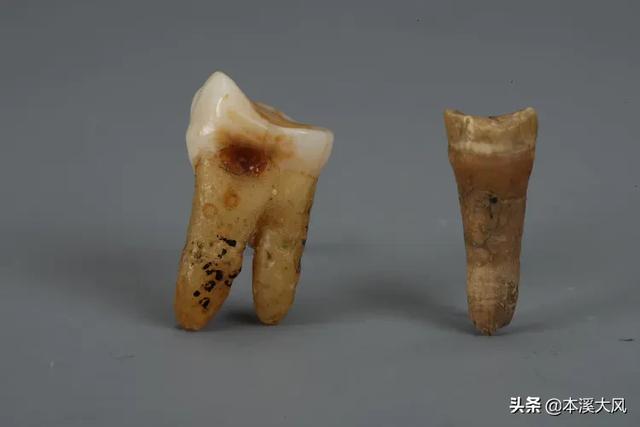
The teeth of the Paleolithic humans unearthed from Miaohoushan Site
The people of Miaohoushan had mastered the technology of stone tools and bone tools. They mainly used quartz sandstone and basalt as raw materials for making tools, using anvil method and percussion method to make stone tools. The symmetrical aesthetic consciousness was applied in the tool-making process. Making large stone tools was a prominent feature of the tool-making industry in Miaohoushan, further improving the technology of processing specific parts of the stone tools
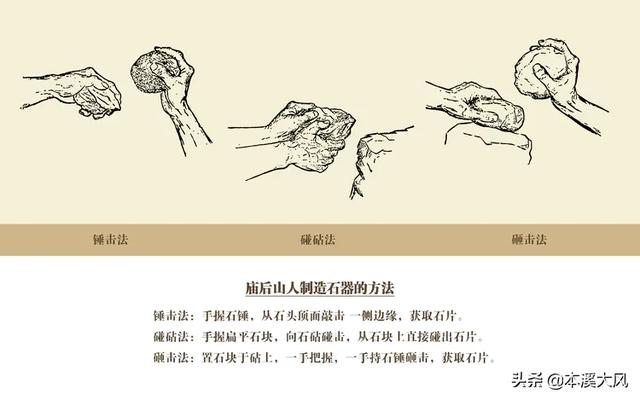
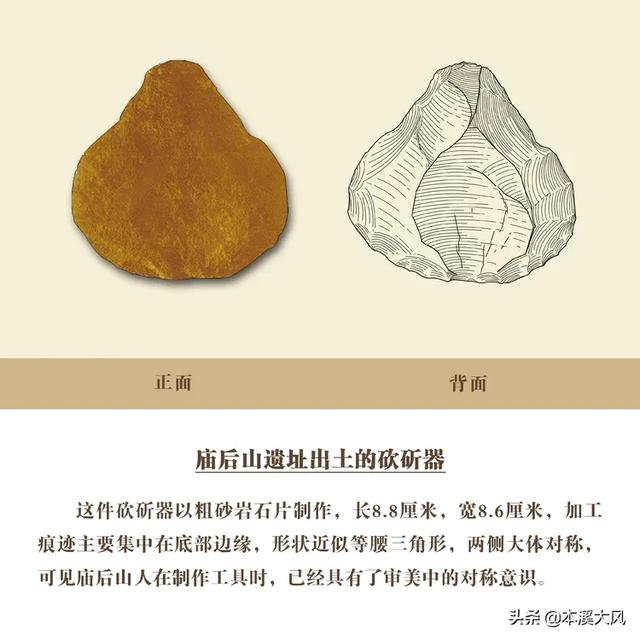
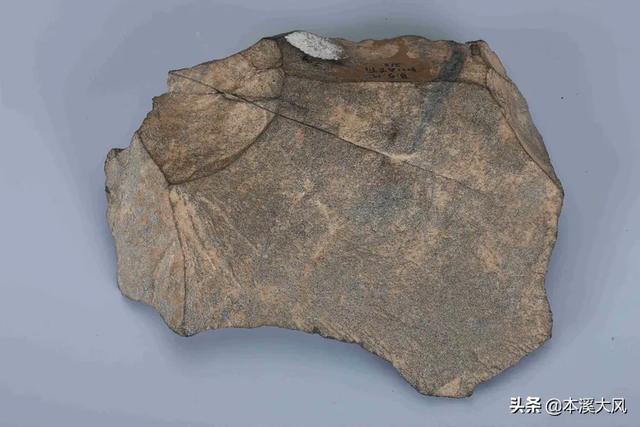
The made stone tools unearthed
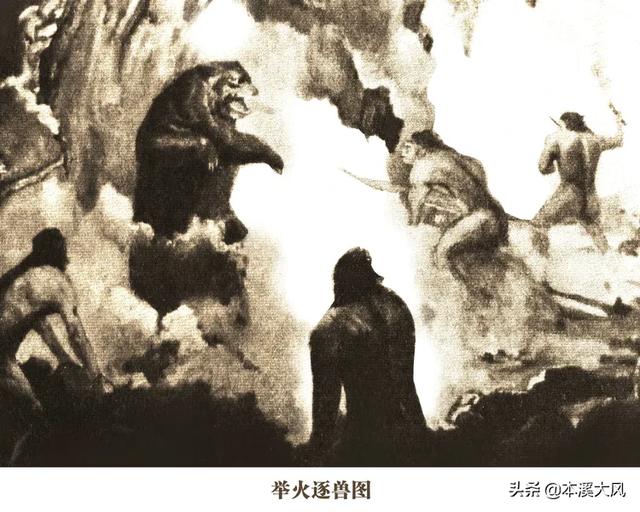
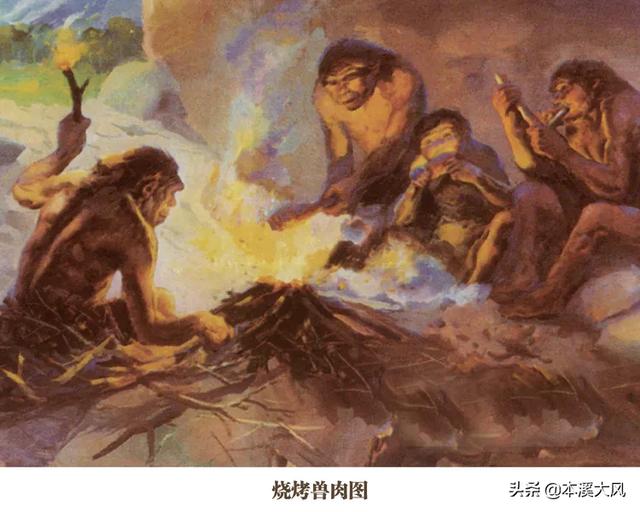
Miaohoushan Site discovered ash layers, charcoal fragments and burnt bones, proving that the people of Miaohoushan had mastered the technology of fire-making, fire-keeping and the preservation of fire. The use of fire broadened the variety of human food and promoted the development of human physique and brain evolution, greatly improving human adaptability to the natural environment and promoting social progress. The fire remains of Miaohoushan Site once shone with the light of human wisdom
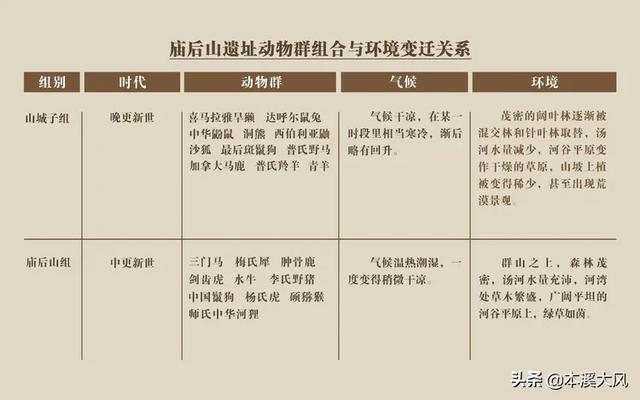
70 plus animal fossils were unearthed from Miaohoushan Site, which can be divided into two groups: warm and cold-resistant groups. The early group of warm animals had many species, such as Mei Shi Xi (horn), Water Buffalo, and Shu Mi (Monkey); the later group of animals were adapted to the cold and dry environment, such as Drought Rabbit, Cave Bear, and Antelope. The two different animal groups reflected the change from a warm and humid climate to a cool and dry climate around Miaohoushan at that time
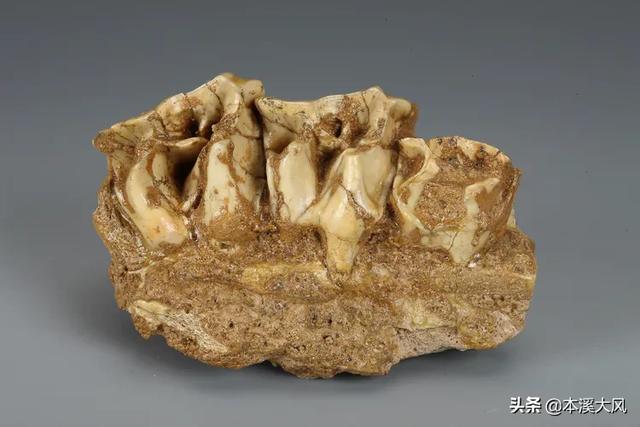
Mei Shi Xi teeth
Miaohoushan Site provides valuable materials for studying the distribution and development of ancient humans in the Liaohe region and ancient geography environments. It is a very valuable archaeological and tourism site.