Record of Mountains and Water: The Magical Story of the Mazu Shrine at Xunpian Dongya Riyue Bay
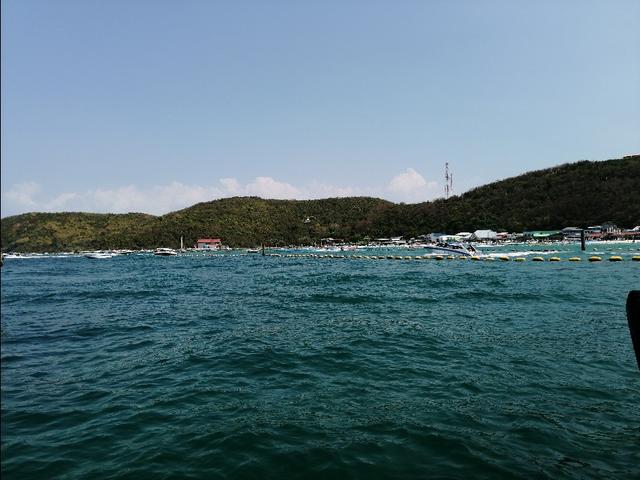
The Xunpian Bay in the South China Sea is inevitably influenced by ancient marine culture, giving us a sense of freshness and wonder. Sometimes, a wooden ship and an island not far away feel like a gift from heaven, making our hearts flutter.
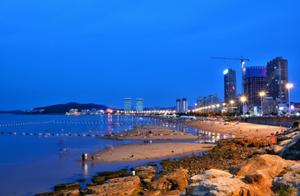
This is Donggao, and it is one of the cleanest bays along hundreds of miles of coastline. The white beaches allow us to enjoy soft feet and physical relaxation. Whether morning or evening, we can go for a swim under the sea, wash away the old dust, and feel refreshed, as if a peaceful poem is floating in the sky.
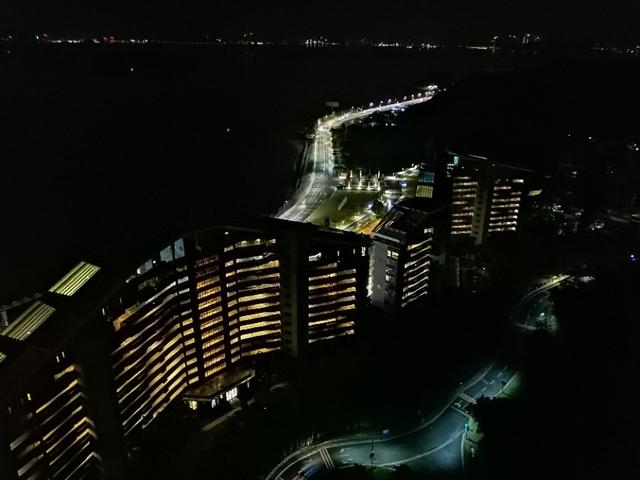
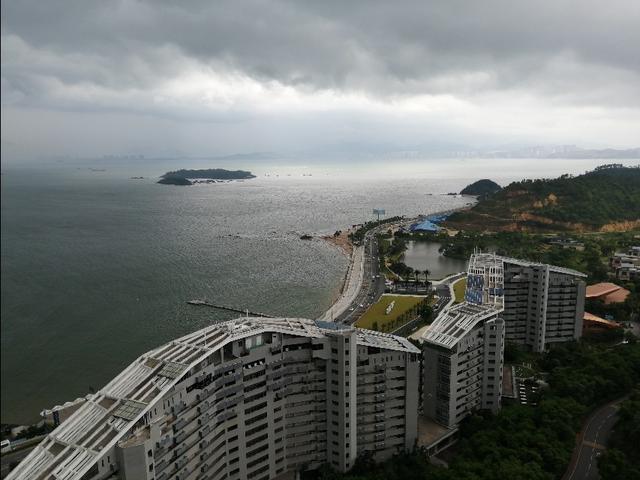
When arriving in the central area of Xunpian, I didn't expect to find that it's orderly and vibrant, with many white-walled and gray-roofed houses, which are dazzling. Naturally, the gentle and curved architectural style reminds me of Jiangnan, and the spirit of this place. The most distinctive geographical landmark is undoubtedly Tianfeng (Sky Peak).
Tianfeng Temple enshrines Mazu. Mazu has many names, such as Tianhou, Tianfei, Madam, Heavenly Mother, etc. She is the deity worshipped by sailors, fishermen, merchants, and today's people. This reflects her status in China's southeast coastal and global marine cultures. The United Nations granting her the title of 'Peace Goddess' is not without reason.
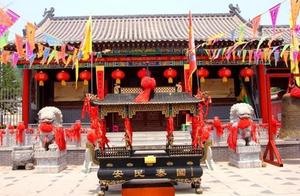
There are over 10,000 Mazu temples worldwide, and the Tianfeng Temple in Xunpian Bay is one of them. 'Tianfeng Temple' is also known as 'Ama Temple,' built by Xunpian fishermen to pray for the safety of their fishing trips and the well-being of their families. Regarding Tianfeng Temple, its history dates back to the late Ming Dynasty. On a windy and rainy day during the reign of the Emperor, villagers discovered a Mazu statue erected on the sand dunes of Xunpian Bay's Fanhe Port. The villagers believed it was a sign of good fortune and built a small shrine to worship the statue. The weather was favorable, and the village was peaceful. As time passed and residents migrated to Xunpian, the villagers built the small shrine into a stone wall and tiled building. During the Qing Dynasty, due to the faith of the villagers of Chengguan in Xunpian, they expanded the small shrine and named it 'Mazu Temple.'
Xunpian's Ama Temple has a unique characteristic: it's closed for half of the year. This involves another explanation – the Mazu statue enshrined in the temple originally came from Fanhe Port and was washed away by a typhoon and high tide. The Mazu statue was left on the beach of Fuchi Island. Local fishermen built Ama Temple on the beach. Because the Mazu statue came from Fanhe Port, the villagers wanted to ensure that both Fanhe and Xunpian's fishermen would be safe and prosperous, so the Mazu statue was enshrined in the temple in Fanhe Port for half the year, while the other half was enshrined in the temple in Xunpian Bay. This is consistent with the earlier story. I heard another layer of meaning from the story. Xunpian people have the surname 'Xun,' and 'Xun' in Cantonese means '' (shun), which also means 'following,' 'submissive,' and 'humble.' Therefore, the people of Xunpian are worthy of the virtue of the Xun, with a humble and generous spirit. It is said that the people in both places get along harmoniously and ensure safety. This is the generosity of ancestors, and the will of the gods. The concept of cultural and humanistic education is to promote the prosperity and harmony of religions, thus becoming a common value pursued by all religions. The spirit of morality, righteousness, and compassion in Mazu culture empowers sailors, inspiring people to overcome difficulties and continue the inheritance of marine culture and human civilization. Therefore, I must say that the ancestors were indeed great. What they left behind for future generations is the wisdom and bloodline that concerns incense and inheritance, which will continue to flow like a stream. It requires ancestors to leave behind the spiritual treasures for us to cherish.
After Tianfeng Temple was built, it was worshipped by people from all walks of life, and was admired by people near and far. Until 1949, it had been renovated several times. In 1963, the temple was demolished due to the situation at the time and replaced with a tidal gate. To preserve the incense, the villagers temporarily rebuilt a simple shrine to worship the statue. In 1982, the villagers rebuilt the shrine according to its original appearance. In 2006, the Beijing Financial Street Group settled in Xunpian, transforming Xunpian into a famous tourist resort, and the local skilled construction team rebuilt Tianfeng Temple. During this process, the 36th descendant of the Wudang Mountain's, Huang Wuzhao, led a group of disciples to Wudang Mountain's Golden Summit to obtain incense and sacred soil. The president of the Xunpian Tianfeng Temple Committee, Twenty-Jade Ming, led villagers to Fujian's Mazu origin to obtain the incense. In 2010, the project was completed, and it was named 'Tianfeng Temple.' The entire palace is grand in scale and magnificent in momentum, solemn and elegant. Three grand deities are dignified and peaceful, and the auspicious atmosphere spreads throughout, echoing and resonating. The temple bell rings in the morning, and the temple drum is sounded, with smoke and mist, creating a beautiful scene. When the temple lights are on at night, you feel the tranquility of the sea next to you, the sound of the waves, which is part of your thoughts. Perhaps you are part of nature. I like this unique and serene shrine. In this thousand-year-old sacred temple and ten-thousand-year-old deity, what can I take away except for a moment of quiet contemplation? It will always belong to me, and will always be a fleeting moment in my life. I hope I can come back again. Because of the sea, because of Mazu, because of the Xun culture and the mindset here. I thank you, the sea, Mazu, and my eternal totem in my heart!
1949196319822006,2010“”