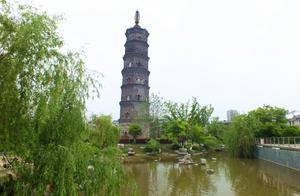
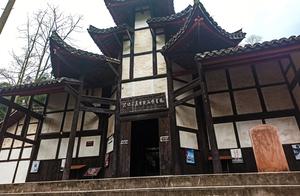
Three hills and half of the green mountains beyond, two streams divide white egret harbor.
Jiangnan is beautiful, with the imperial capital of Jinling. As Nanjing was the Six Dynasties Capital and the Ten Dynasties Metropolitan City, it boasts numerous scenic spots. Moreover, because the Republic of China once set its capital in Nanjing, it added a rich taste of the Republic of China. Nanjing is also known as Jinling, legend has it that when Qin Shihuang traveled east, scholars saw that there was a lot of dragon energy here, so Qin Shihuang ordered a large amount of gold to be buried in the place where the dragon energy was located as a suppression, thus named Jinling. As Zhu Ziqing said, 'Visiting Nanjing is like browsing a shop of antique, everywhere has a trace of time erosion. You can handle it, you can pay tribute, you can leisurely'.
Nanjing has a long history and abundant cultural heritage. Here there is the Nanjing Museum, the Ming Xiaoling Mausoleum, the Six Dynasties Museum, the Baoren Temple Ruins, Zhanguan Garden, and many other historical figures and stories with legendary colors.
Star Recommendation Campus Plan #
Wake up good spring light #
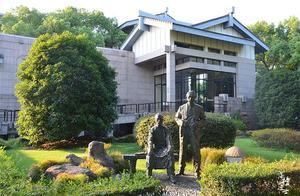
Nanjing is historically significant, with a wealth of cultural attractions. A must-visit is the Presidential Palace, especially for those who love the Republic of China style. The Presidential Palace is the largest and best-preserved architectural complex in China's modern architectural ruins, it is one of the main representatives of Nanjing's Republic of China architecture, and an important historical site of modern China. It was the central location of the Nationalist Government, witnessing the rise and fall of the Taiping Heavenly Kingdom and the Jiangsu Commandment Office. The Presidential Palace is divided into three areas: the Central Area (Central Axis), the West Area, and the East Area. The overall architectural style is mainly in the style of the Republic of China. Here, you can see the figures of former leaders and witness many important conferences and decisions. Another must-visit attraction is the Ming Xiaoling Mausoleum. If you have watched 'Those Days in the Ming Dynasty', you will know that the 'workaholic' emperor who was most diligent, hardworking, and conscientious is buried in the Ming Xiaoling Mausoleum along with his empress Ma. The Ming Xiaoling Mausoleum is located at the south foot of Zhiguishan in Nanjing City, extending eastward to the Zhongshan Ling, southward to Meihua Mountain, it is the largest imperial mausoleum in Nanjing and one of the largest imperial mausoleums in ancient China. The founder of the Ming Dynasty, Zhu Yuanzhang, and his empress Ma are buried here. Zhu Yuanzhang's deputy of the Military Command Office, Li Xin, presided over the construction of the mausoleum. The Empress Ma passed away in August and was buried in the mausoleum in September, and the mausoleum was named 'Xiaoling' because of the character 'Xiao' in the. The name 'Xiaoling' means 'to govern the world with filial piety', or it is derived from the Empress Ma's 'XiaoCi', hence the name 'Xiaoling'. The main road of the Xiaoling Mausoleum is 'Lion Statue Road' and 'Weng Zhong Road', which is about 600 meters long. The Xiaoling Mausoleum Road is different from the imperial mausoleum road of the previous dynasties. The imperial mausoleum roads of the previous dynasties were short and straight, while the Xiaoling Mausoleum Road is winding and winding, surrounding the Meihua Mountain with a curved shape like the Big Dipper constellation. On the east section of the road, there are six stone beasts – lion, xiezhi, camel, elephant, qilin, and horse, each pair of 2, totaling 12 pairs and 24 pieces. These stone beasts reflect the ceremonial requirements of the royal mausoleum, each with its own meaning. ##