Zhangjiadian: Echoes of a Thousand-Mile History
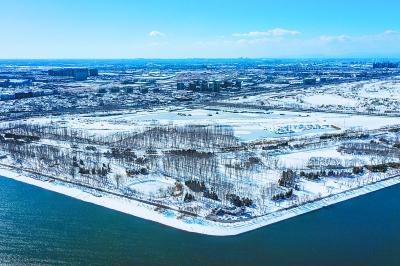
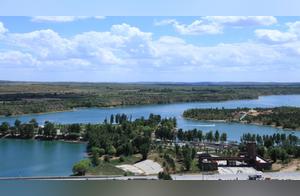
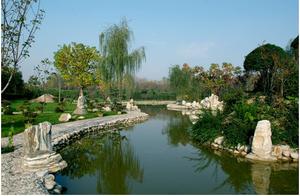
Zhangjiadian beside the old town of Zhangjiadian, along the riverbank, is under construction as a 'city green heart' with an area exceeding 11 square kilometers. Ma Wenxiao/Photo.
Li Cheng
Zhangjiadian was once the cultural essence of the ancient Yunuo Empire. Now it has become an important part of Beijing's urban center. The construction of Beijing's urban center will strengthen the overall protection of Zhangjiadian old town, and the positioning of urban and rural town development will also drive the green development of the old town.
Named after Xun Huan
Zhangjiadian was originally named because 'Zhang Xuan, a supervisor of the maritime shipping under the Yuan Dynasty, established it here'.
Zhang Xuan was originally a pirate, and later followed the Yuan Dynasty and was granted the title of Maritime Envoy. The Yuan Dynasty's imperial grain ships entered the inner river after arriving in Tianjin. After arriving in Zhangjiadian, they waited for a short time. The Government of the Maritime Envoy stationed in Zhangjiadian checked and counted the ships and grain, and then released them to Tongzhou. The maritime transport was carried out every spring and summer. During the busy season, Zhangjiadian had many piles of wood and a noisy crowd of people waiting for inspection and release.
In the Ming Dynasty, to alleviate the difficulties of gathering and unloading grain in Tongzhou, a grain depot was built in Zhangjiadian in the 12th year of the Jiajing reign. The depot was called Tongji Warehouse. Tongji Warehouse could be used as a backup grain store when Tongji Warehouse was full. When Tongji Warehouse was short of grain, Tongji Warehouse would transfer grain to fill the gap. As the Tonghui River became increasingly silted, in the sixth year of the Jiajing reign, official Wu Zhong proposed to rebuild the Tonghui River, which was only carried out after the river channel was diverted to the north of Tongzhou City, connecting with the White River.
The prosperity of Zhangjiadian in the Ming Dynasty was due to its important location. In the 14th year of the Jiajing reign, wrote a poem 'Morning departs from Yan Yang, evening rests by the bay' Zhangjiadian is an important channel for entering Beijing and a temporary resting place for travelers and merchants. The large gateway in Zhangjiadian was once called 'a gathering of goods' and was a major customs port. Zhangjiadian's tax revenue reached one-sixth of the most important customs port of Zhongwenmen, which shows the prosperity of trade.
Various institutions were set up in Zhangjiadian during the Ming Dynasty, such as the Inspection Office, the Administration Office, and the Salt Field Inspectorate, managing the administration of Zhangjiadian's law enforcement, taxation, and grain transport. To meet the needs of urban construction, various facilities such as brick factories and plank factories were also set up in Zhangjiadian. The gathering of households also promoted the improvement of urban facilities. There were several buildings in Zhangjiadian, such as Guangfu Temple, Round Moon Temple, and Guardian Temple.
Because of the river surrounding Zhangjiadian, there were many bridges, and the most famous one was Zhangjiadian South Gate Bridge, called 'Runuo Bridge'. There were many bridges and passages around Zhangjiadian.
During the Qing Dynasty, Zhangjiadian was still an important part of the grain transport system. The Qing emperors often stopped their southern grain transport journeys and disembarked from their boats to enter Tongzhou City. In the second year of the Qianlong reign, the Chief Executive of the Directly Attached Province of Hebei, Li Wei, and others surveyed the grain transport river channel. Li Wei and others reported that there were no officials in the river channel, and it was difficult to manage the river channel without officials. After that, the position of Grain Transport Supervisor was established, with Zhangjiadian as its base, specializing in the dredging of the river channel. This division of labor enhanced the efficiency of the grain transport system.
The prosperity of Zhangjiadian in the middle period of the Qing Dynasty continued. In the 54th year of the Kangxi reign, a grain ship from Suzhou, Jiangsu, ran aground in Zhangjiadian and about 5,200 stones of grain and rice were lost in the river. The court decided to follow the example of grain ships that sank in the Yangtze and Yellow Rivers, and did not compensate. This reflects the scale of grain transport on the Grand Canal. The ships were transported by vehicles when they arrived at Zhangjiadian, which increased the burden on the grain transport soldiers. The officials requested the court to increase the shipbuilding cost, which was approved by the emperor. From then on, each grain ship that passed through Zhangjiadian was given an extra twenty silver coins.
During the Qing Dynasty, the maintenance of the Grand Canal was not only about maintaining river channels, but also about the grain transport costs. In the first year of the Jiaqing reign, the Emperor requested to increase the shipbuilding cost of the grain transport ships. Because of the rising prices, the grain transport prices set by the early Ming Dynasty were far lower than the actual shipbuilding cost. The surplus shipbuilding cost was transferred to the grain transport soldiers, who had to sell their assets and children to raise funds. When ships arrived in Zhangjiadian and were transported by vehicles, the vehicle operators would take a share. The officials requested the court to increase the shipbuilding cost, which was approved by the emperor. This division of labor enhanced the efficiency of the grain transport system.
In the 14th year of the Jiaqing reign, the Grand Canal was in a state of silt and sand, and there was no use for the dams and embankments. The curved river channel slowed down the flow of water and became a place to accumulate and transport grain ships. In addition, the continuous scouring of the Kangjiagou River had become a large flow of water, and it was not easy to avoid dryness in the year. The Emperor ordered the officials to dredge the Zhangjiadian river channel, and at the same time, block the Kangjiagou River to ensure grain transport safety, and required the officials to complete the construction within a year. However, the dredging of the Zhangjiadian river channel required a lot of effort, and it was difficult to reverse the situation of the river channel rising and the river channel becoming silted. The officials recommended to operate the channel through Kangjiagou River and try it for one year to observe the results. The Emperor's will was not carried out by local officials. The officials measured the river channel and found that the silted river channel was much more serious than the Kangjiagou River. The officials recommended to let the officials in charge of the river channel be stationed in Zhangjiadian to manage the river channel, and it was approved by the Emperor.
In the 14th year of the Jiaqing reign, the Grand Canal was in a state of silt and sand, and there was no use for the dams and embankments. The Emperor pointed out that the Kangjiagou River was originally not the 'main channel' of the Grand Canal, although it had a large flow of water, it was difficult to avoid dryness in the year. The Emperor ordered the officials to dredge the Zhangjiadian river channel, and at the same time, block the Kangjiagou River to ensure grain transport safety, and required the officials to complete the construction within a year. However, the dredging of the Zhangjiadian river channel required a lot of effort, and it was difficult to reverse the situation of the river channel rising and the river channel becoming silted. The officials recommended to let the officials in charge of the river channel be stationed in Zhangjiadian to manage the river channel, and it was approved by the Emperor.
1715
14321507
“”
186019001911
1985“”
1488
1749
1767
1807“”“”
“”“”