Hu Yao Zheng's Liu He Xin Yi Nong (Shou Dong Chen Ji)
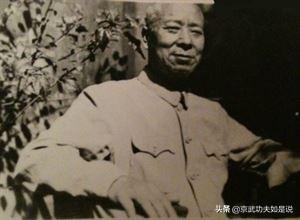
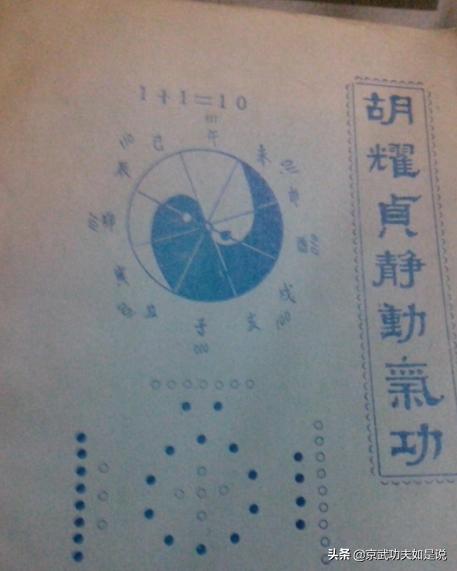
Six mainly involves Dantian work and four postures.
Generally, after practicing ‘’ (jing dong qi gong) to restore health, or a healthy person has practiced and mastered the three-body stance in stationing and (zhan pang), then they practice Dantian work and four postures.This (gong) is said to have been created by (Ji Longfeng) in the late Ming and early Qing dynasties. It was sorted out by (Hu Yao Zheng) in 1959.
Six (Liu He Xin Yi Nong) is also known as (Shou Dong Chen Ji). ‘’ (xin yi) refers to the brain and intention, ‘’ (liu he) refers to the internal three joins and the external air joins, the intention and the air join, the air and the power join, ‘’ (wai san he) refers to the hand and foot joins, the elbow and knee joins, the shoulder and groin joins. In general, it is said that ‘’ (shang yu xia he, zuo yu you he, qian yu hou he) – ‘up and down join, left and right join, front and back join’. ‘’ (Liu He Xin Yi) are interlinked and combined, to use intention to control the six joins, to use the six joins to penetrate the intention.
The three stances are: (Stationing three-body stance), (Xian Zhao Jin) and (Shou Fang Jin).
() (Kai He Jin): Stand in the three-body stance, relax, be still, let the air sink into the Dantian, with intention, feel the air from the navel to the vital points, then expand the air to the vital points, repeatedly 5-10 minutes.
() (Xian Zhao Jin): Stand in the three-body stance, relax, be still, let the air sink into the Dantian, with intention, contract and expand the air to the middle Dantian (the navel), then extend the air to the fingertips, repeatedly 5-10 minutes.
() (Shou Fang Jin): Stand in the three-body stance, relax, be still, let the air sink into the Dantian, with intention, gather the air from the upper and lower Dantians into the center Dantian, then release the air from the center Dantian to the upper and lower Dantians, repeatedly 5-10 minutes.
These three methods of breathing are used when practicing five styles of Xing Yi Quan (i.e., the five styles of fist – (pi), (zheng), (zuan), (pao), (heng)), when launching an attack, exhale from the Dantian, and inhale when returning the hand to the Dantian, this opening and closing, extending and contracting, gathering and releasing, is a basic practice of Six.
Dantian work has seven types, namely (shu vertical Dantian), (louer Dantian), (zuo Dantian), (zha Dantian), (kai Dantian), (cheng Dantian), and (yang Dantian).
Practicing Six (Liu He Xin Yi Nong) is all about the work in the Dantian, using the air from the Dantian to activate the body’s movements. Therefore, it must be based on the practice of internal skill before practicing martial arts. These seven types should be combined, and cannot be strictly separated. No matter which one you practice, start by standing, relax, be still, let the air sink into the Dantian, use intention to guide the air, after circulating the air around the body, then practice Dantian work as good.The four postures are (yīng zhuā), (jī xíng), (xū bǎng), and (shuāng bǎ).
Its characteristic is to launch and return, like an eagle grabbing something; when stepping back and turning, it is like the gait of a chicken walking; it takes the power of the bear with a specialized posture; when practicing alone, the double palms are the double postures.”;;;