The Earliest Tibetan Antelope Photographs: A Nazi Expedition and a Killing of Bloodlust
The Shot Killing the First Wild Tibetan Antelope

▲ Considered a symbol of wealth and nobility, the cashmere goat has become a synonym for bloodlust and greed since people knew that at least three wild Tibetan antelopes were embedded in every shawl.
Tibetan antelopes are now a frequently mentioned important theme in the field of animal protection. From the disaster brought by cashmere goats, this ancient species faced extinction, and finally, under the awakening of human conscience, Tibetan antelopes were reborn from the brink of extinction.
This is a story that makes people's feelings complex.
However, today we are talking about not the protection of Tibetan antelopes, but rather these animals called 'Sky Spirit' elves, when were their earliest photos taken? From the data we have today, The earliest photos of Tibetan antelopes appeared in 1938, they were taken by a German team led by Dr. Scherrer during an expedition to the Qiangtang area in northern Tibet.
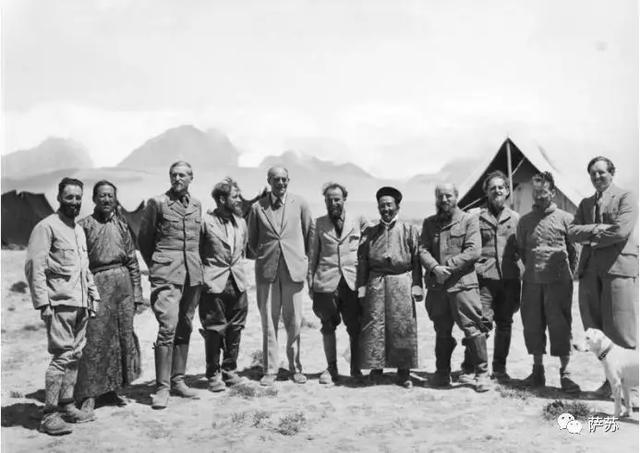
▲ The Scherrer team in the Tibetan Plateau
Dr. Scherrer is a world-renowned animal scientist, but his expedition was supported by the Nazi government. Therefore, in the history of world natural history, people often regard this expedition as a political stain on science. For the purpose of the investigation, there are also many legendary accounts, some believe that Hitler sent people to the Himalayas to find the ancestors of the Aryans.
However, considering the practical political considerations, without the need for propaganda, this reason is somewhat contrived, unless Hitler was a madman (of course he was a madman). A more realistic reason is that Nazi Germany was trying to find a base that could threaten or at least restrain Britain in the Indian subcontinent. The 'expedition' was to establish contact with the Tibetan local government, seeking such a foothold.
However, during the entire contact process, the Tibetan local government was extremely cautious, they were always suspicious of the Germans' entry, although the two sides circled for a long time, they did not establish any effective contact with the Nazis.
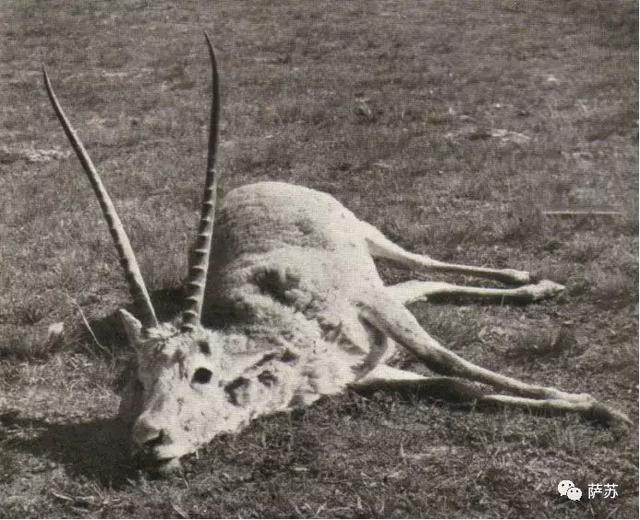
▲ And this 'earliest Tibetan antelope' shows that the local people's doubts were not unfounded.
During this 'expedition' entering Tibet, the Tibetan local government also put forward many requirements to them, one of which wasto abide by local religious customs and respect all creatures on the plateau. Dr. Scherrer and his team also promised to comply with this rule when entering this snowy area.
However, as we can see now,The Germans did not keep this promise—this antelope was shot and photographed by them. In the photos left by this expedition, we can see that they had a large number of records of killing wild animals to make specimens.
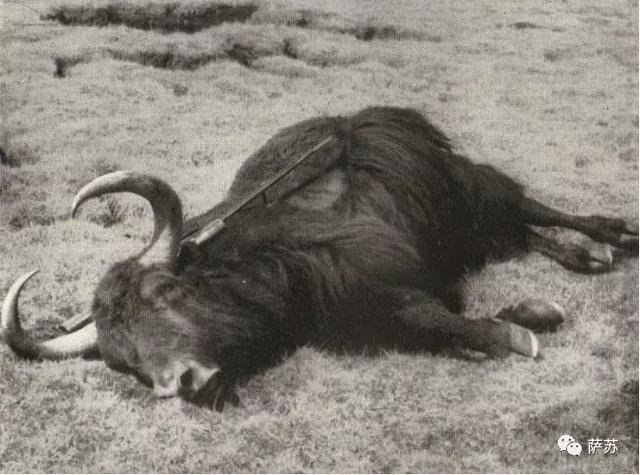
▲ This is a wild yak shot by the Scherrer expedition, it is said that it is as tall as two meters, the tallest wild yak among all wild yaks.
On the back of the wild yak, there was placed with the .75 caliber Springfield rifle used by European hunters to shoot it, and the earliest photo of the Tibetan antelope was also an individual shot by the Scherrer team, it is likely a victim of this weapon.
From the above photos, we can see that this is a mature Tibetan antelope. The shooting time was approximately between spring and summer, because from the fur of this Tibetan antelope, we can see that it is in the molting period, but not yet entered the summer state.
In fact, there are many hunters in Tibet, even regarding Tibetan antelopes, there have been records of hunting since ancient times. During the journey to the northern Tibetan Plateau, the expedition team discovered dozens of ring-shaped traps on the route.
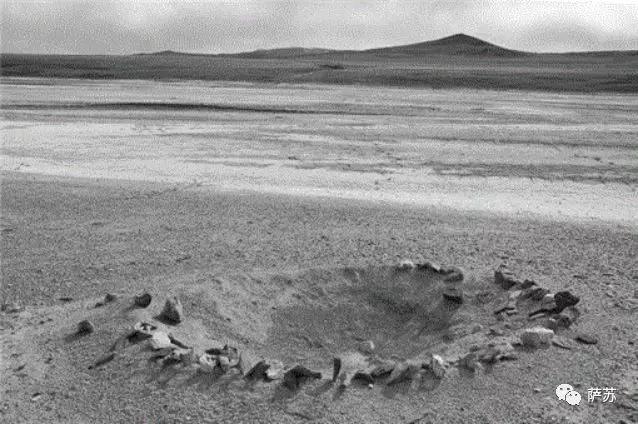
▲ This so-called ring-shaped trap is set by local hunters to kill Tibetan antelopes, a special land barrier.
They would set such barriers on the Tibetan antelope's must-pass routes, and leave a narrow exit. When the Tibetan antelope encounters an obstacle and has to exit through a narrow exit, it gives the archer hunters an opportunity.
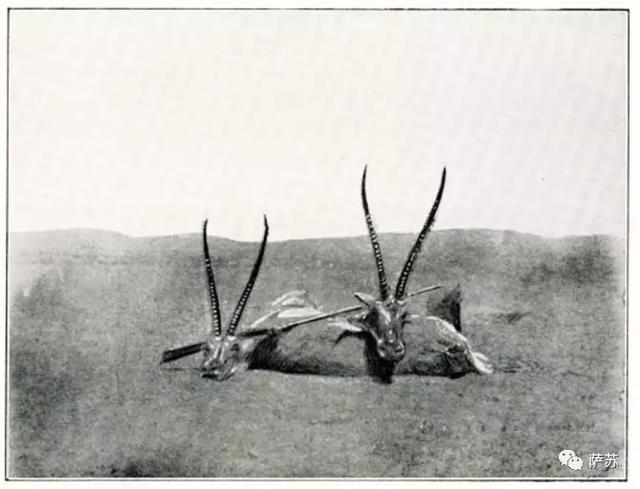
Traditional Tibetan hunters use bows and arrows, and the Tibetan antelopes shot by modern weapons are the first shot by Scherrer and his team, it is a victim of this long-range weapon, they would have been caught off guard.
Tibetan hunters' hunting of Tibetan antelopes is a means of survival for people in ancient times. At that time, hunters had a strong sense of gratitude for the prey. Just like the people shoot black bears and hold a ceremony to worship them, the same meaning exists. Because the number of people is small, the weapons are simple, and the demand is restrained, even though hunters shoot Tibetan antelopes, it will not have a significant impact on the overall ecosystem.
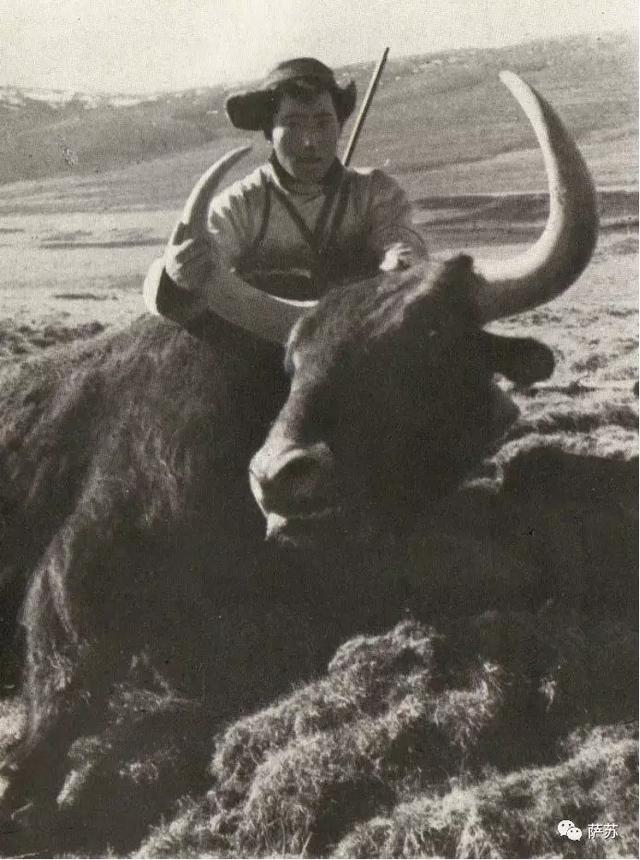
▲ A traditional Tibetan hunter
From this perspective, the Tibetan local government's constraint on the Germans' commitment is to dissuade them from indulging in meaningless killings, this is not something that local customs support. Westerners' turning hunting into a competitive activity is not something that local people can understand, because this exceeds the scope of being forced to kill.
The antelope shot, seemed to be lost and full of longing for the world.
It is not because Old Sa is sentimental, but because the Tibetan antelope brings us a profound feeling. In the process of humanity's gradual development of the earth, many wild animals have gradually disappeared in the competition with humans, and Tibetan antelopes were originally animals that could coexist peacefully with humans, they had no competition with humans, and their survival area has retreated to the end of the deep valleys of the mountains—the Tibetan antelope's Ali area has an altitude of more than 5000 meters, which is a place completely unsuitable for human survival.
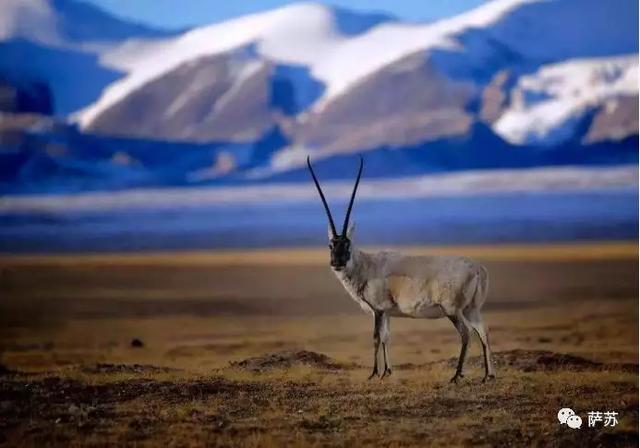
But we have to admire these animals, they can develop strong physiques in environments that many species cannot adapt to, and even they can sprint at high speeds at altitudes of 6000 meters without slowing down—this athletic ability even the best athletes in the world cannot achieve.
Choosing a land that humans cannot survive, the Tibetan antelope and humans, have no intersection. But humans still came, bringing with them pure greed—even willing to sacrifice their own lives to complete this mysterious killing.
I once listened to the interrogation records of poachers of Tibetan antelope criminals, they admitted that when they arrived at the Tibetan antelope's habitat, they committed poaching, which is a game that at any time can cause them water swelling, pulmonary congestion and cerebral death. However, these people could still risk their lives to do this business.
They were completely different from traditional hunters, they usually chose the Tibetan antelope's breeding season, when the antelope herds were concentrated and pregnant ewes were slow to move, they would conduct encirclement and hunting, using automatic weapons to deal with these highland elves.
After completing the killing, the killers might also cause problems due to violent movements, resulting in inability to leave with the prey—many poachers with full carts of antelope skins lay on the plateau, just like dead lambs, becoming food for vultures.
This is really regrettable.
In the isolated habitat, the Tibetan antelope breeds and thrives, it can bring us a sense of awe for life, but in this life-and-death fight, humans have completely failed to live up to the title of 'Spirit of All Things'. What they seek is nothing more than wealth, and today's world is a multi-space, there are many ways to obtain wealth, especially when a person doesn't want to die, this blood-stained wealth and effort is even somewhat disproportionate.
So, the hunting of Tibetan antelopes became an event that makes us feel sad for both humans and antelopes.
Of course, this is more sad for the Tibetan antelope. Their fate reminds me of what the shopkeeper Wang said in the teahouse: 'I have been a loyal subject for a lifetime, I have bowed and greeted everyone. … Those officials live and thrive, why don't I eat a bowl of noodles?'
Tibetan antelope is like the most docile 'loyalty' person, but it is still remembered by others for being hunted. People who reach this point are revolutionaries, and antelopes have no room to resist.
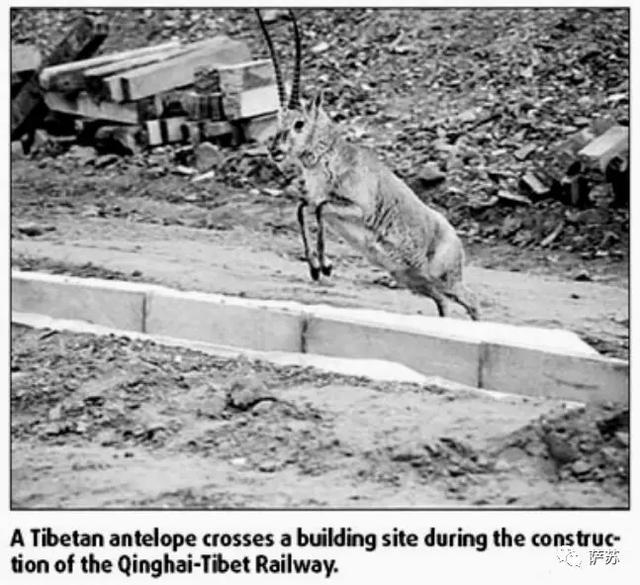
Fortunately, with humanity's reflection, the fate of Tibetan antelopes finally turned for the better. We have to say, this is not the luck of the Tibetan antelope, but the luck of humans. Because we finally learned how to save our own souls.
sasutime