Why Can Camels Freely Nibble on Spine-Covered Cacti?
Let's start with cacti, and I'm sure everyone is familiar with them. These plants, covered in sharp spines, aren't just what they seem. In fact, cacti spines are very sharp, and if you're not careful, they'll pierce your skin. Just thinking about it is painful, so when we encounter these plants, we usually keep a safe distance. If we must touch them, we must do so with extreme caution.
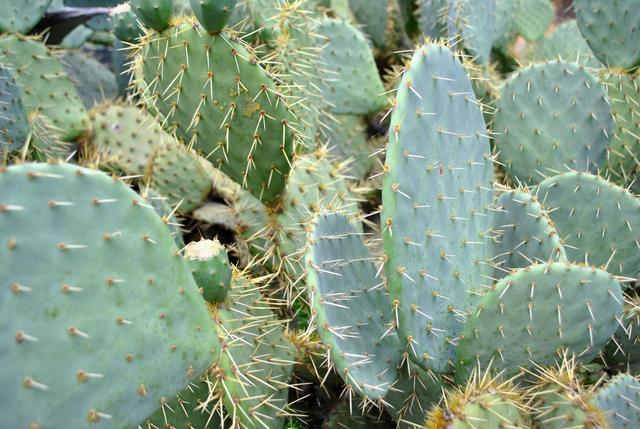
It goes without saying that cacti's survival strategy has achieved excellent results, almost all animals take a respectful attitude towards cacti. However, not all animals are helpless against cacti. For example, camels don't care about cacti spines. When they see cacti, they often bite and eat them greedily. Those spines that make us shudder are like nothing to camels. This is very curious, cacti are covered in spines, but camels can bite and eat them. Let's talk about why camels can freely nibble cacti covered in spines.
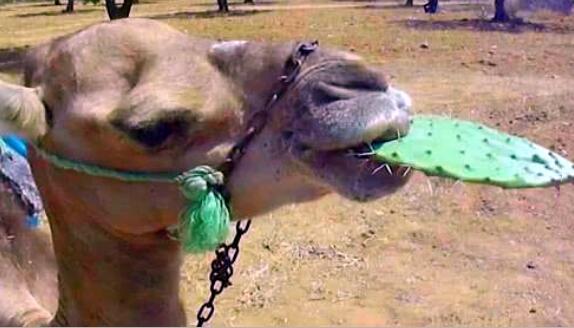
The reason camels can ignore cactus spines is mainly due to two reasons. The first reason is camels' unique oral structure. In order to resist the harm of the spines, camels have thick skin and flesh, but it's not enough. Because only thick skin and flesh can't effectively avoid the threat of long spines. So there are many horn-like protrusions in the inner walls of camels' mouths (as shown in the picture).
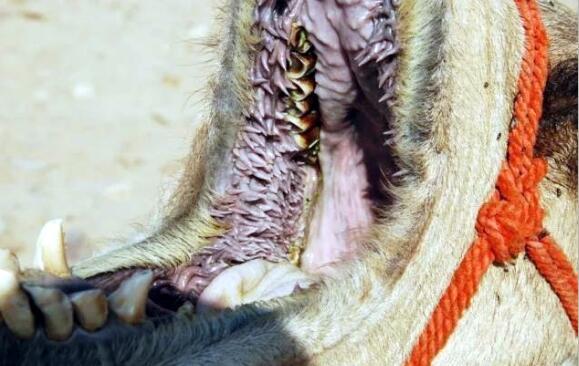
These horn-like protrusions are very hard, they are the weapons camels use to fight against cactus spines. When camels nibble on cacti, they usually cleverly hide their tongues, then use the protrusions on the inner walls of their mouths to complete the initial chewing action. Note that the horn-like protrusions in camels' mouths cannot chew cactus spines into pieces. Their main function is to straighten the direction of the spines, so as to avoid the damage to their mouths during subsequent chewing.

The second reason is camels' special digestive system. Camels have three stomachs, one for storing water, one for storing food, and the other for digesting. Camels will coarsely chew cacti after entering their mouths, and then send them into the stomach used for storage, where there are a lot of digestive juices for breaking down food. Even cactus spines will not last long here, they will soon be softened, then camels will regurgitate them to their mouths to chew them finely, and finally send them into the stomach for thorough digestion.
It should be pointed out that although camels' 'hardware configuration' allows them to freely nibble cacti covered in spines, sometimes cactus spines will still cause damage to camels' (especially young camels') mouths, so cacti are not camels' favorite foods, they eat cacti only when they have no choice.

We all know that camels live in desert areas, and in the dry and barren desert, cacti are the most common plants. It can be imagined that camels' ancestors had to bite hard to survive in these cacti covered in spines. At first, they must have eaten a lot of hardship, but after a long time, they learned to bite and evolved corresponding 'hardware configuration'.
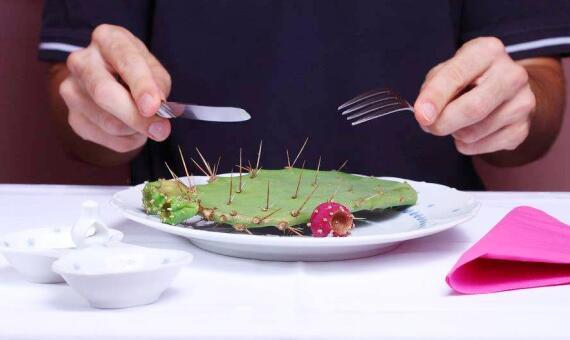
By the way, many cacti in nature contain excessive amounts of harmful substances to humans, so not all cacti are edible. If you, foodies, want to eat cacti like camels, you must first carefully determine the type of cactus in front of you, so as to confirm whether it can be eaten.
Okay, that's all we'll talk about today, welcome everyoneFollow uswe'll see you next time`
This article's images are from the internet, please contact the author to delete if there's any infringement