True Turtle Among Tanks - Giant Turtle
Giant Softshell Turtle Introduction
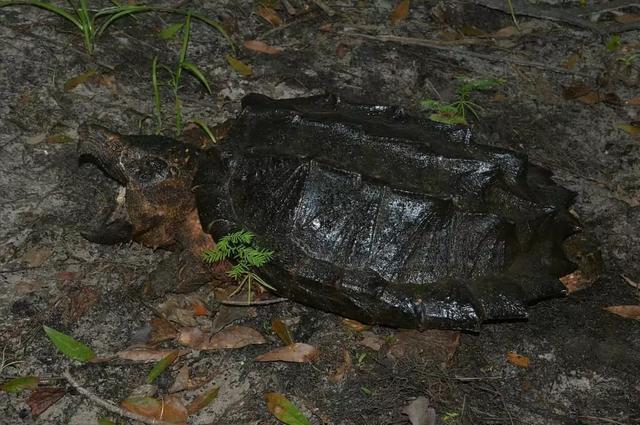
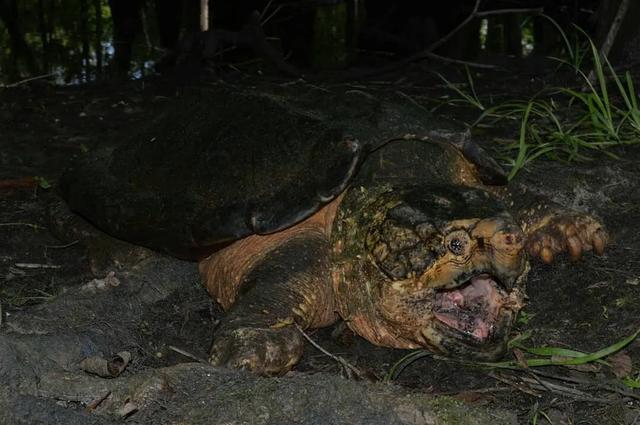
When people mention Giant Softshell Turtle, they often think of its appearance and unique predatory methods. It has a retro, angular, and distinct carapace, as well as a long tail, and a large head that cannot be retracted into its shell but can release a huge amount of biting force, like a heavily armored warrior from the ancient times. Such a distinctive turtle is loved by many, but as hobbyists, we are often more concerned about the quality of the specimens. We often don't pay much attention to the distinction between different species of this turtle. For a long time, people have always assumed that the Giant Softshell Turtle belongs to only one species: the Giant Softshell Turtle (Macrochelys temminckii), which is the most common cognition of this turtle. However, this is not correct, so today we will talk about the Giant Softshell Turtle and the different types of it
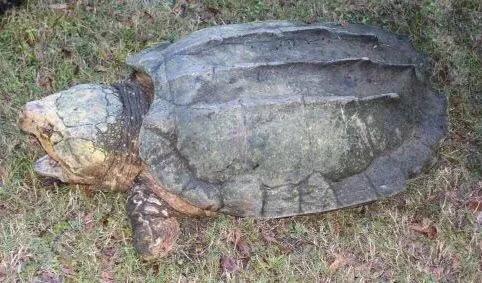
▲From the Ancient Times' Armored Warrior
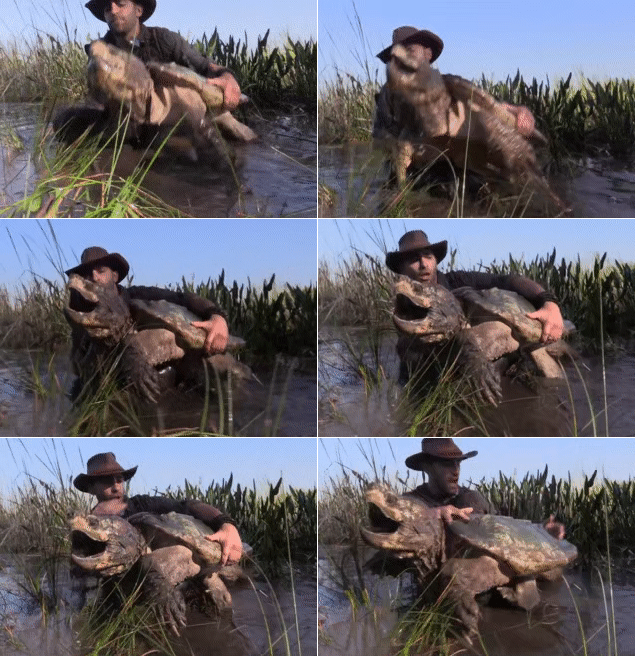
▲Huge Body and Mighty Appearance
How does the Giant Softshell Turtle behave?
Compared to its active and irritable relative, the Little Softshell Turtle, the Giant Softshell Turtle is relatively timid in the water. It might not even notice you if you step on it while wading in the wild (of course, if you step on its head, it's a different story). However, you still need to approach it cautiously because when you take it out of the water, it becomes irritable and aggressive, and a mature Giant Softshell Turtle can cut your fingers very cleanly.
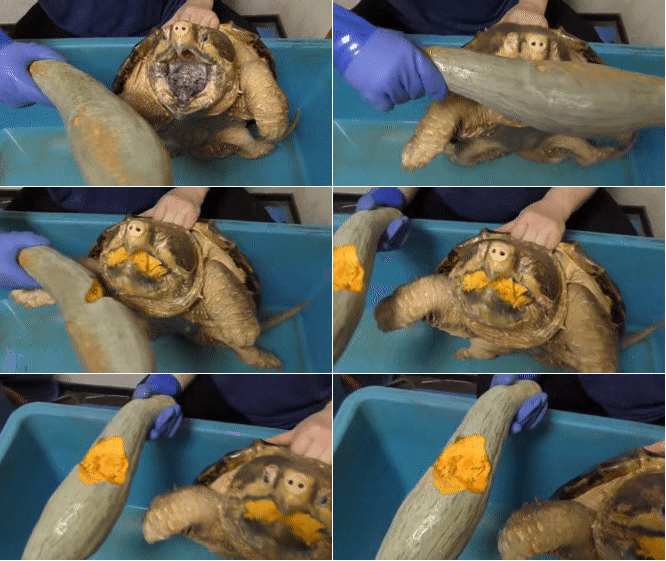
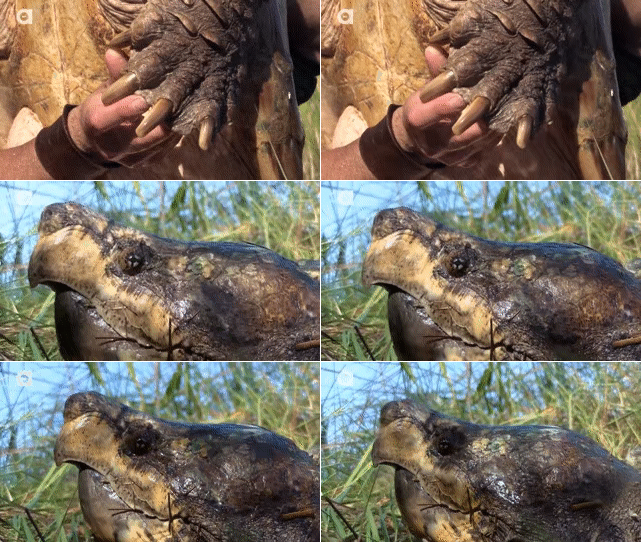
▲Their biting force is not to be underestimated
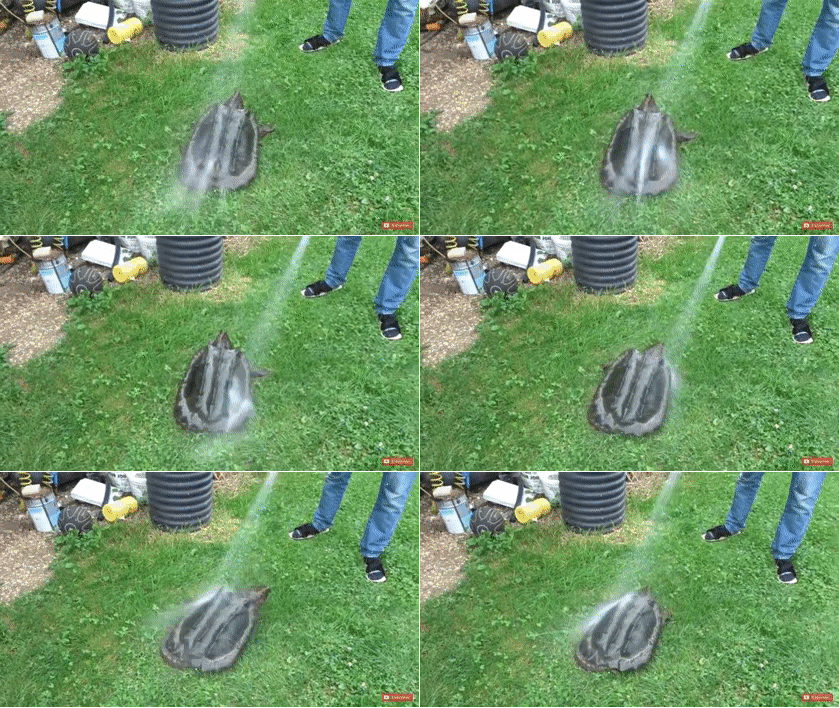
▲The Giant Softshell Turtle is more aggressive on land
In its native range, the Giant Softshell Turtle primarily inhabits ponds, swamps, and streams. They generally don't stay in particularly deep water because the Giant Softshell Turtle's swimming ability isn't good, although they are highly aquatic, they usually just crawl along the bottom of the water, unlike many other turtles that move up and down in the water. Therefore, the water level problem is also a point to pay attention to when raising it at home. When the water level is deep, you can use logs, platforms, etc. to help the turtle climb out of the water to breathe.
Besides egg-laying, the Giant Softshell Turtle rarely returns to land on its own. It's rare to find photos of Giant Softshell Turtles returning to land on their own. Many photos of Giant Softshell Turtles coming out of the water are taken after they have been forcibly captured. However, they still need to regulate their body temperature externally, and sometimes you can see Giant Softshell Turtles coming out of the water to bask. Generally speaking, when they need to raise their body temperature, they prefer to stay in shallow, sunny areas, while when they need to lower their body temperature, they hide in cooler, shadier areas. In an artificial environment, you can create a shallow water area and use halogen lamps to directly shine on it to simulate its natural environment.
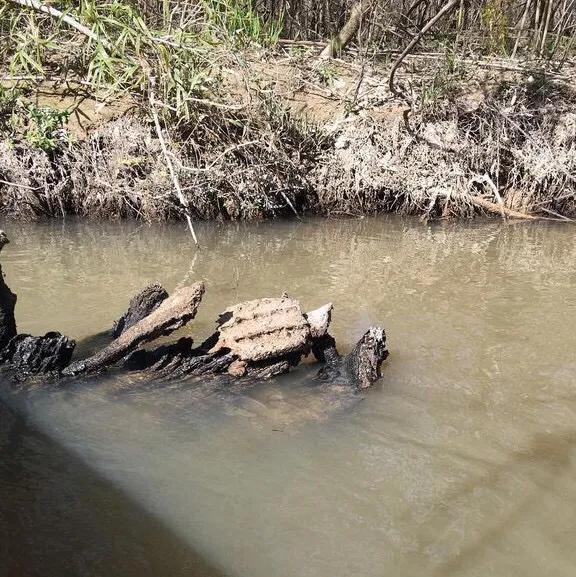
▲Rarely seen Giant Softshell Turtle basking on land, and there are many theories about why
▲Sometimes Giant Softshell Turtles come out of the water, for various reasons: such as individual differences, water quality problems (most artificial environments have small water bodies, so they are more prone to water quality problems) and the turtle's own illness, especially respiratory problems, the turtle coming out of the water is also for self-protection, sometimes it is caused by this reason.
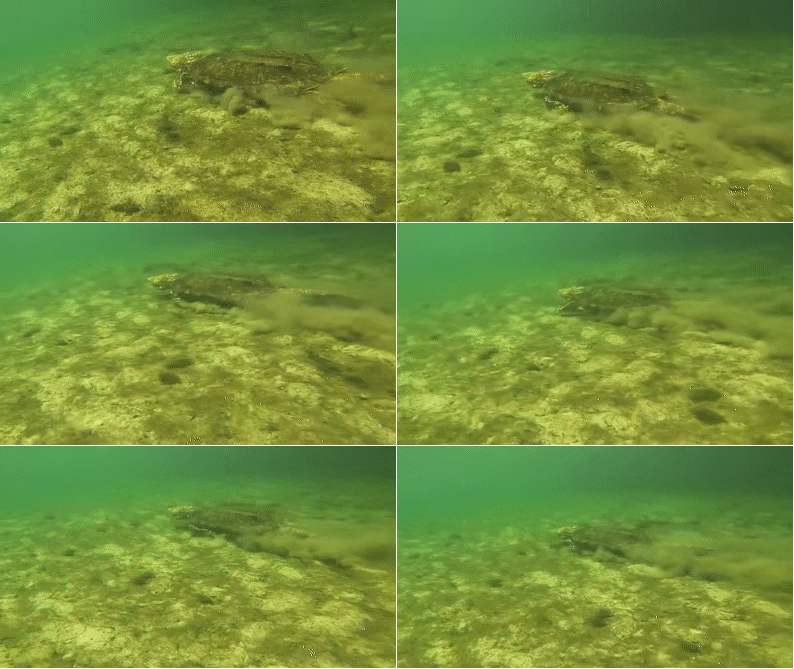
▲Giant Softshell Turtle walking in shallow water
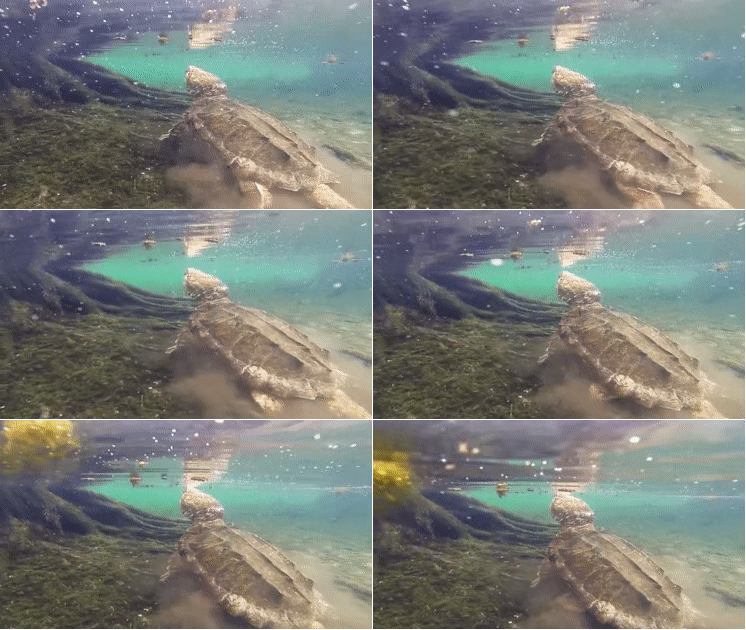
▲The turtle's head is sticking out of the water to breathe
The Giant Softshell Turtle is almost a pure carnivore. It can accept almost anything edible, young Giant Softshell Turtles have a worm-like lure on their tongues, it will wiggle its tongue to attract small fish, while slowly approaching the fish, when it confirms that it can bite it, it will suddenly close its mouth, this special hunting method is unique in turtles
While the Giant Softshell Turtle grows up, the worm-like lure will become less and less obvious, eventually disappearing completely. This is because large individuals of Giant Softshell Turtles can easily crush shellfish, snails, and even other turtle species with their powerful bite force, and obtaining food in this way is much easier than painstakingly twisting its tongue to catch fish, so it no longer needs to waste energy in this way.
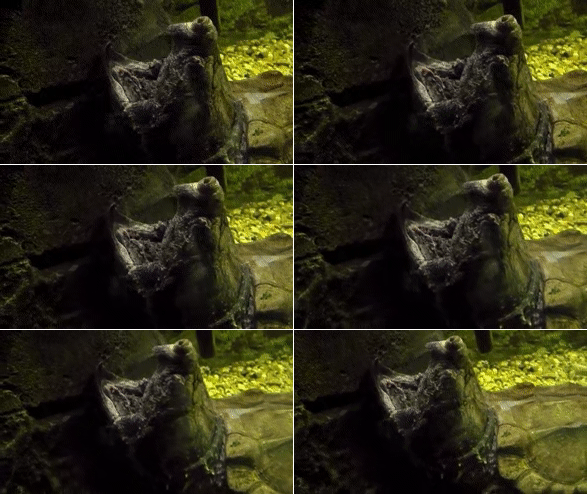
▲The worm-like lure on the tongue
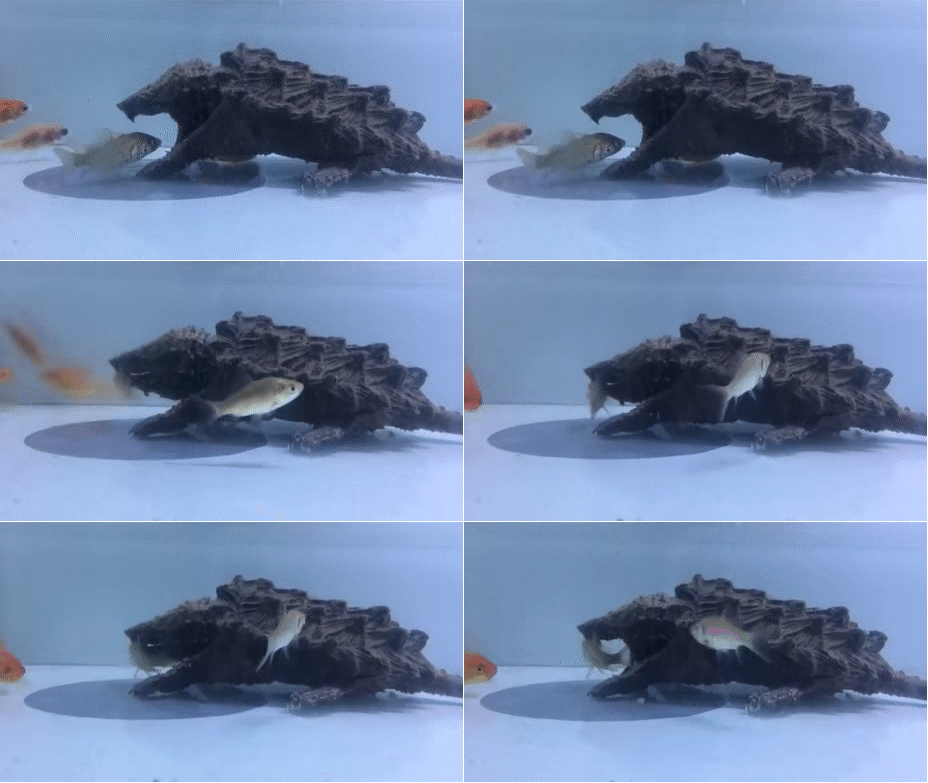
▲Locking the target and striking
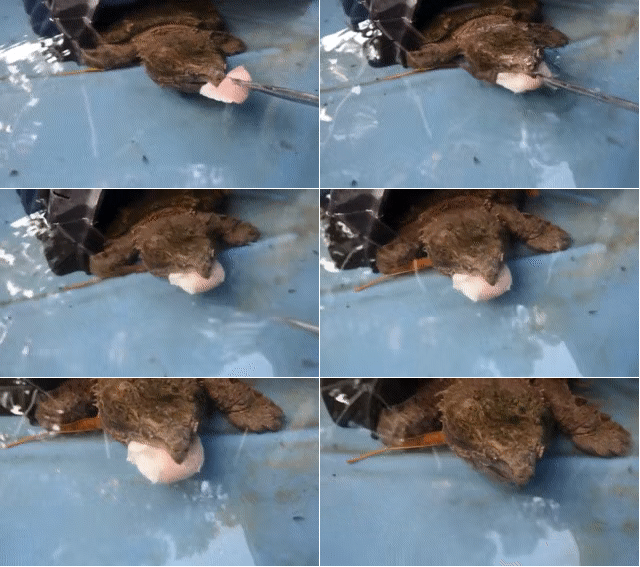
▲Some individual specimens raised artificially can stably accept the feeding of two-legged people
How many types of Giant Softshell Turtles are there?
As early as 1999, it was already considered that the Giant Softshell Turtle belongs to a group of 3 evolutionary lineages, and Thomas et al. team in 2014, based on morphological measurements, population genetics and fossils, it further divided these 3 evolutionary lineages into 3 different species: the Giant Softshell Turtle (Macrochelys temminckii, usually in the west-colored area), the Apalachicola Softshell Turtle (Macrochelys apalachicolae sp. usually in the central-colored area), and the Suwannee Softshell Turtle (Macrochelys suwanniensis sp. usually in the eastern-blue area). Domestic materials mostly only updated to 2014. However, this classification was soon questioned shortly after it was proposed.
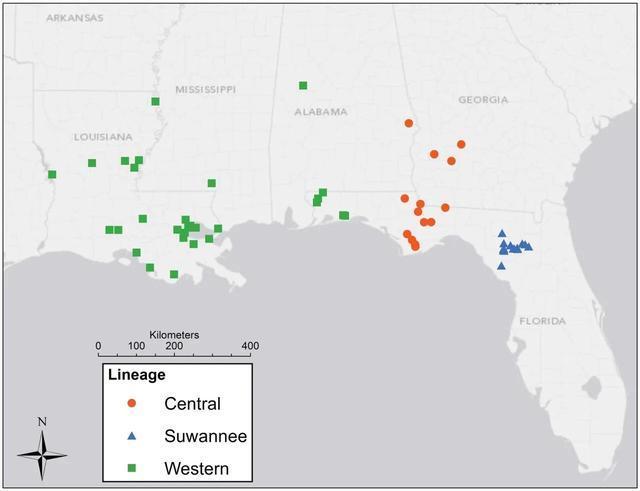
▲Map of the distribution of the three evolutionary lineages, the western-colored area is the Giant Softshell Turtle
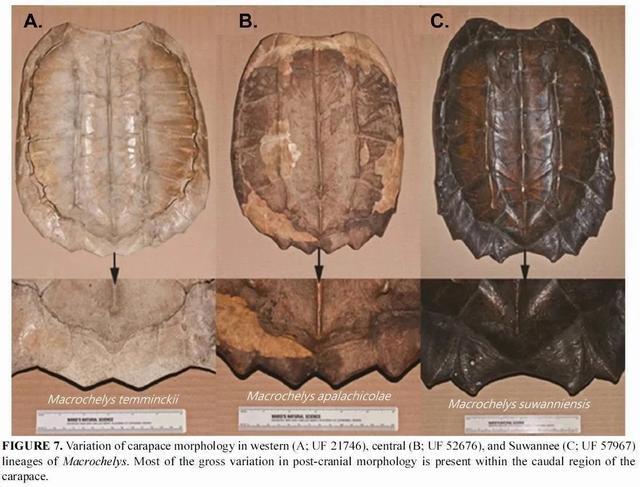
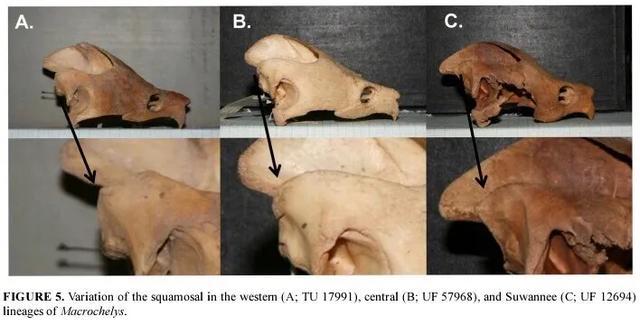
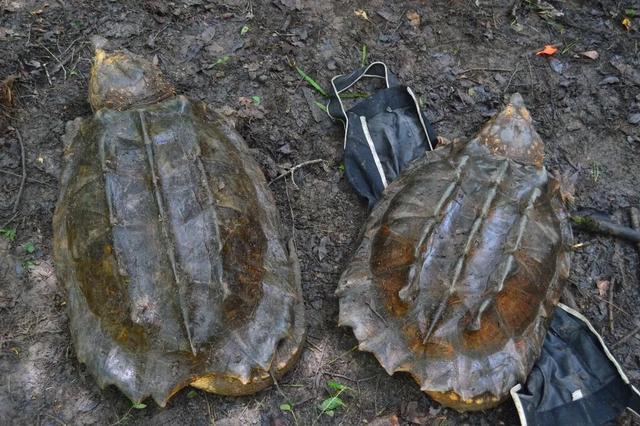
After further research and verification, by 2015, Brian Forte and Craig Gay confirmed that the 2014 division of the three evolutionary lineages into three different species was inaccurate. Because the original Giant Softshell Turtle and Apalachicola Softshell Turtle have very small differences in appearance and genetic differences, so these two evolutionary lineages cannot be recognized as separate species, so they are merged into one, while the Suwannee Softshell Turtle stands alone. This classification was widely adopted, and it has become the mainstream system and is still used today. So soon after this classification was proposed, it was questioned because of the lack of evidence and contradiction. ▲Comparison of the shapes of the nuchal scutes of the three evolutionary lineages, the rightmost one is the Suwannee Softshell TurtleAlthough the three evolutionary lineages were eventually divided into 2 independent species, the two evolutionary lineages merged together did not mean that there were no differences between them. These three evolutionary lineages may have differentiated from each other between the early Mesozoic and early Cenozoic eras. If you compare the specimens from different areas in the early Mesozoic and early Cenozoic eras, we can indeed find differences in appearance and genetic differences. For example, the Giant Softshell Turtle's nuchal scute's bump shape and tail shield shape are different: the Giant Softshell Turtle's nuchal scute's bump is relatively round, while the other two lineages have V-shaped bumps; the Suwannee Softshell Turtle's nuchal scute has a wide, crescent-shaped notch, and the other two branches have V-shaped notches▲Comparison of the differences in nuchal scute shapes, the rightmost one is the Suwannee Softshell TurtleAs mentioned in the previous article, the differences between the two evolutionary lineages that were considered to be 3 different lineages in 2014 are too small. If you don't look at the nuchal scute's bumps and the difference between two different origin's living specimens with tail shields, it's difficult to find the differences between these three evolutionary lineages. If you consider the individual differences, it's even more difficult. Simply put, it's like the phenomenon of geographic isolation in turtles, such as the Grand Red Ear Turtle and the Mississippi Red Ear Turtle, both of which are the same species of Common Painted Turtle, but they have different appearances and genetic differences because of geographic isolation.
Conclusion
After saying so much, how does the classification relationship between the Giant Softshell Turtle and its fans affect the players in recent years? I think, at least for some players, this example can help them change some of their preconceived notions: when identifying whether there are subspecies, populations or evolutionary lineages, we must use cautious attitudes, based on reliable verification, evidence and logical analysis, not based on subjective perception of appearance to make judgments. This kind of mechanical thinking is harmful and ineffective.
At the same time, this example tells us to change some mechanical thinking: biology is complex, we cannot simply assume that if there are two or more specimens with different appearances and genetic differences in a species, they must constitute populations, subspecies or different species relationships. These two extreme ways of thinking are harmful and ineffective.
In summary, the changes in the classification relationship between the Giant Softshell Turtle and its fans in recent years have what relationship with players?
Thank you for reading