The Smartest Dog – Border Collie
Border Collie
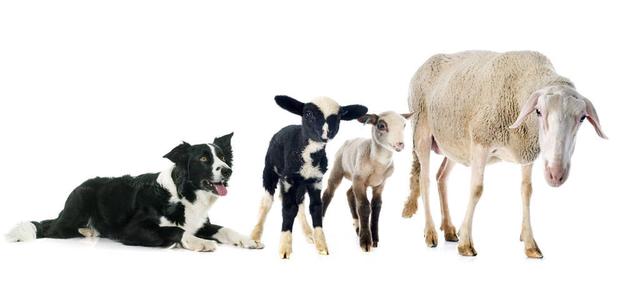
originating in Scotland, a type of Border Collie, with a strong herding instinct, highly intelligent and adept at observing and understanding human cues, able to drive sheep movements or rotations through eye contact, has a long history of being used as a sheepdog in the world, ranking first in the world's dog intelligence rankings.
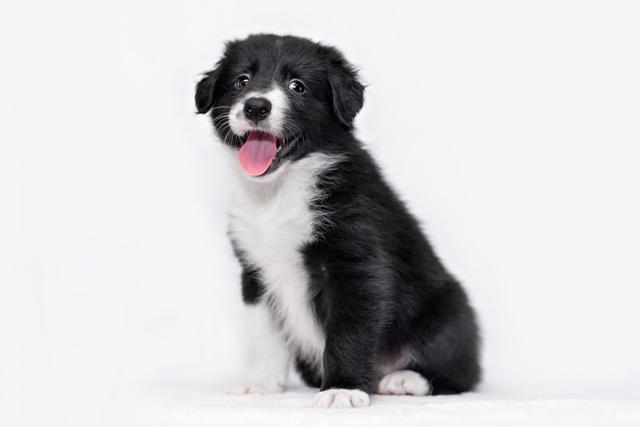
Characterized by intelligence, strong learning ability, high comprehension, easy training, good communication with owners, gentle, loyal, and obedient, its loyalty can be described as shadowing its owner. Due to its gentle and loyal nature, it doesn't bark excessively, once becoming one of the most popular pets among urban populations. Moreover, Border Collies are competitive in frisbee dog events, being the main players in the annual World Frisbee Dog Championships.
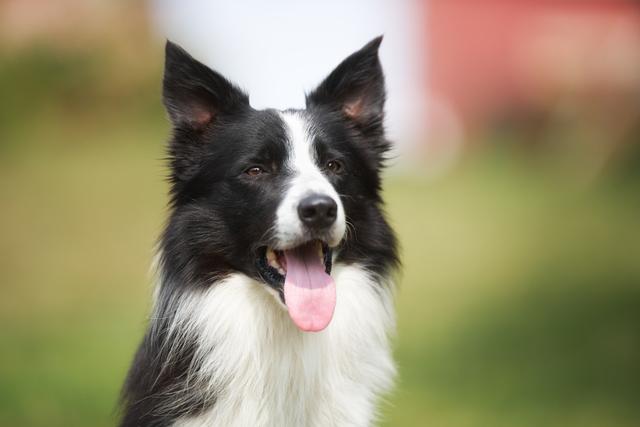
Border Collie, also known as Border Collie, is a very intelligent breed, mainly distributed in four countries – Britain, America, Australia, and New Zealand. American scientists, through extensive testing, have discovered that Border Collies' obedience intelligence surpasses that of German Shepherds and Poodles, ranking first among over 100 dog breeds. In the early days, the sheep used for herding in Scotland and the dogs used to manage sheep were all found on the Scottish islands. Those dogs originated from Irish clergy who emigrated to Scotland, and they brought their dogs with them, which had already happened before the Vikings invaded Scotland. However, in this rugged geographical environment, people relied on dogs to help collect, drive, and manage livestock. According to modern sheepdog origins, they have the ability of 'eye control', which was developed and trained by herding people in the border areas of England and Scotland, so these dogs are called 'Border Collies'.
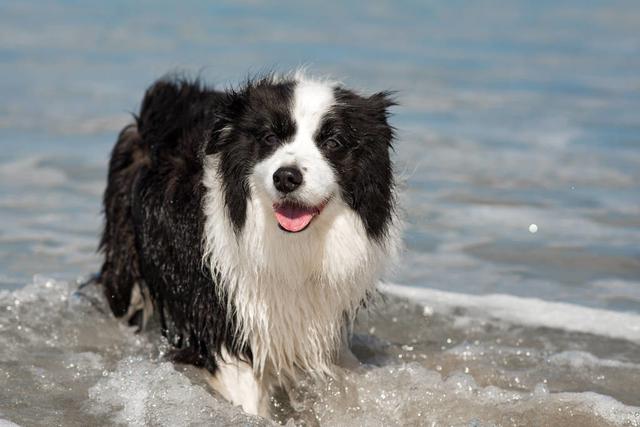
The Border Collie has a broad head, with the length of its head approximately equal to its face length. Its ears are medium in size, split widely, and sensitive and flexible, maintaining a standing or semi-standing posture. The eye part is open, of medium size, egg-shaped, and eye color is usually brown. The tip of the nose is pointed and extends to the tip of the nose, with well-developed nostrils, generally black. The chest is deep and of medium width. The forelimbs are strong and parallel. The wrist is slightly inclined. Wolf paws can be trimmed, and the foot pads are compact and oval-shaped, with deep and solid pads, and the toes are moderately rounded and compact, and the nails are short and strong. The hindquarters are broad and inclined towards the tail. The large thigh is long and deep, with appropriate knee joints. The hind legs are abundant and parallel, with a slight hock.
Stubborn, docile, yet keen, alert, sensitive, and agile, with a character that is both fierce and bashful, intelligent, easy to train, gentle, loyal, and obedient. Its innate intelligence allows it to clearly understand its owner's instructions.
Border Collies can withstand harsh climates and have two types of fur – coarse and short – both of which are soft and dense. There are dense, coarse hairs on the neck, shoulders, hips, hind legs, and tail; soft, short hair on the face, ears, forelimbs, and hindlimbs.
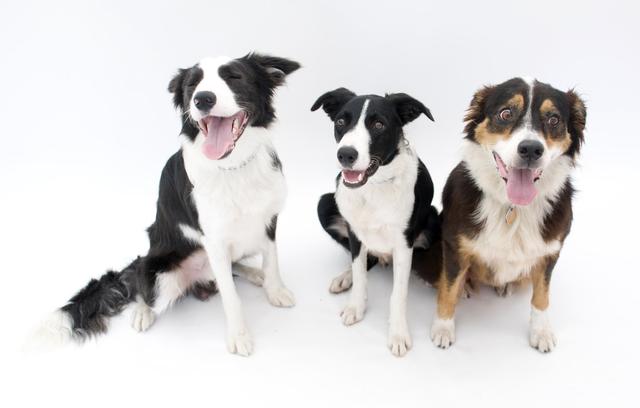
Common colors include black and white, blue and white, and brown and white. In addition, there are three-colored hair with black, blue, and brown as the main colors, as well as meteor colors such as blue meteor and red meteor. Most people only think of Border Collies having black and white colors, because this color is the most common.
It is energetic, vigilant, and enthusiastic. Its intelligence is equivalent to that of a 6-8 year old child. According to assessments, it may be the smartest dog. Border Collies are not only excellent pets and companions, but also good guard dogs in families.
The feeding of Border Collies doesn't differ much from that of other dogs. After weaning, puppies can start eating puppy food, because puppies' digestive capacity is limited, and they can be fed 3-4 times a day. After 8 months, dogs and adult dogs can be fed once a day, but in moderation, eating about eight-tenths full is enough. It's best to feed it about 40 minutes after a walk. You can judge its appetite by the condition of its feces. For example, if the feces are in a strip shape and are soft and easy to pick up with a dog feces clamp, it means that the dog's food is just right; if the feces are too soft, it means the dog's food is too much, and you need to add more dog food.