Migratory Birds Flock to Guan Ting Reservoir, Transforming It into a Swan Lake
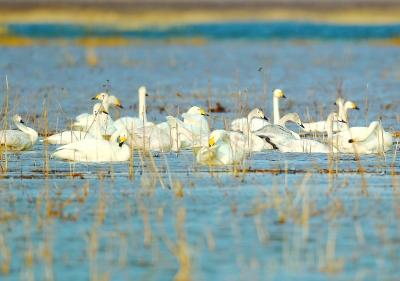
Flocks of swans rest at Guan Ting Reservoir. Photo by Li Li
Reporter Yu Lisang
In family groups, swans successively arrived and landed from the air. Because of their heavy weight, when they landed on the ice, they couldn't stop abruptly, some skidded into the water, and others were stuck with their bellies on the ice. The first swans to land spread their broad wings to protect their mothers and babies, seemingly telling the following swans: 'Attention! This runway is for geese!'
On February 20th, led by gray cranes, winter migratory birds arrived in Beijing, and joined the resident gray cranes; on February 20th, swans successively landed in major reservoirs and waterways in Beijing. Because the melting speed of the ice was relatively slow, they began to rest and forage in family groups. Yesterday, 96 swans were detected in the reservoir area of Guan Ting Reservoir, and more than 50 swans formed groups. Guan Ting Reservoir became a swan lake.
'In places where the ice melting speed is faster, large areas of water are formed, and swans and other birds will gather to forage.' Li Li, director of the Black Leopard Wild Animal Protection Station, introduced. After landing, the swans' first thing was to bathe and groom their feathers, first in family groups to tidy up, and then to join the large group.
'We also noticed during monitoring that the survival rate of swan babies during migration has been increasing in recent years. A family brings five, six, or even seven babies to migrate.' Li Li said. This is closely related to the recent implementation of wetland restoration and protection work across the country. Whether it's the breeding ground, the wintering ground, or the replenishment ground during migration, the amount of food is very abundant, and, more importantly, human poaching behavior is rare, and the safety coefficient of family-based populations is getting higher.
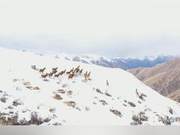
Playing, frolicking, and foraging. In the distance is the unmelted snow-covered Hai Tu Peak. Swans, gray cranes, and bean geese… Near the water surface is only the call of birds. Animals and nature coexist harmoniously, such a beautiful scenery, such soothing scenery.
Source: Beijing Daily
Follow Hebei News to learn about the latest news in Hebei.