Common Water Scorpions
Water scorpions, also known as Da Tian Fu Lian, Da Tian Bi, water knowlets, forceps scorpions, scorpion scorpions, big water bugs, underwater tyrants or toe biters. They often quietly lurk on the bottom of the water and attach various camouflage items to their bodies, waiting for prey to approach. Once the prey enters the 'range', they will launch an attack, bite the prey and inject a terrifying digestive saliva into its body, and then suck up the melted prey corpses.
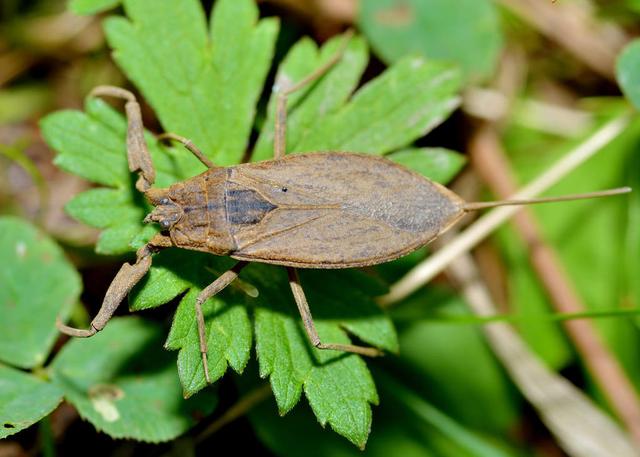
Water scorpions are large aquatic farting bugs. The two front legs shake and look like drums, so they are called water scorpions. Because they often live in shallow fields and mud, it's difficult to find them. They mainly prey on insects close to the muddy fields, such as water dew.
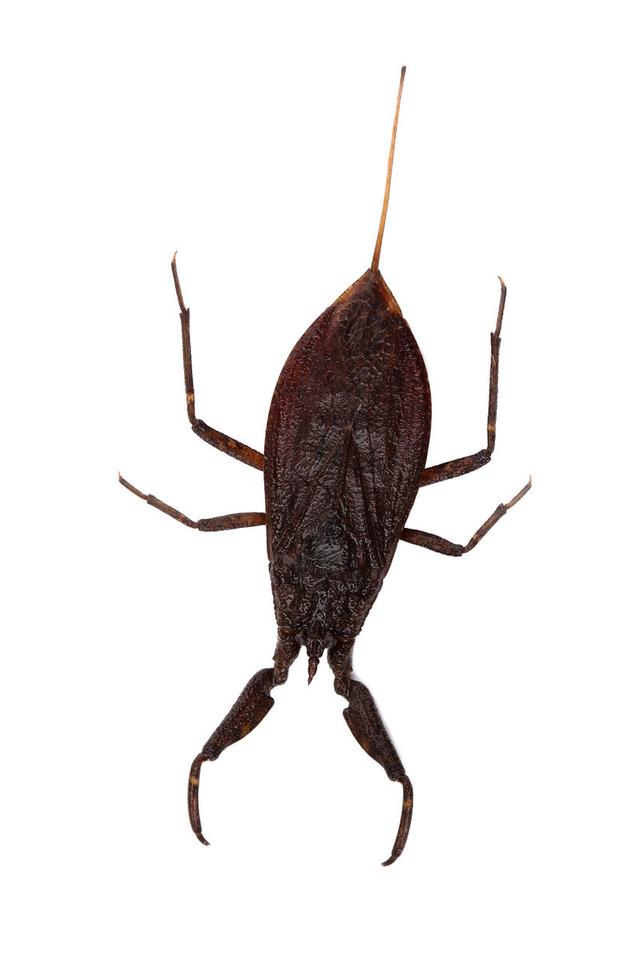
The body length of water scorpions is similar to that of water axes or slightly smaller than water axes. Generally, their body length is 3-4 cm. Compared to water axes, the body of water scorpions is flatter. The head of water scorpions is small, with a pair of shiny black compound eyes.
The front legs of water scorpions are like two small scythes, with hard small thorns on them. The front legs are responsible for catching food, while the middle two legs and hind legs are specifically for swimming.
The abdomen of water scorpions has a respiratory tube similar to that of water axes, the length of the respiratory tube is about the same as its body length. Water scorpions also have 3 antennae.
Water scorpions and water axes are both carnivorous animals. Their food mainly includes tadpoles, water dolphins, small fish, etc. The color of water scorpions is also very similar to the color of surrounding tree branches and falling leaves, so it is difficult to distinguish them. Therefore, it is very difficult to catch water scorpions.
So, if water scorpions and water axes fight, who will win? Should still be the one with more developed mouth and better food capture ability, the water axes?
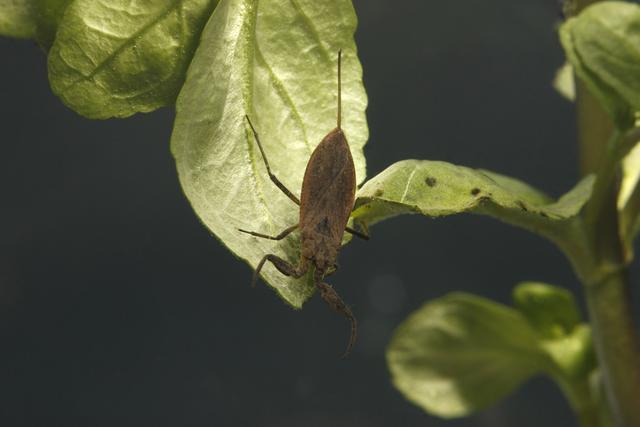
Adult body length 37-40 mm, width 10-11 mm. The body is flat, dark brown to gray-brown. The head is small; the compound eyes are spherical, protruding, black. The front chest panel is wider than the head. The wings cover the back of the abdomen; the forewings are black with banded patterns. The front feet are developed for capturing food; the middle and hind feet are for walking feet. The abdomen is raised on the back, with a triangular-shaped ovum flap at the end; the end of the abdomen has a long respiratory tube, which is as long as 38 mm and close to the body length.
Occurring one generation per year in Jiangxi, Hunan, adult insects overwinter in the cracks of rocks and mud in rivers, ponds, and lakes; in March, they emerge and become active; in May, they mate and lay eggs in water plant stems; in late May, the larvae hatch. Adults and larvae prey on water fleas, mosquito larvae, snails (, ), dragonflies and bean sprouts' larvae; adults can hunt newly hatched fish and tadpoles. This insect is both beneficial and harmful.