Flower House Winery Design
This is a new resort estate, where you can not only taste delicious wines, but also enjoy exquisite cuisine and admire the beautiful natural scenery. Its existence has brought fresh vitality to the valuable landmarks in the area. Covering an area of 15.5 acres, the estate was built in the mid-1970s and is just a few minutes’ drive from Healdsburg, the center of the Russian River Valley. It has been known for its rustic appearance and organic integration with the surrounding nature for a long time, and has good prospects, but the facilities of the estate have gradually aged due to years of neglect. Coincidentally, Flower House Winery is looking for a place that can effectively convey its natural, sustainable winemaking philosophy. The former is waiting for someone to renovate it, and the latter is looking for a carrier; the two complement each other, and Flower House is thus born.
When protecting natural heritage, it is also necessary to ensure that the site appears in a new form and meets the customer’s requirements. Brooks Walker, Principal at Walker Warner Architects, states: “Our approach is simple: let nature dominate, and use architecture to build the experience. Ultimately, it’s about the story of this place.”
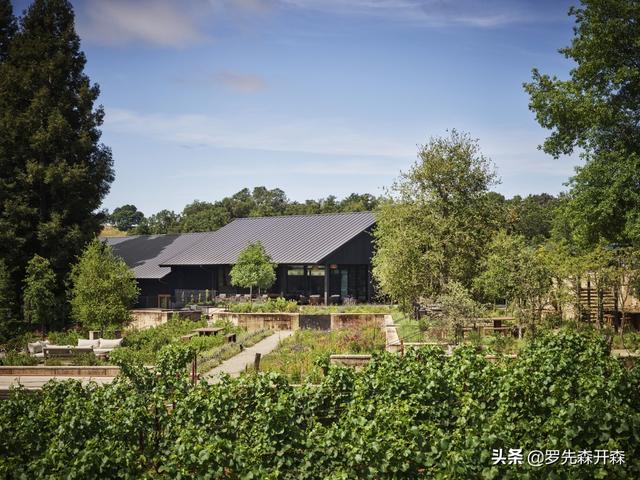
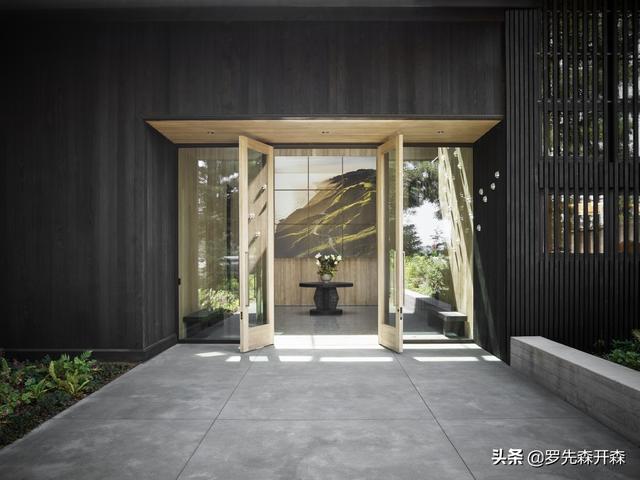
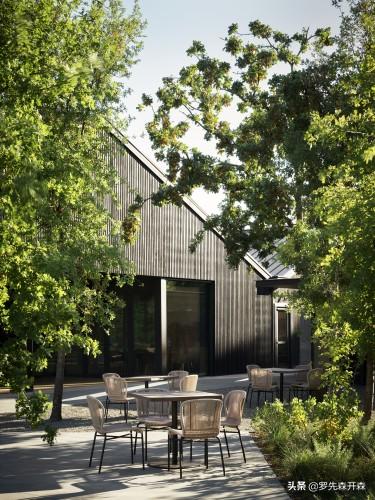
The site is located in a redwood forest, but the connection between the building and the surrounding nature is low. In order to address this, the designers wanted to find ways for visitors to re-establish contact with the landscape, and also conceived of using a series of minimalist industrial elements to design the site. With the investment in this site, the revitalization journey has begun. In the newly built site, after passing the parking lot, you will arrive at the visitor center. In the renovated warehouse visitor center, there are signs indicating how to get to all locations, and there is a display area for the history of Flower House. Inspired by the redwood trees in the surrounding forest, the designers designed the visitor center in dark colors, so that the landscape can break out of the building and become the focus of sight.
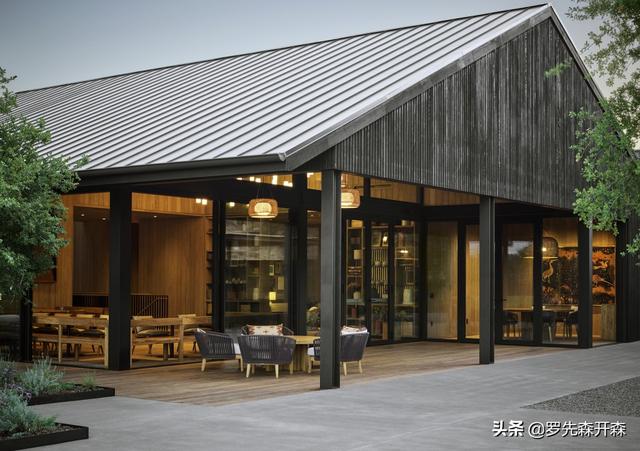
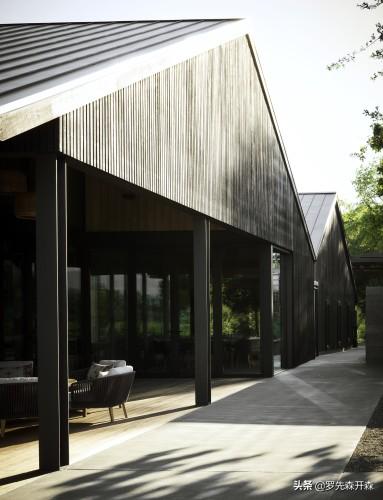
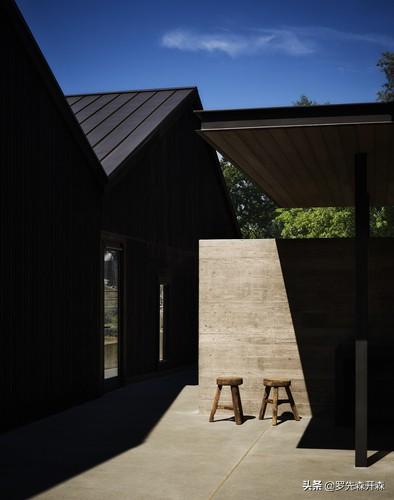
In the architectural design, the existing building structure is repaired according to the sustainable development requirements of Flower House. This approach focuses on the design work, so that most of the original structures can be ‘utilized’ again, which enhances the preservation of the structural components. The design also adopts passive energy strategies (low cost, high impact), including utilizing sunlight (skylights and large windows) and shading (external wooden screens and redwood forest shade). Moreover, sustainability is also reflected in the fact that artist Evan Shively used repairable redwood to create large functional wooden structures.
▼ Skylight
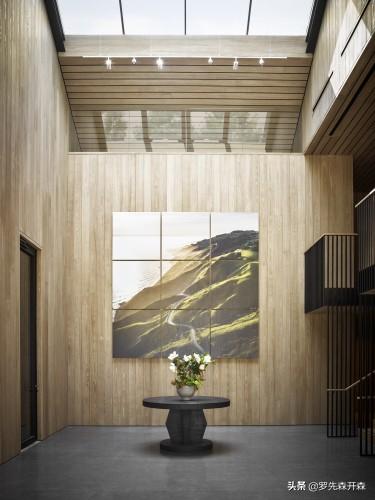
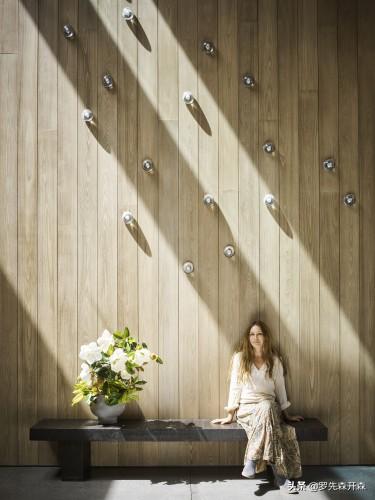
The black-toned space of the exterior of the building and the white-toned space of the interior form a harmonious yin-yang (dark-light) relationship. Mike McCabe, Principal at Walker Warner Architects, states: “The overall presentation of the building is understated. This renovation is not for the world to announce a news, but to create a place that can integrate the Flower House brand with the natural ecosystem’s sustainable values and respect for the area and inheritance.” Flower House’s owner says their wish is: “to create a welcoming home where guests can enjoy wines and share happiness.”
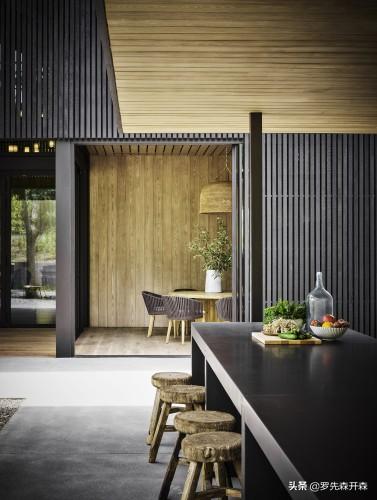
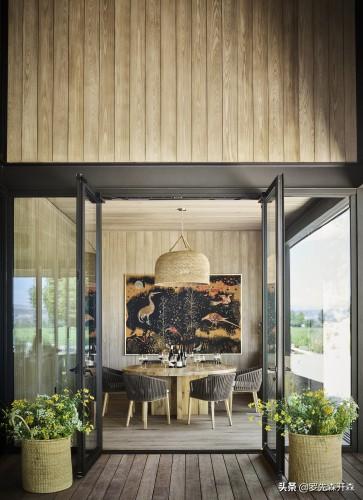
Here, you can host various private parties, and you can taste Flower House Sonoma Coast wines anytime, anywhere. After experiencing the first floor, you can follow the service staff to the second floor, where there is a sunroom, restaurant and reception area, and VIP guests also have private lounges.
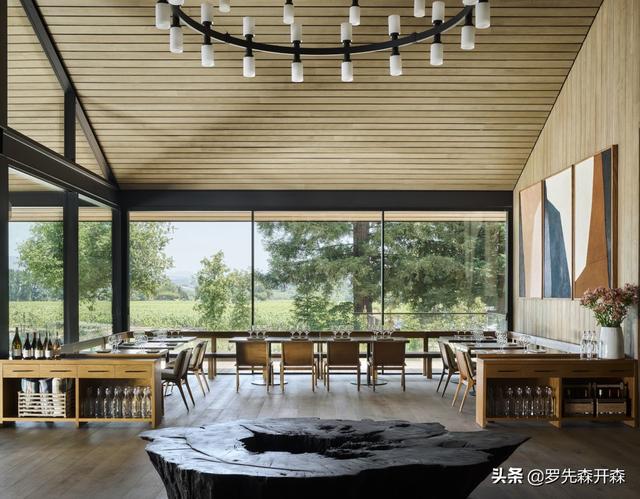
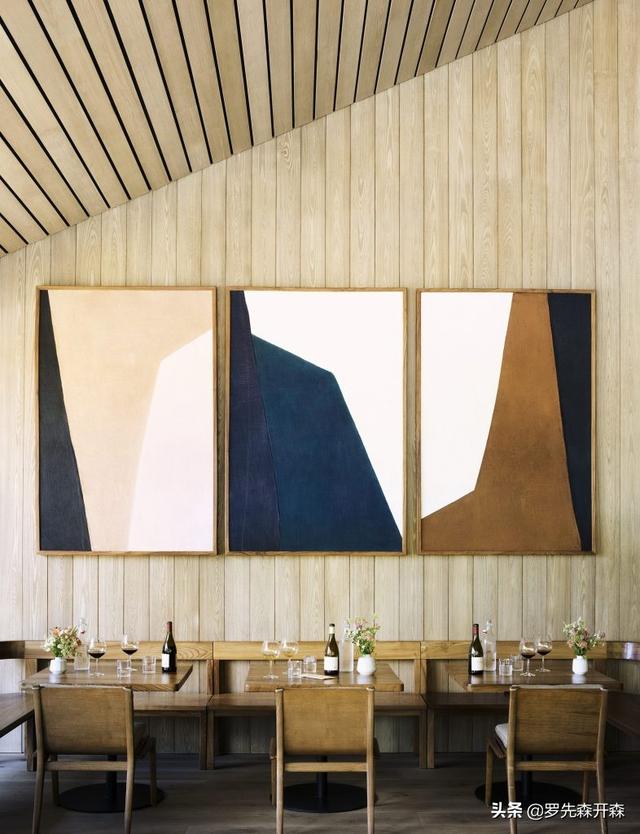
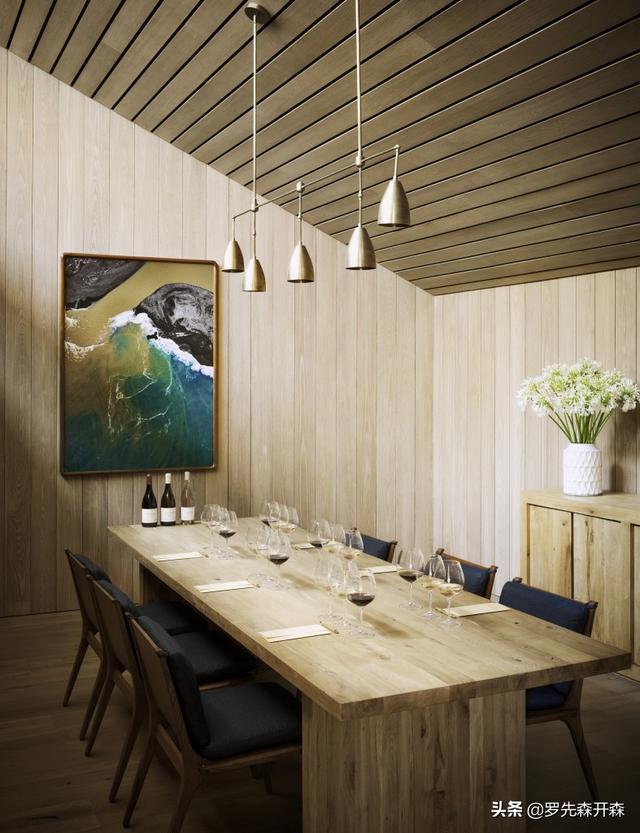
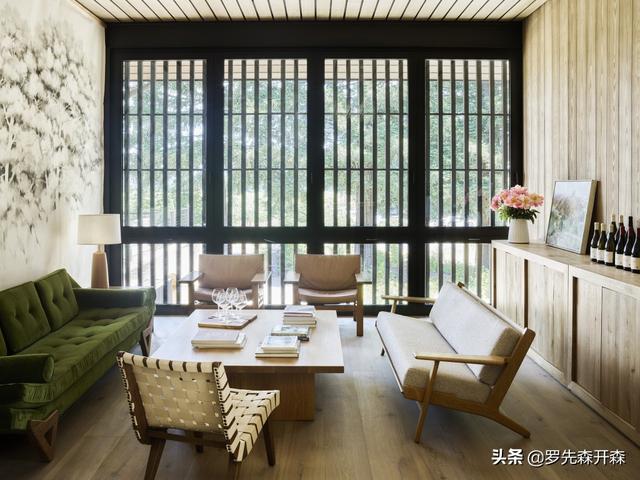
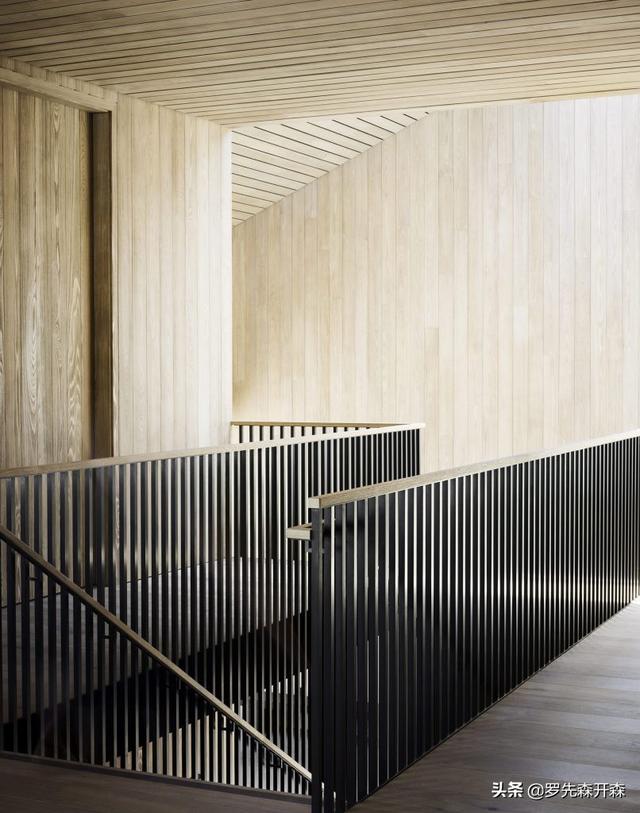
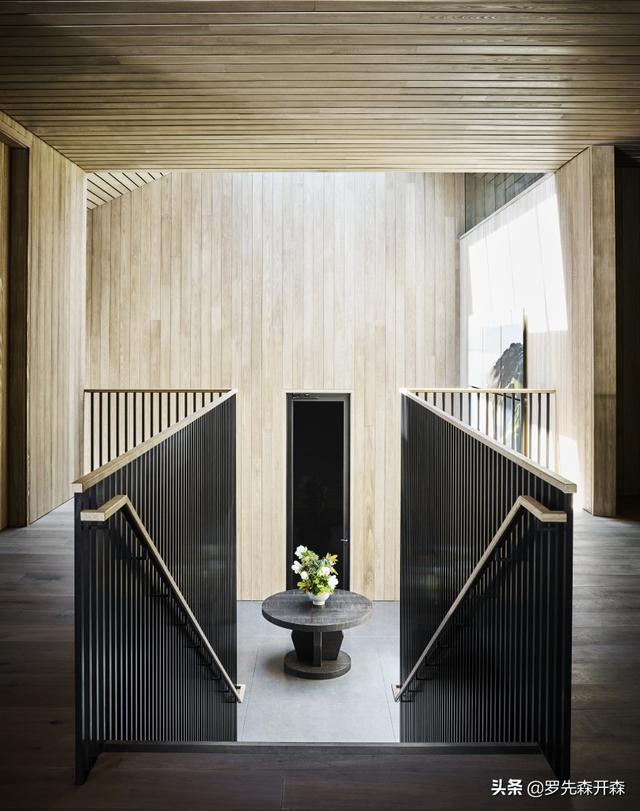
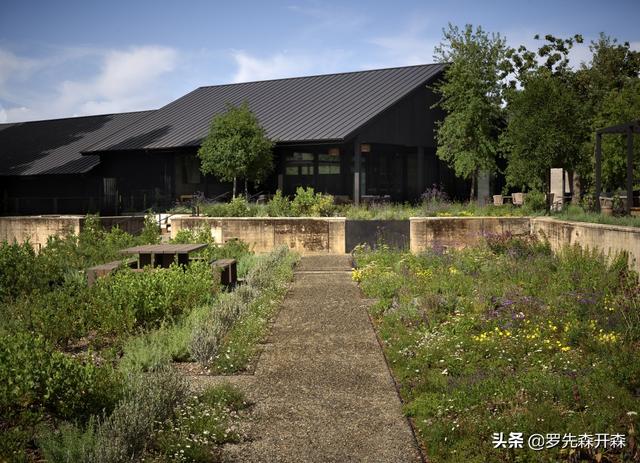
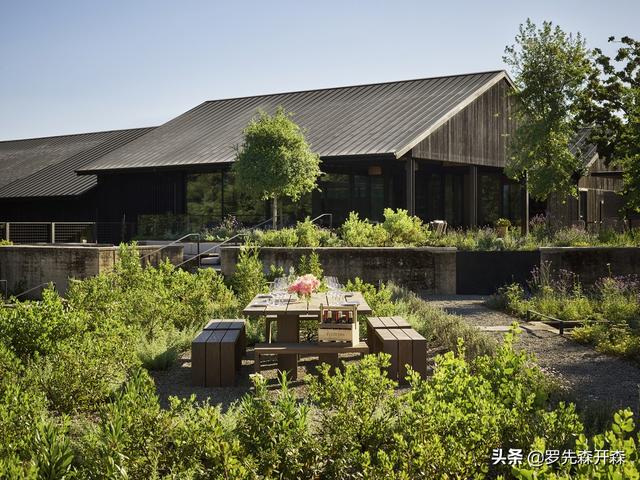
Without damaging the overall landscape, a small house was added to one side of the visitor center. The building was built into the terrain, which not only maintained the local architectural style on the outside, but also provided access to the mountain top landscape and garden. In the garden on the mountain top, there is also a rest area, where you can stand and admire the scenery and drink tea and have meals. The garden, surrounded by a rammed earth wall, provides a space for guests to gather, taste wine and enjoy the tranquility of nature.
▼ Spacious gardens
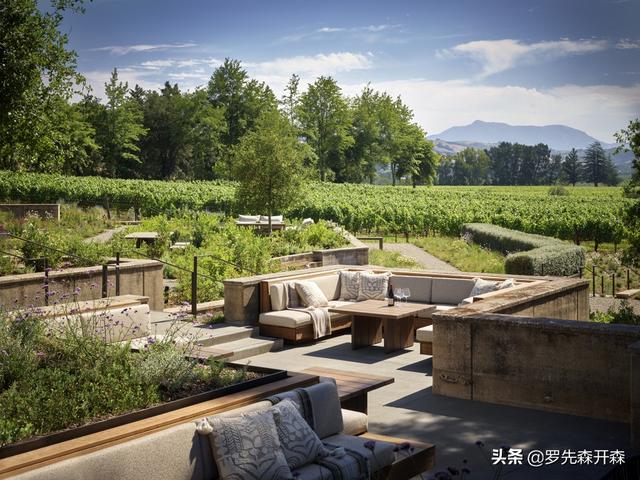
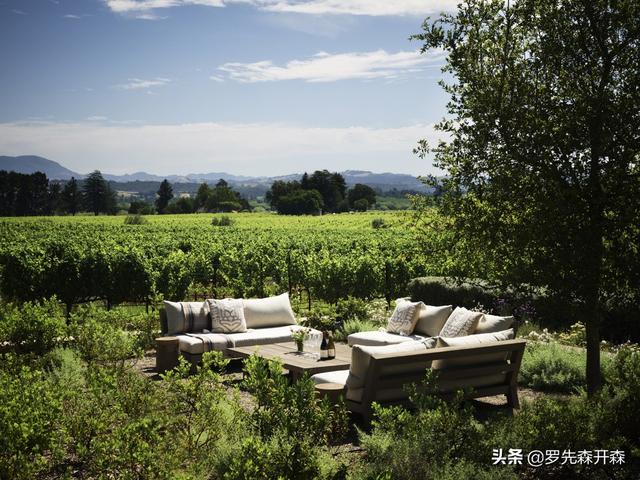
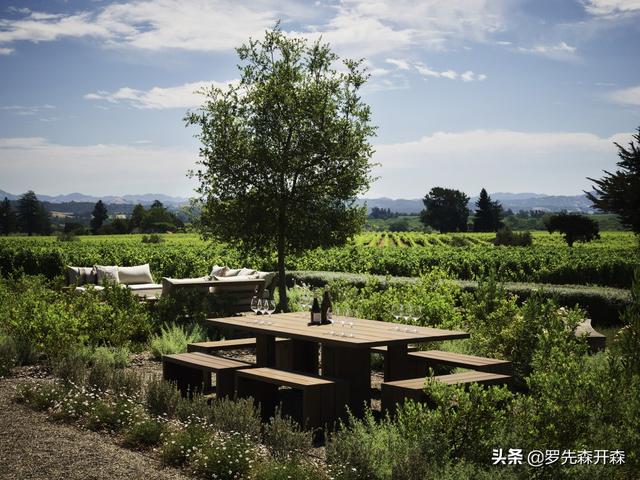
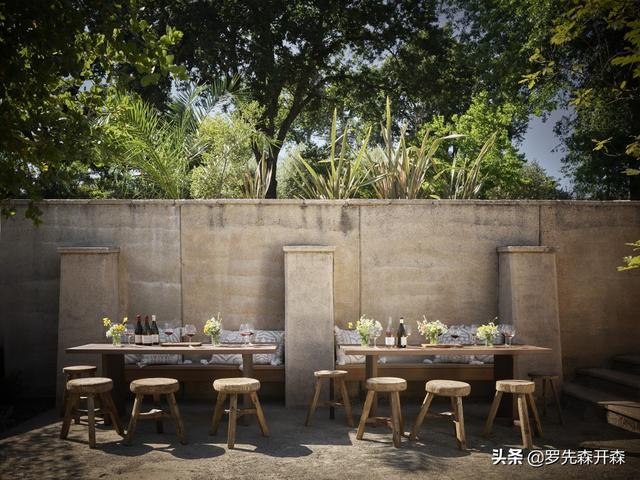
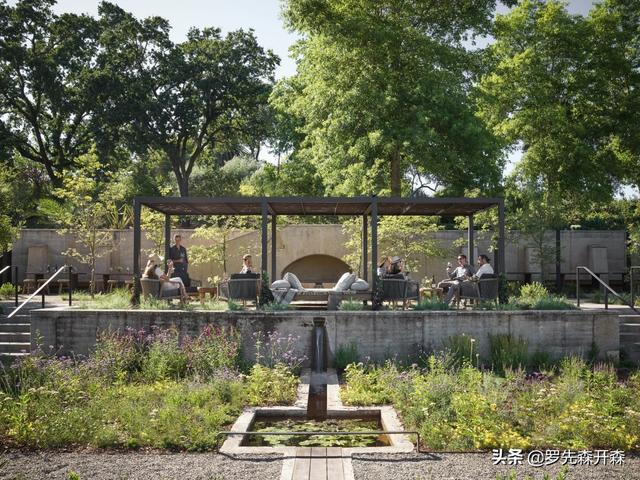
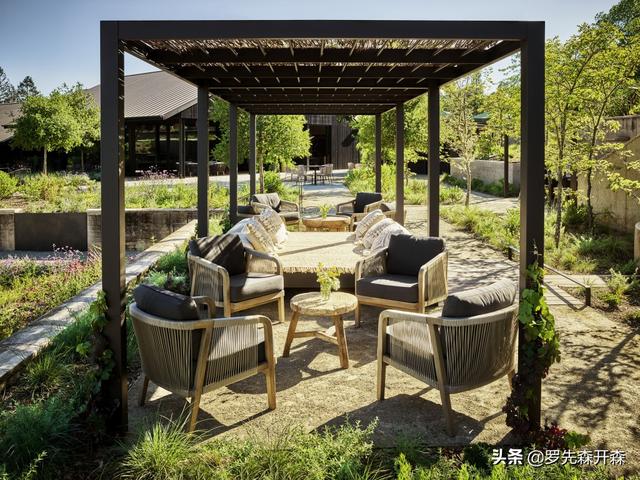
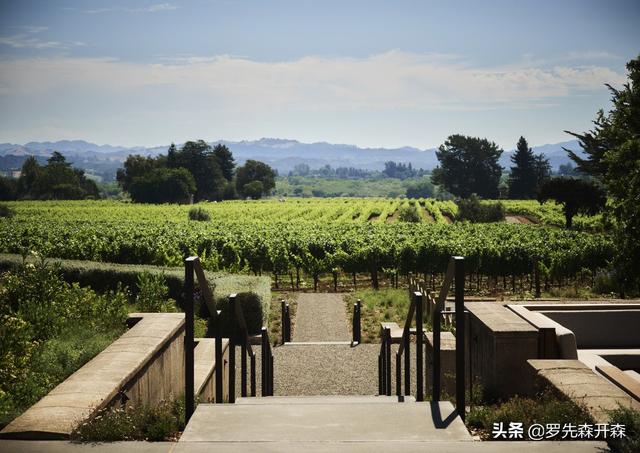
The project is located on the boundary between the Griddle Vineyard and the Russian River Farms, in the heart of the Oak Mountain Ridge, reaching the coastal redwood forest, and surrounded by these forests. The terraces are planted with different types of plants, forming a plant community terrace garden. According to the design requirements, the landscape also uses concrete walls made of wood and cement, which will become historical with the passage of time and become mottled, reflecting the past. The designers have perfectly integrated the landscape and architecture, shaping a quiet space for guests, a space where they can make friends and enjoy life through wine.
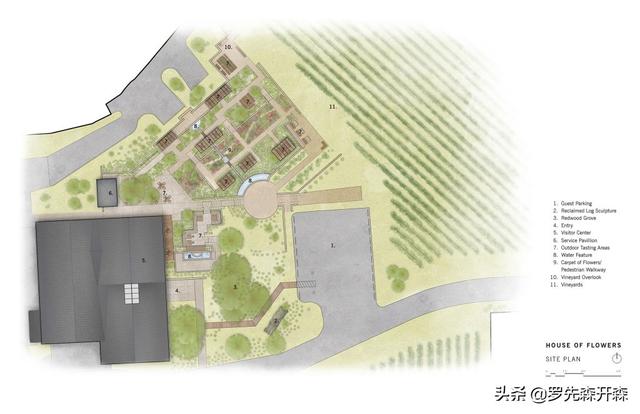
▼ Master plan
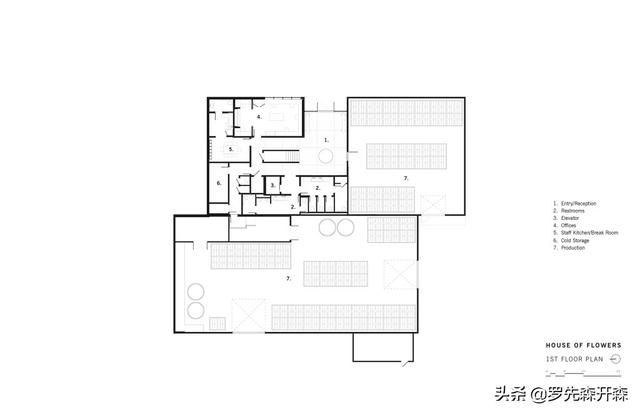
▼ 1F plan
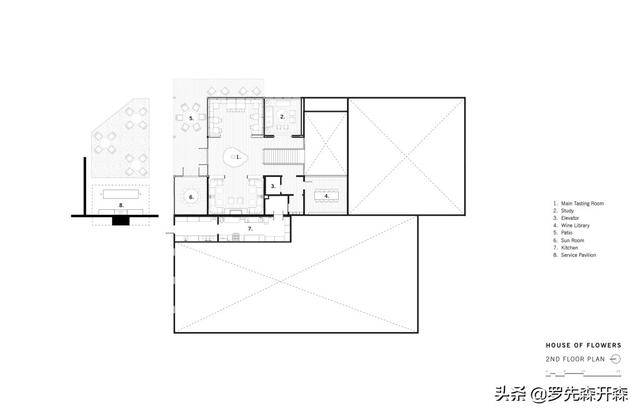
▼ 2F plan
Project location: Healdsburg, California
Walker Warner Architects team:LEED AP Director Mike McCabe;LEED AP Director Brooks Walker;LEED AP Senior Project Manager Sharon Okada;Architectural personnel: Matthew Marsten, Hana Bittner, Darcy Arioli
Collaborating Consultants:Architecture: Walker Warner Architects Interior: Maca Huneeus Design Landscape: Nelson Byrd Woltz Landscape Architects Local Landscape Consultant: Alexis Woods Landscape Design Lighting Design: Anna Kondolf Lighting Design Structural Engineering: Daedalus Structural Engineering Contractor: Cello & Madru Construction Company Woodwork: Acorica
Photography: Douglas Friedman