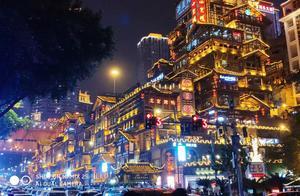
West Zhitou, a historically famous ancient wharf in Zhenjiang where Marco Polo disembarked
West Zhitou, the first time I came across this name, I thought I was in Japan. In fact, it's a very Japanese-sounding old wharf and old dock. Located at the foot of the Yuntai Mountain west of the city of Zhenjiang, Jiangsu, it's a historical site built upon the remnants of the Bashan Stroll. It was originally known as Jinling Wharf during the Tang Dynasty, and was later renamed West Zhitou during the Song Dynasty. Let's explore West Zhitou with the illustrations below~
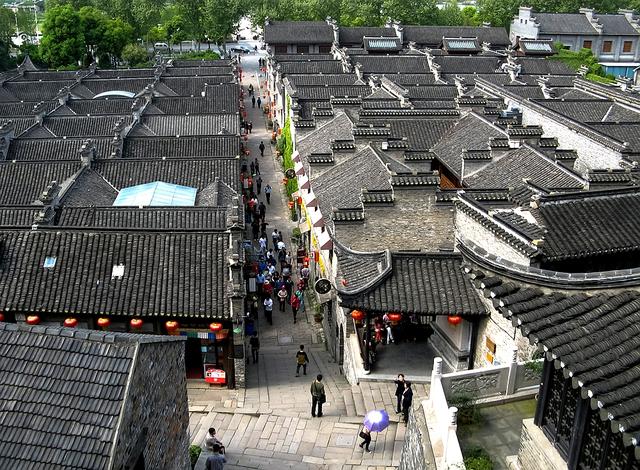
From the entrance of the ancient street, you can climb uphill. The hill is not high, and there's a pavilion at the top. Climb to the highest point, and you'll have a good view. You can overlook the entire West Zhitou Ancient Street, making you feel like you've traveled through time to the bustling and noisy period of the past.
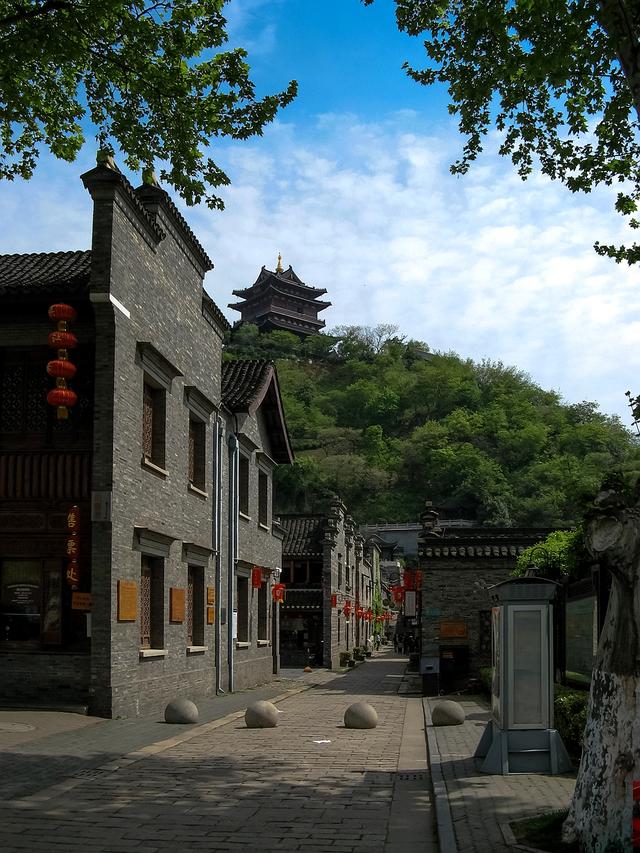
West Zhitou was an ancient Yangtze River ferry dock, and now it has become land, which shows the great power of the sea changes into land. Only a small part of the original dock remains today, most of which were made old and renovated later. Walking on the stone-paved ancient street, it has a rich humanistic atmosphere and historical atmosphere.
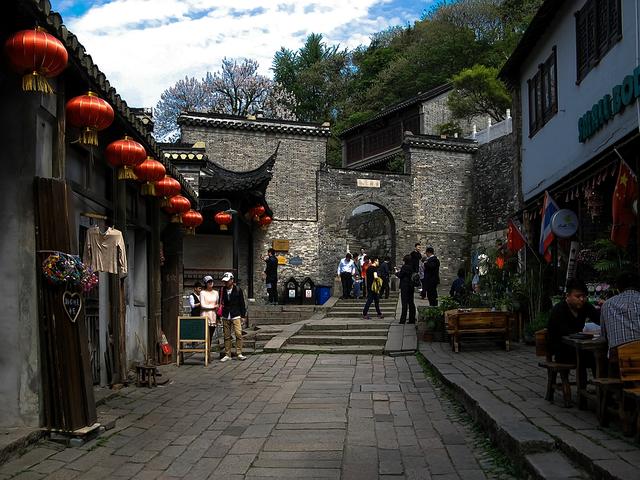
During the Yuan Dynasty, the famous Italian traveler Marco Polo came to Zhenjiang from Yangzhou, and he disembarked at West Zhitou. This shows that West Zhitou has been a famous Yangtze River dock since the Three Kingdoms period. Zhenjiang has been a key transportation hub since the Tang Dynasty, the throat of the transportation. West Zhitou was the only dock in Zhenjiang that connected to the north, and it had a very important strategic position, which has been a contested area for generals since the Three Kingdoms period.
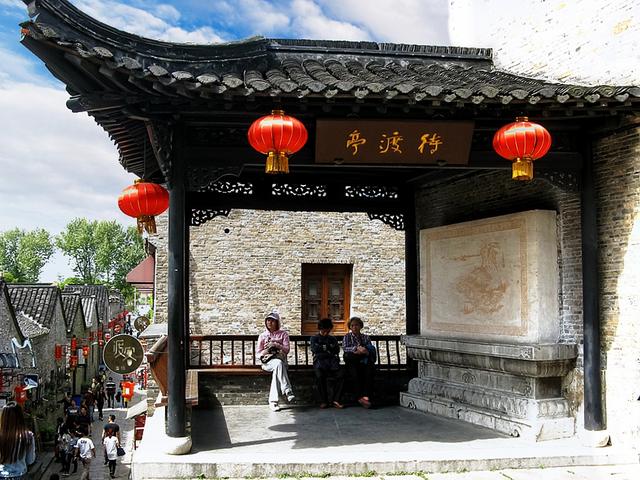
The Waiting Pavilion was a place where people waited for boats or took shelter from the rain. Legend has it that Emperor Qianlong also stayed here in the pavilion. There's a jade stone carving in the Waiting Pavilion with the following inscription: 'Waves are gentle, and the ship's bow and sail; the wind is mild and breezy, and the willows are drooping; people come and go, and old and young are carried; regretting separation, we offer our sincere respects.'
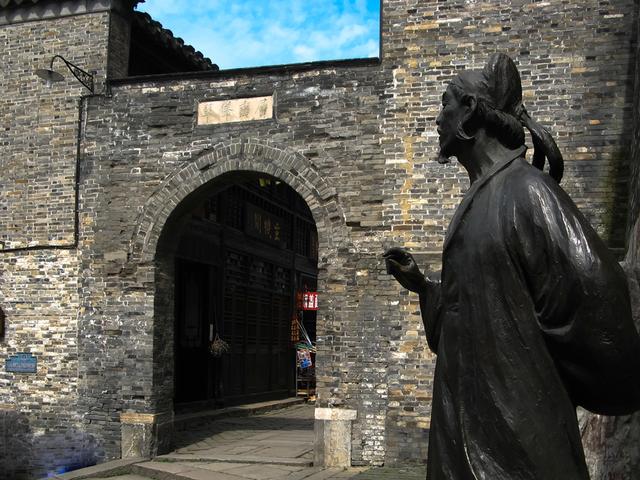
Stone wall next to the statue of Zhang You, a Tang Dynasty talent, and his poem 'Jinling Wharf, small mountain pavilion, a night of travelers can be melancholy, the tide recedes, the moon is slanted across the Yangtze River, two auspicious stars are like melon fields.' Turn left from here to West Zhitou Ancient Street, and if you keep going up, you'll reach Yuntai Pavilion.
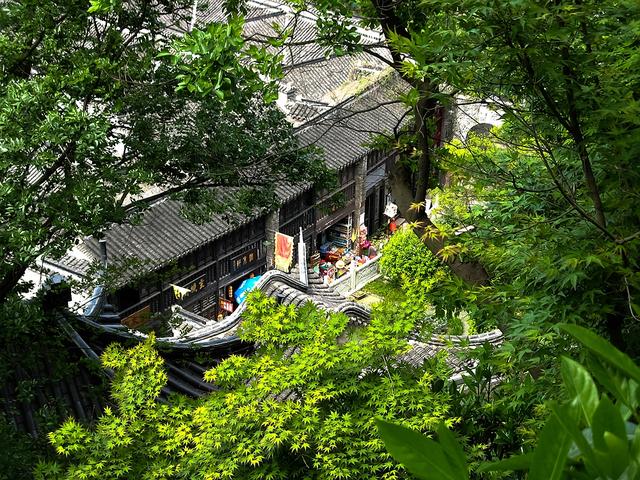
West Zhitou Ancient Wharf is situated on the mountainside alongside the river, with beautiful scenery. Li Bai, Meng Haoran, Wang Anshi, Su Shi, Mi Fu, Liu Yu, Marco Polo and others all moored or docked here, and left many poems that have been passed down through generations.
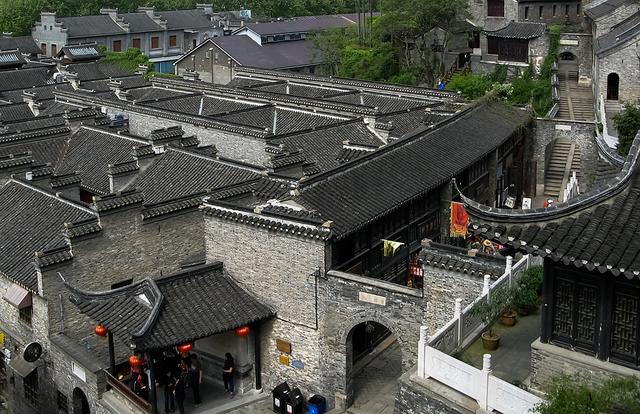
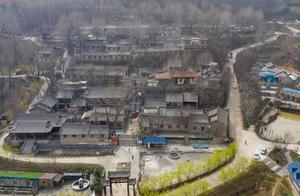
Looking down from the pavilion in the middle of the mountain, the entire West Zhitou is in your sight. The houses are densely clustered, arranged in a complex and intricate manner, extending in all directions. The dark tile roofs and gray brick walls reflect the setting sun, creating a stunning visual effect.
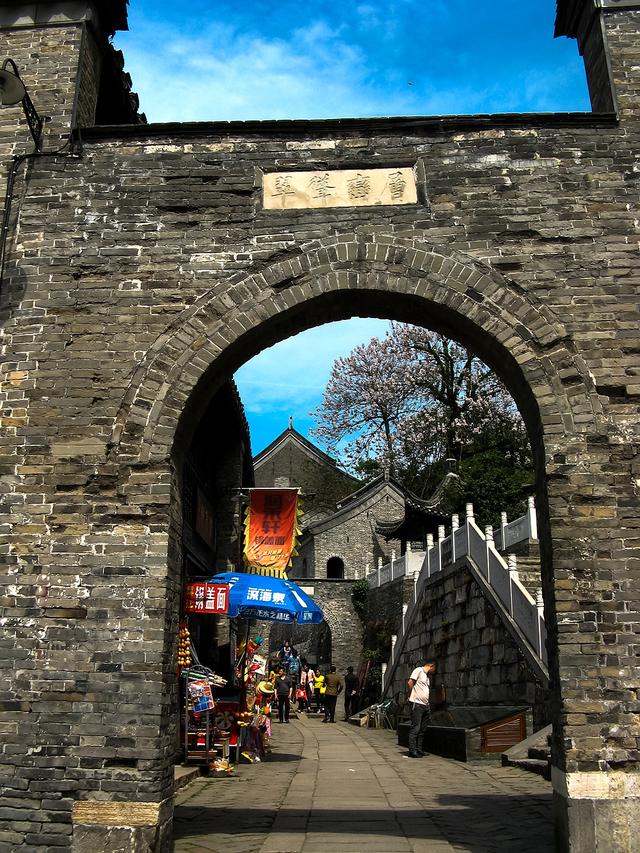
Here's a photo of the 'Layered Azure Peaks' gate.
The four arched gates along the ancient street are inscribed with the following words: 'Layered Azure Peaks,' 'Flying Pavilion, Scarlet Flow,' 'Sharing Voyages, Blessed Cruises,' 'Shared Ascension to the Way.'
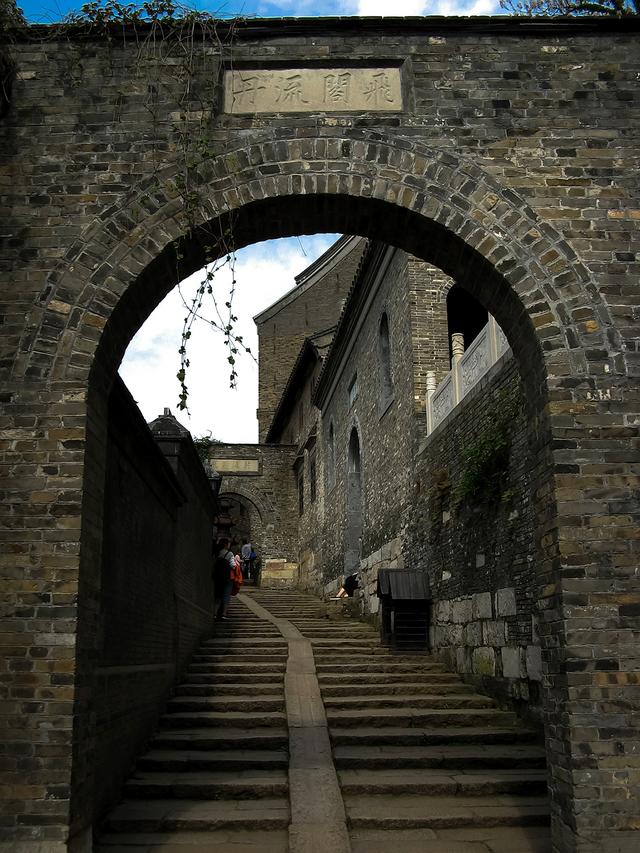
The second gate, 'Flying Pavilion, Scarlet Flow.'
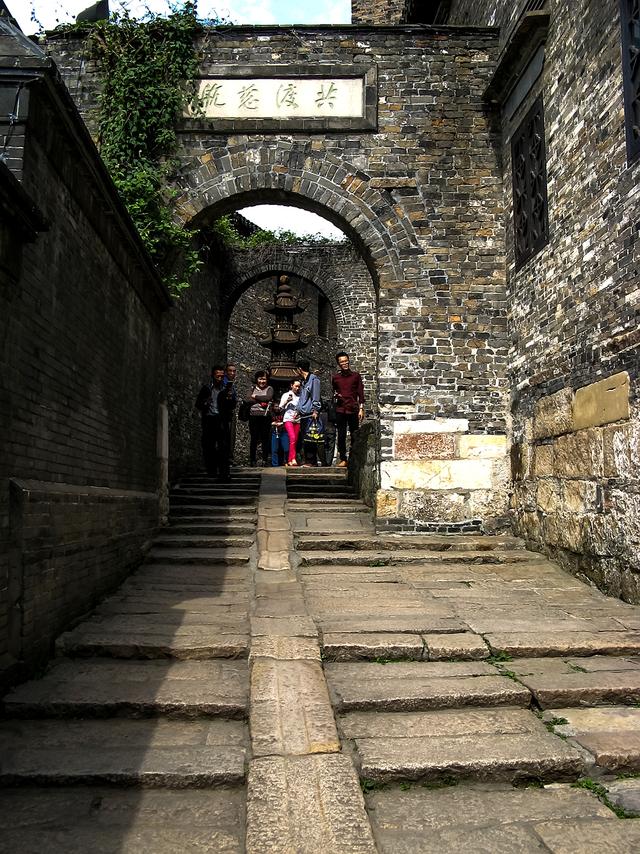
The third gate, 'Sharing Voyages, Blessed Cruises.'
There's a stone-paved uphill road between the two gates, with a sloping surface in the middle. This slope was used for draining rainwater quickly, and also for transporting goods that docked or departed from West Zhitou. The wheel tracks are historical traces that remind us of the prosperity of West Zhitou in the past.
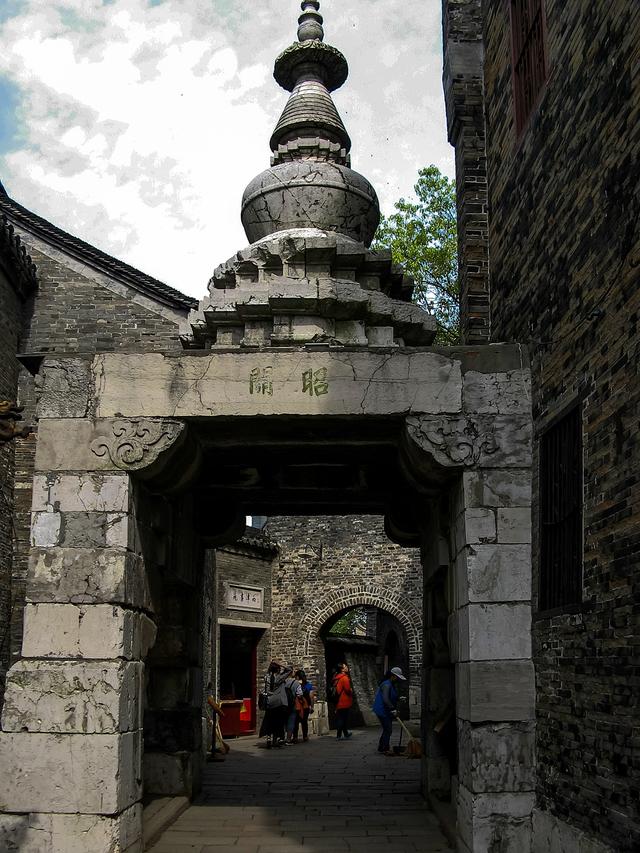
This is a Yuan Dynasty-era street gate pagoda. According to experts, it was commissioned by Emperor Hai Mountain of the Yuan Dynasty and was built by Liu Gao, the master craftsman of the Yuan Dynasty's Metropolitan White Temple. The base of the pagoda is engraved with the words '' (Zhaoguan – Declaration Gate) on both sides, hence its name 'Zhaoguan Stone Pagoda.' The Viewing Platform Cave (pictured on the right) was built during the Song Dynasty and was renovated in the 9th year of the Xianfeng reign of the Qing Dynasty (1859).
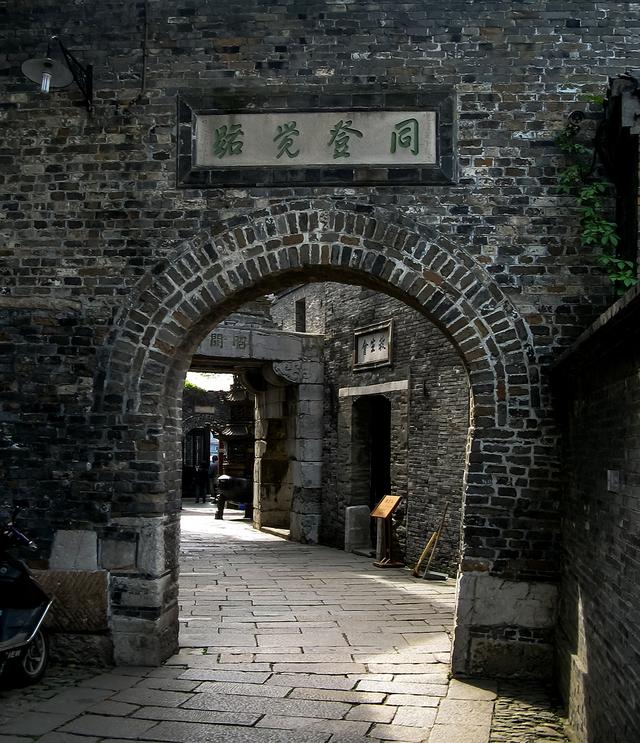
This is the first gate on the east side, 'Shared Ascension to the Way.'
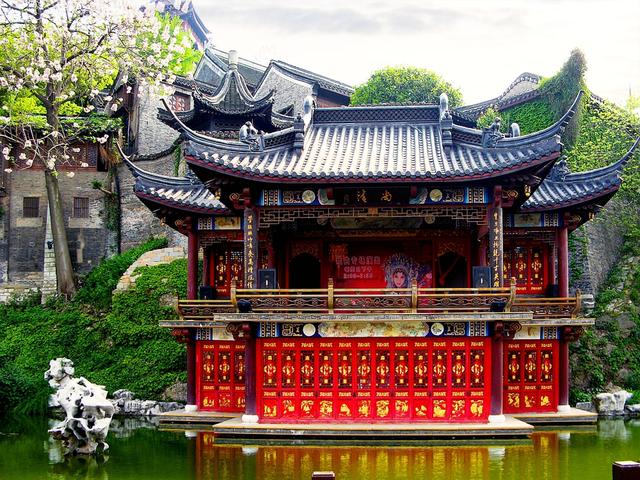
The ancient theater is still in use, and there are performances of opera every Sunday afternoon from 2 pm to 4 pm, enjoying a cup of tea and listening to an opera – it's a relaxing afternoon that makes you forget your worries.
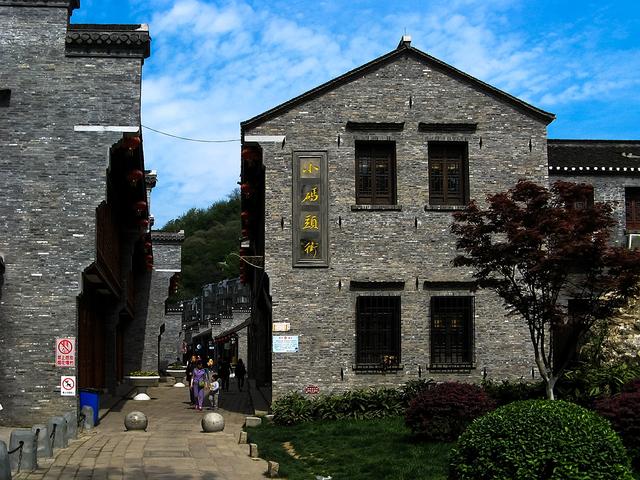
It's said that the local people of Zhenjiang didn't call it West Zhitou Ancient Street. People just called it Small Wharf Street. The original West Zhitou was actually a wharf. Small Wharf Street is a small street that's several hundred meters long, and at first glance, it looks very similar to a traditional ancient town street. You'll only realize it's special after examining it carefully.
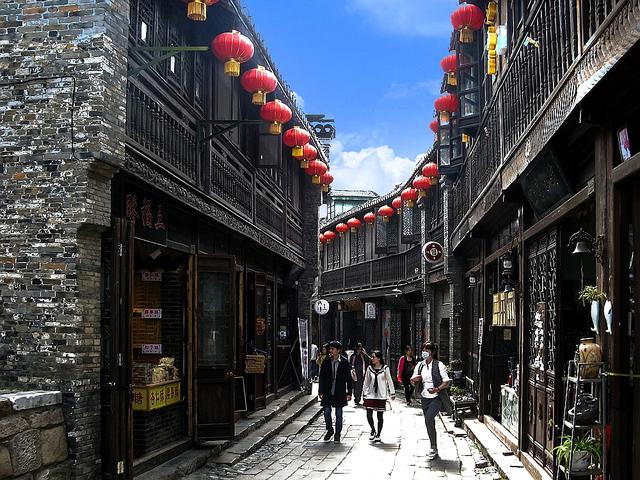
Walking along the ancient street, the rows of two-story houses on either side take you back to the era of singing and dancing.
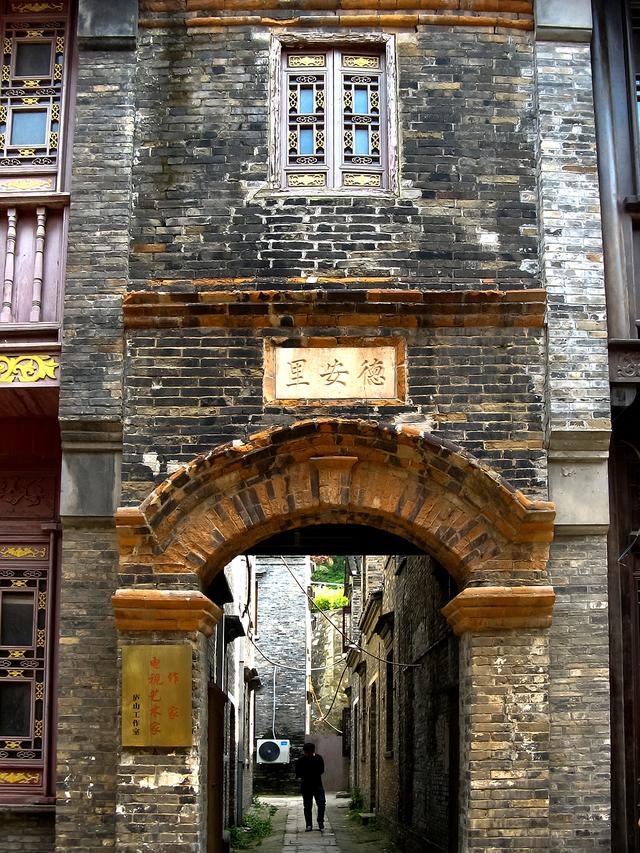
The buildings on the ancient street are mostly remnants from the Ming and Qing dynasties. Brick and wood structure, the window frames of the eaves and carvings are all painted in a vibrant 'Flying Pavilion, Scarlet Flow' color, creating a stunning visual effect.
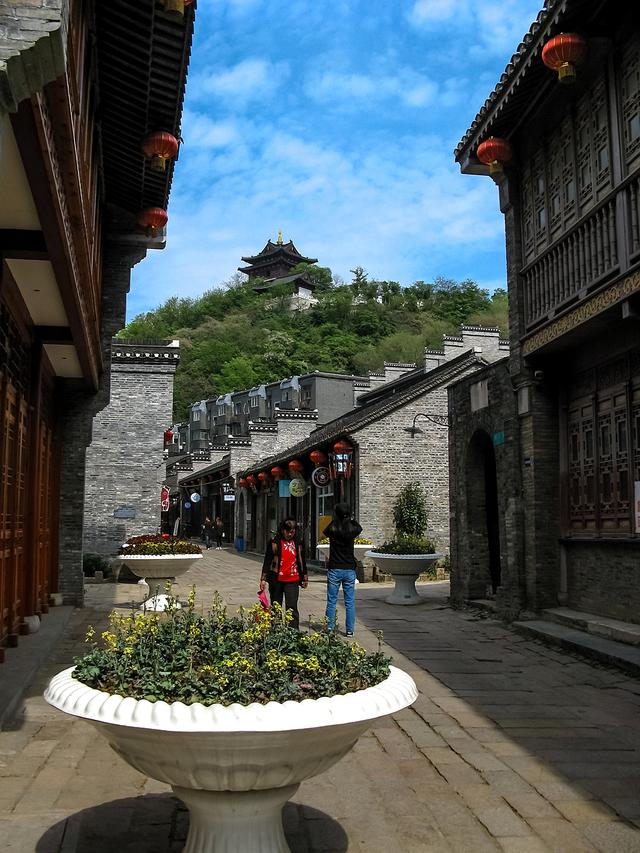
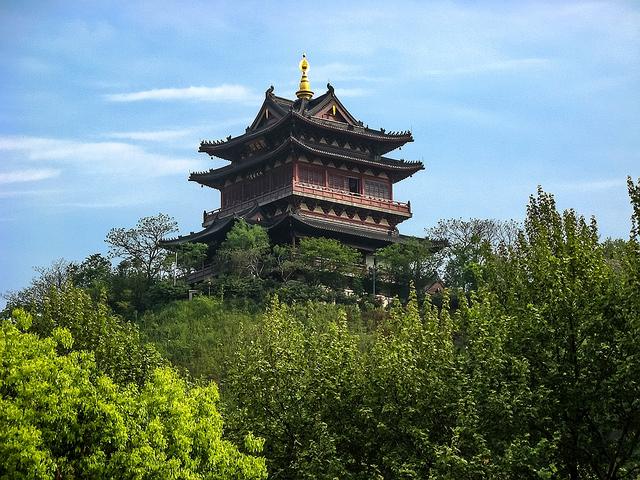
The entrance to the original De'an Lane.