Wangjiu Village: Exploring Unique Stone Watchtowers
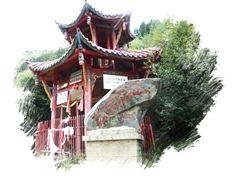
In the middle and lower reaches of the Mara River in Banma County, Qalogu Zang Autonomous Prefecture, Qinghai Province, there lies a little-known village hidden within the folds of the earth. It's less famous than Banqian Village and doesn't have the geographical advantage of being along the highway. Even if you arrive at Red Army Gorge, you might overlook its name, but a closer look will reveal that it has its own beautiful scenery and moving stories, and more uniquely stone watchtowers. That's Wangjiu Village.
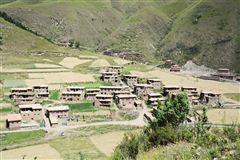
Scattered villages in the mountains
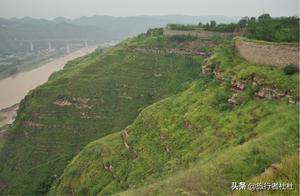
Wangjiu Village belongs to Yalintang Township, Banma County. It is located on the banks of the Makhe River on both sides of the gorges, and is the southernmost village of Yalintang Township.
With a total length of 210 kilometers, originating from the Bayan Qira Mountain branch of the Qalogu Mountain south of Sichuan, the Mara River runs south, and during its journey between countless mountains, it carved out countless 'S' bends, while also leaving behind blocks of open land and forming one after another scattered small villages. Wangjiu Village is one of them.
In the west of the Mara River, four settlements are located from north to south. The northernmost is Five-village Owa Village, and its southern boundary is Oangou Valley. Owa Village means the village next to Oangou Valley. The southern boundary of Oangou Valley is Four-village Wangjious, which is located at the foot of Majia Mountain. Wangjious is one of the eight major tribes of Banma. According to villagers, villages such as Wangjiu Village and Mangmu Village originated from Wangjiu Tribe. Further south is Second Village Deang Village, Deang Village is adjacent to Dai'er Mountain and faces the shape of an elephant, the Igulrinqin Mountain. Further south is the southern boundary of the village – Laizhai Mountain, the foot of Laizhai Mountain is the sixth village – Bargan Village.
In the east of the Mara River, there are three villages from north to south. The northernmost is Three-village Dang Village, Dang Village has three residential points located on the Mara River side, the three residential points are North-to-South: Dangdang, Ga'ang and Zhalo. Ga'ang is the location of Yaltintang Township Government, and Zhalo is the location of Zhaluo Temple. Zhaluo Temple south is Xiaogou River converging into the Mara River, Xiaogou River north and south sides are two residential points of the village, North is Guorong residential point, South is Dai'er residential point. Continuing south is the southern boundary of Wangjiu Village – Zimu Da Village, which is the location of Seven-village Zimu Da.
Moving along the Mara River, in addition to the beautiful natural scenery on both banks, there are also uniquely stone houses with the imagination of multi-layered stone and wooden houses.
Watchtowers are two to three-story stone and wooden multi-story houses built by the Zang people. The Zang people call them 'Kuaril'. Watchtowers are generally two to three stories high, about 10 meters high. The first floor is for building the main entrance, for livestock sheds; the second floor is for living; the third floor is for storage space and guest rooms, with a roasting furnace on the roof for the annual roasting activities, which is also used to dry grain, and the floors are connected by individual wooden ladders.
Actually, the watchtowers here are much more complex than the external appearance we see. If you can look through the surface of the watchtower and carefully observe every structural detail, you will find that the watchtowers here are not just houses, but also the wisdom of the locals formed through long-term 'harmony' with nature.
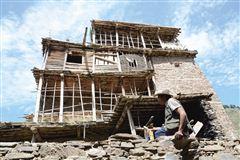
In Wangjiu Village, Deang Village, a four-story stone watchtower is particularly eye-catching. It is rare that there are four-story watchtowers in the Mara River region.
According to villagers, this watchtower has a history of nearly 400 years, and it was the residence of the head of the Mu'liado tribe at that time. The watchtower's exterior is grand and magnificent, but the interior architecture is also different from other stone houses.
The first floor of this watchtower is a 40-square-meter circular house, and the other spaces separated by stone walls are estimated by villagers to be 50 square meters for a stable and 4 square meters for a prison. This is unprecedented in stone watchtowers in Banma. The second floor is for storage and guest rooms, which is different from the stone watchtowers in other villages. The main reason is that the head of the tribe lived here.
The third floor is the same as the third floor in other stone watchtowers, but it has two extra guest rooms. The fourth floor is the same as the third floor in other stone watchtowers, and is a Buddhist hall and a threshing floor.
“”……
80
“”10
“”
400()
40504