Mountains, People, and Anhui: A Chronicle of Yefushan (Part 12)


: Sword Forging Mountain of Yeji
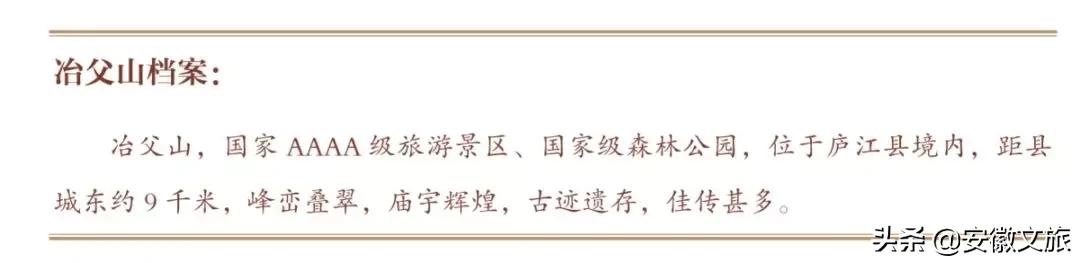
Yefushan is located in the territory of Lu County, with lush peaks and ancient temples. It is said that during the Spring and Autumn period, the ancestor of Chinese sword forging, Yeji, forged swords on the mountain, hence the name Yefushan. ‘Lu County Official Records’ records: ‘To forge a long sword, one must seek Yefushan at night. Look at the strange air with a cloaked garment, straight to the cattle pen.’
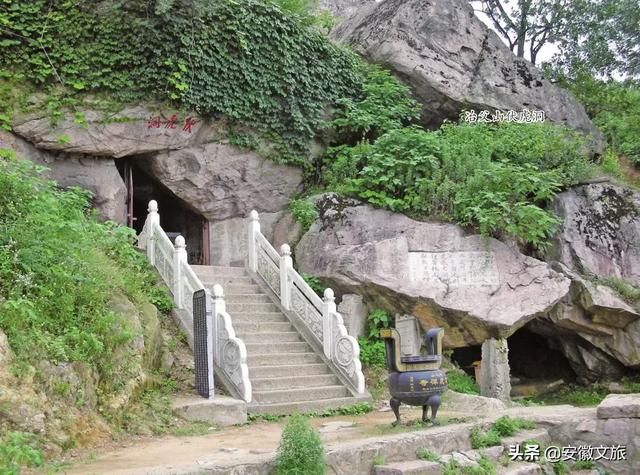
The highest peak of Yefushan is Mount Duishan, with an altitude of over 370 meters. From the foot of the mountain to the summit is about five miles, climbing along the mountain trail, and along the way, there are towering peaks and shady trees. At the summit, you can see the Yangtze River like a ribbon, and near it, Lake Chao like a mirror. If it's a rainy day after the rain, you can see purple mist hovering above and lush peaks below, which is called ‘Yefushan Eight Scenery’ – one of them. Besides ‘Yefushan Eight Scenery’, there are also ‘Lake Chao One View’, ‘Dragon Pool Reflecting the Moon’, ‘Tiger Cave Singing the Wind’, ‘Mount Duishan Surrounding the Sky’, ‘Rolling Thunder and Clear Thunder’, ‘Hundred-Foot Pine Waves’, and ‘Spring Bloom Rain’. Every place has its own characteristics, with unique scenery and beautiful legends, accompanied by many wonderful stories.
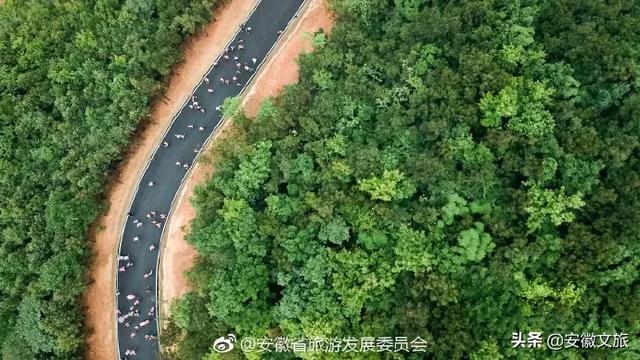
Yefushan Photo by Zhang Duan
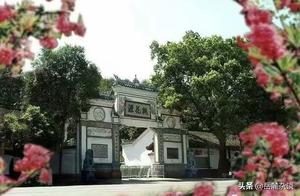
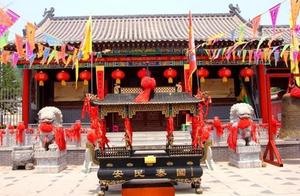
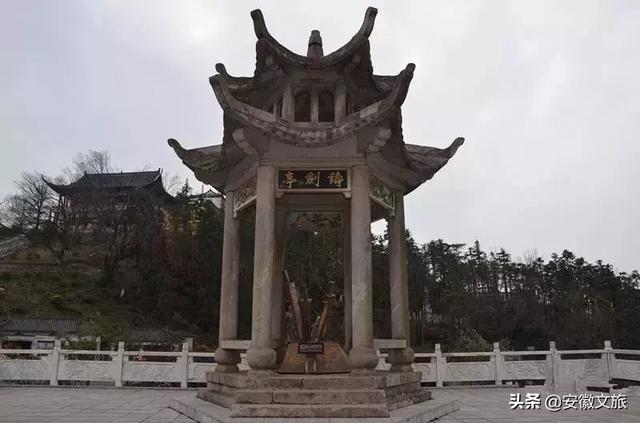
Near the Sword Forging Pool, you can see the Dragon Pool Reflecting the Moon, as if entering Yeji's Sword Forging Site. Yeji forged five famous swords, including Zhanlu, Jueque, Shenxie, Yichang, and Chunjun, along with Jiangyi, together forging swords for the Chu King, Longquan, Tai'a, and Obu, three famous swords. Now the Sword Forging Pool is clear and jade-like, cool and cold, like sword energy floating. The pool is surrounded by stone fences, stone monuments, and the Sword Forging Pavilion.
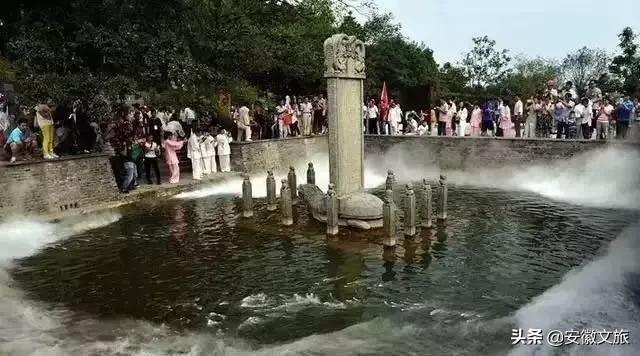
Sword Forging Pavilion Photo Source: Lu County Tourism
The pavilion was built during the Wanli period of the Ming Dynasty. Now the inscriptions and tablets have disappeared, only the stone fence remains. The Sword Forging Pool is the earliest historical site recorded on Yefushan. ‘Yefushan Official Records’ contains the ‘Sword Forging Pool Monument Record’. The Sword Forging Pool is located north of Mount Duishan by more than a hundred steps along the stone steps, facing each other with two giant stones, like two hands holding each other, with fingers raised in the air, named ‘Hand Holding Stone’. There is also a saying that when Yeji forged a treasure sword, he wanted to test the sharpness of the sword, so he used a stone to slash it, and the sword cut through the stone, hence it is also called ‘Sword Testing Stone’.
Hundred-Foot Cliff located at the eastern corner of the summit of Yefushan, near the Sword Forging Pool. The cliff is 100 feet high and several tens of feet wide, with steep stone walls and dangerous rocks. During the Ming Dynasty, poet Zhou Liangde wrote: ‘The tall, smooth cliff of one hundred feet, carved by the sky’s axe like a rose. Raise your hand to encompass the world, stretch out your hand to touch the stars.’ Under the Hundred-Foot Cliff, there is a small spring, semi-circular, like a pot storing water, no less than a foot deep, not overflowing in the rain, not drying up in the drought. If the moisture rises, it will rain; if it doesn't, it will rain.
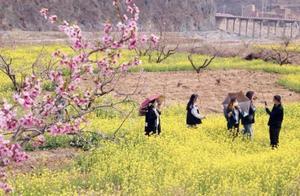
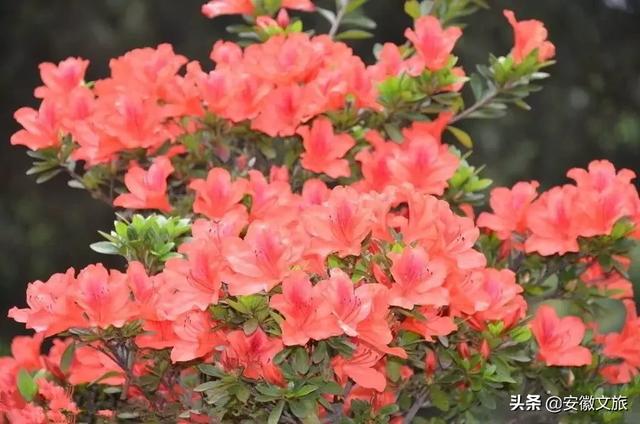
Climbing Yefushan is best in spring. Rhododendrons are red as fire, interspersed with various wildflowers, covering the mountains and valleys in a colorful and vibrant way, ‘Spring Bloom Rain’ is a scenery.
Many visitors to Yefushan ask about why Yeji forged swords here. Is it because of the rich minerals or beautiful scenery? Perhaps both.
Great River: Under the Ninehu Mountains
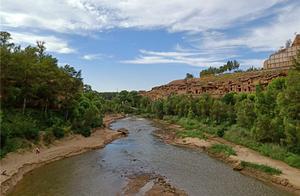
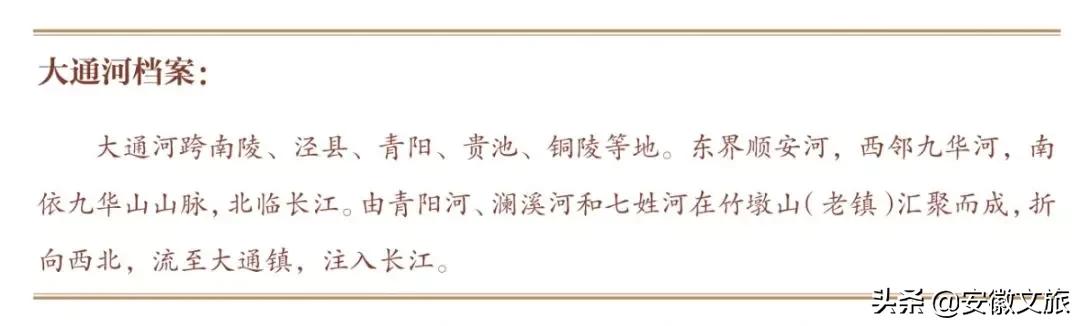
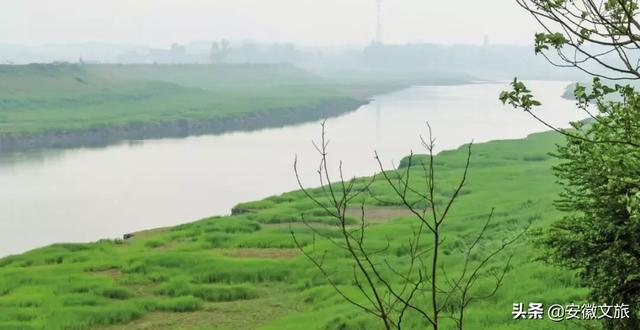
The Great River belongs to tributaries of the Yangtze River, with a long history. The upper reaches have two main tributaries: one is Qingtong River, originating from the (Chatiaanling) on the eastern foot of the Ninehu Mountains, with an altitude of 1117 meters, flowing from south to north, passing through Guang'uan Zhuang and Niujia Bridge, and Longkou, and Zhubei, to Qingyang City, and the river is 90 kilometers long. The other is Qitong River, originating from the (Lao Hu Tou) in Nanling County, with an altitude of 444 meters, flowing from north to south, passing through Zhangjia Mountain and Heiwu, to Qiaojia Bridge, entering Qingyang County, and it flows west, passing through Jiemu and Mituo, and enters Qingyang County, and the river is 55 kilometers long.
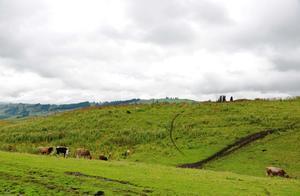
The Great River is covered with lush grass, with a beautiful natural landscape.
Now, Qingtong River is defined differently. Qingtong River refers to the Qingyang River and the Great River. ‘Hand Holding Stone’ is above the Qingyang River, and below the Qingyang River is the Great River. The ancient Great River was divided into Lanxi River and Qitong River. The western part of Lake Wangahu is the Lanxi River, and below Wangahu to the entrance of the Qijia River is the Qitong River.
Regarding the origin of the name Qitong River, there is a legend. It is said that Zhu Yuanzhang, during the war with Chen Youliang, Chen Youliang chased Zhu Yuanzhang to the Great River Yangzi River Anhui, and Zhu Yuanzhang used a boat to escape, and the wind was fierce and the rain was pouring, the boat was overturned by the waves, fortunately, fishermen rescued him.
To express his gratitude to the fishermen for saving his life, Zhu Yuanzhang came to the boat and ate and talked with the fishermen. He learned that there were many fresh and delicious fish in the Great River. He wrote ‘Qitong River’ on the golden-threaded fish scale roster.
The Great River fish is fat and delicious. South Song poet Yang (Yang) wrote a poem ‘’ (zhou guo Da Tong Zhen) when he took a boat through the Great River Town: ‘The clouds above the (hui) hang over the banks, the waves in the river pound the sky. If the wind dares to look at it, go into the water and work harder. Reed marshes are left alone, fish nets are hindered by boats. Why regret the rear of the queen, fish and crabs do not care about money.’
Now, the Great River is flowing smoothly, lying quietly on the Big Land of Wannan, with its green and blue silhouette clearly drawn. It is like a beautiful painting, recording beautiful legends and carrying the dreams and hopes of the people on both banks of the river.
“”
“”