Poyang Lake’s Grass: A Treasure of Nanchang, Do You Know the Most Authentic Way to Make This Dish?
As a native of Jiangxi, I have a deep fondness for this dish. As the saying goes, 'mountains eat mountains, water eats water,' and Poyang Lake's superior location gave rise to the dish of 'qilihao' (Chinese artichoke). However, 'qilihao' is most famous for being one of the 'Ten Dishes of Ganzhou,' namely 'qilihao with cured pork.' It was even included on the menu for the 2008 Olympics, which speaks for itself.
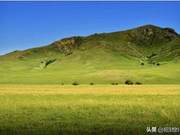
The main ingredient, 'qilihao,' typically grows near the shores of lakes and grasslands, which is why Poyang Lake, as the largest freshwater lake in China, has the most wild 'qilihao.' The effects of 'qilihao' are not limited to eating; it also has medicinal properties. 'Compendium of Materia Medica' records that 'qilihao' has a sweet and pleasant aroma and is non-toxic, treating swelling, evil qi, wind-cold, dampness affecting the spleen, tonifying the middle energizer, promoting hair growth, keeping one lean, improving hearing and vision, and preventing aging. This shows that ancient people already understood the effects of 'qilihao' so well.
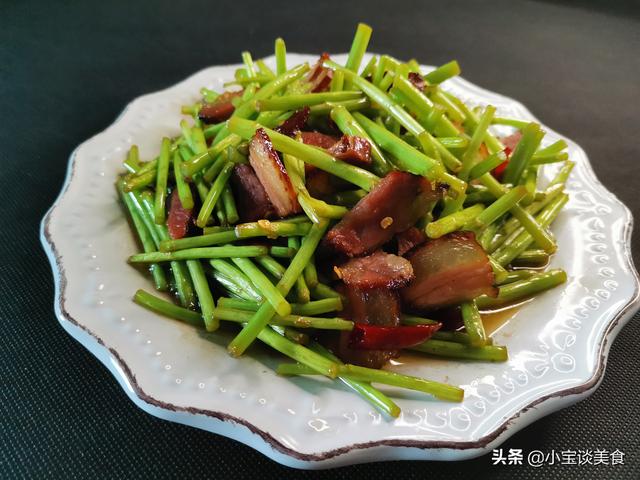
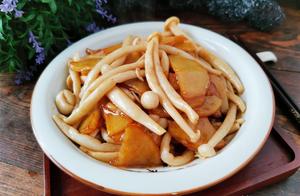
'Qilihao with cured pork,' this famous dish, as the name suggests, 'qilihao' as the main ingredient, cured pork as the auxiliary, the two complement each other with a fresh aroma and a salty aroma, blending together, and then displayed with tender green and red and white interwoven. Whether from a taste or a visual point of view, this dish perfectly showcases its extraordinary qualities.
When selecting 'qilihao,' you need to pay a little attention, because if it's too old, it will affect the taste of this delicacy. Therefore, it's generally taken from the base and taken from the tender part, cut into small segments, and cured pork should be selected with red and white variations, sliced thinly, together with ginger, garlic and green onion powder, then small-sized stir-fried in a large pot, and of course, pay attention to the heat.